
The Himalaya and Karakoram
Mountain Landscape Photographs of The Himalaya and Karakoram
The Himalayas are tall snow-capped and seemingly inaccessible summits that rise up into a cold breathless air from a land bathed in mystique and religious devotion. Literally translated as ‘Abode of Snow’ the name applies to the great mountain system of Asia separating the Indian subcontinent from the Tibetan Plateau. The Himalayas generally consist of sedimentary and metamorphic rocks that have been faulted southward over continental crust which occurred during the formation of the Himalaya by the subduction of the Indian tectonic plate under the Tibetan Plate.
The range runs north-west to south-east in an arc of over fifteen hundred miles from the peak of Nanga Parbat, 8,126m (26,661 ft) in northern Pakistan to Namcha Barwa, 7,782m (25,532 ft) in the state of Arunachal Pradesh in far eastern India. This core Himalaya is bordered on the north-west by the Karakoram which, in view of the significant number of tall mountains lying within this range, it is often included in what is loosely called the ‘Greater Himalaya’.
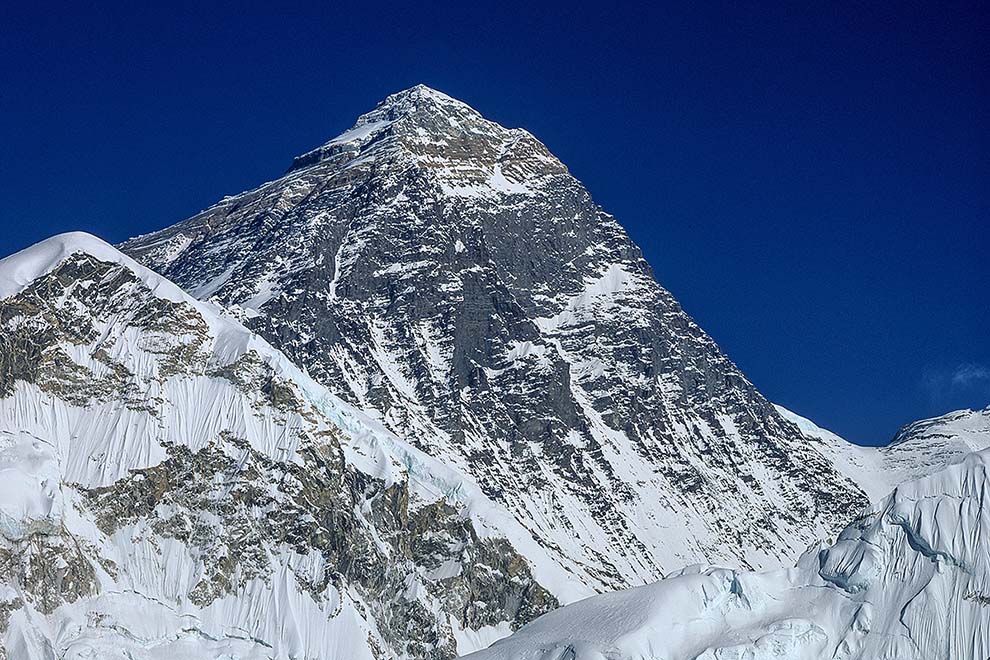
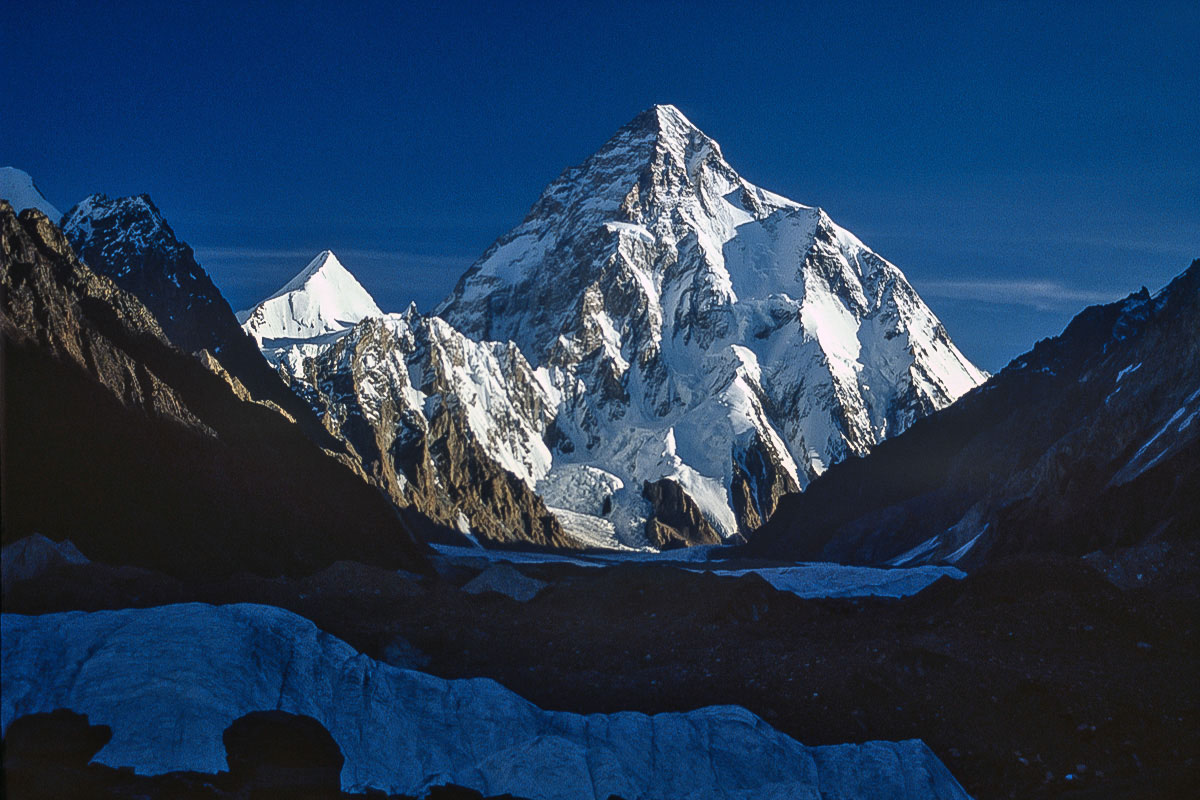
The Himalayas are spread across five countries: Nepal, India, Bhutan, China and Pakistan. Here rise many of the world’s tallest peaks including the highest, Everest, standing at 8848m (28,029 ft) above sea level. Everest is located on the border between Nepal and Tibet in the Mahalangur Himal, a sub-range of the Himalayas; it is known to the Nepalese as Sagarmatha and to the Tibetans as Chomolungma, ‘Goddess Mother of the World’. There are thirteen other distinct peaks rising to above 8,000 metres (26,248 ft), seven in Nepal, five in the Pakistan Karakoram including K2, the world’s second highest mountain, and one entirely within the borders of Tibet. In addition there are over fifty peaks exceeding 7,200 metres (23,600 ft),
The mountains have a profound influence on the climate of the region. The weather here is dictated by the movement of the jet stream and the arrival of the summer monsoon; as the monsoon approaches the jet stream moves northward thus reducing the intensity of the high altitude winds. However, those high winds prevail during most of the winter months and, although there is much snowfall during the winter, lying snow on steep mountain slopes such as the South-West face of Everest, for example, is scarce.
Access to the Himalayas for mountaineers, photographers and tourists has improved considerably over the years via a network of new roads and an increase in the number of domestic airlines operating flights to the remoter areas such as Lukla in the Khumbu region of Nepal, Skardu in the Pakistan Karakoram, Bagdogra in northern India, Lhasa in Tibet and Gelephu in Bhutan.
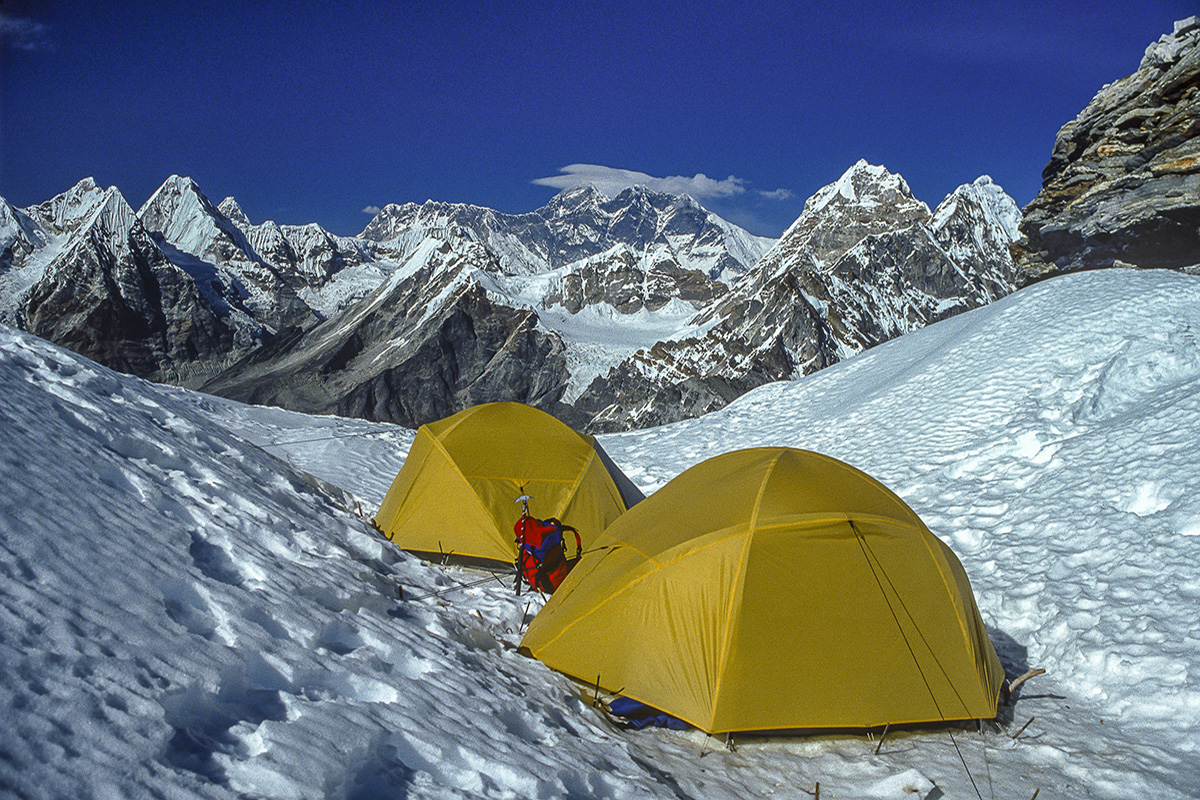
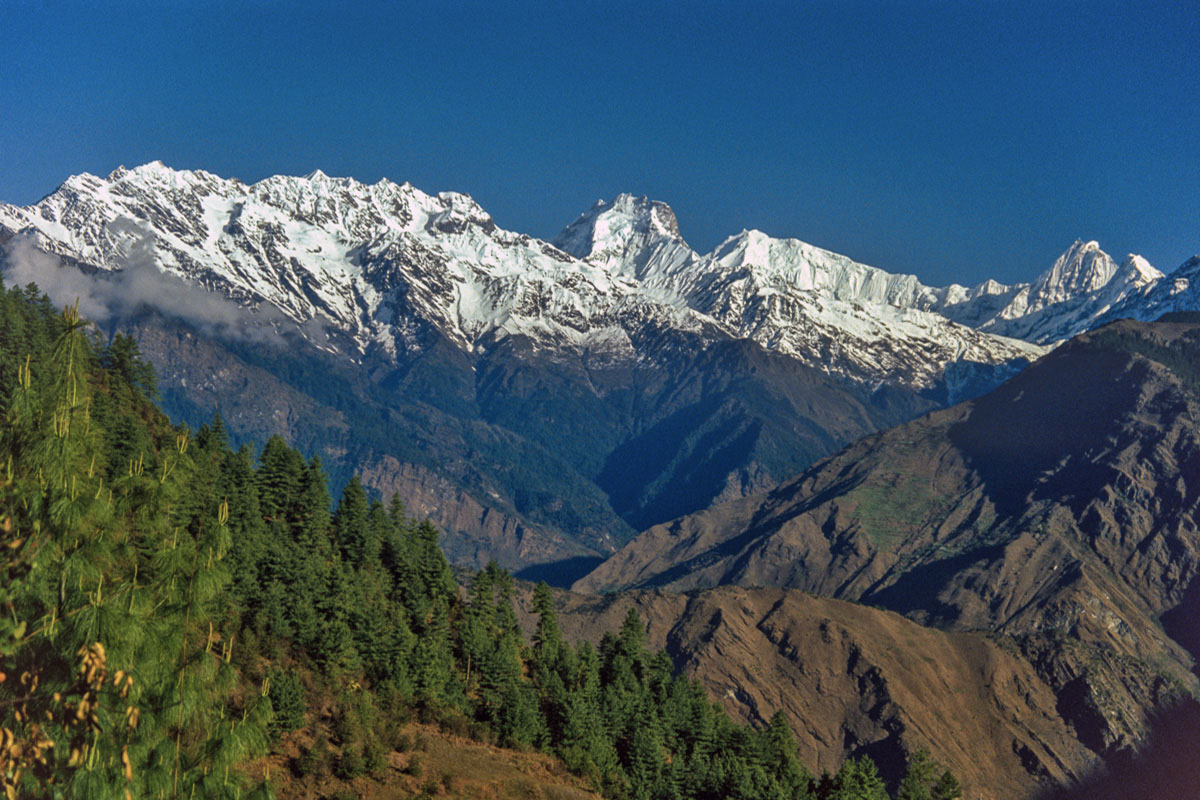
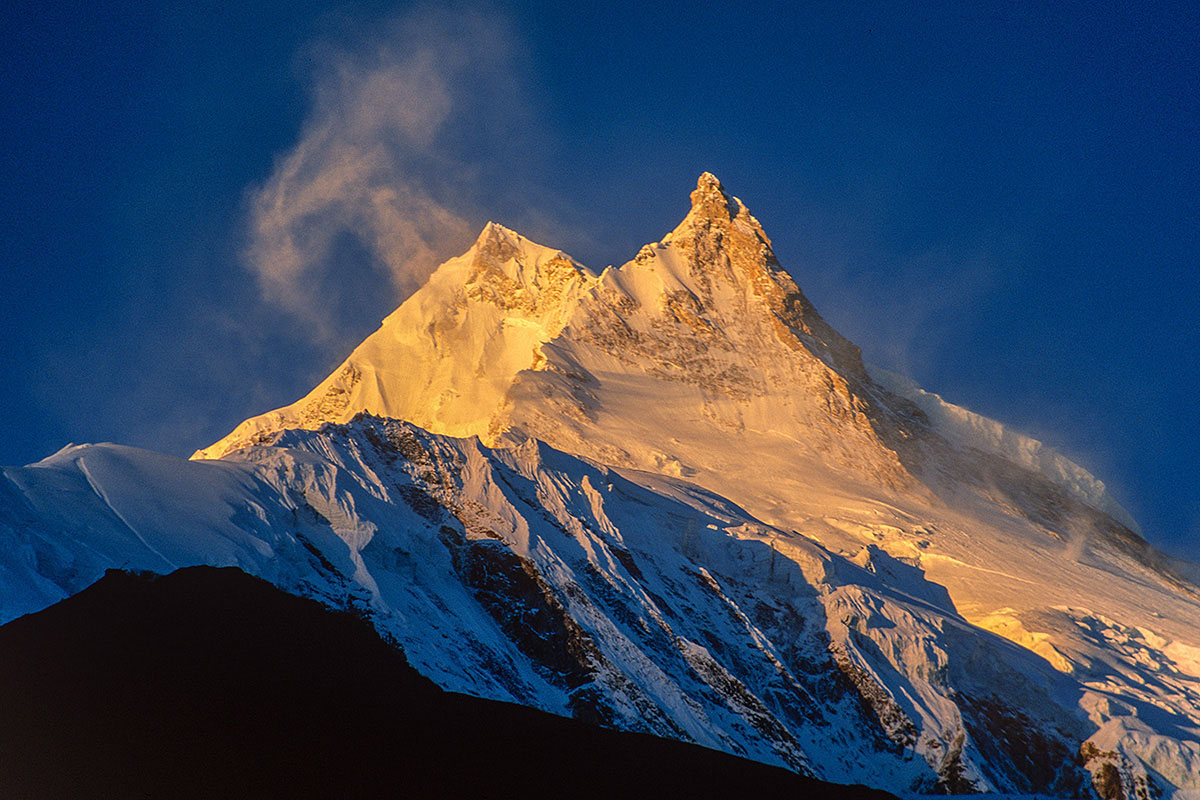
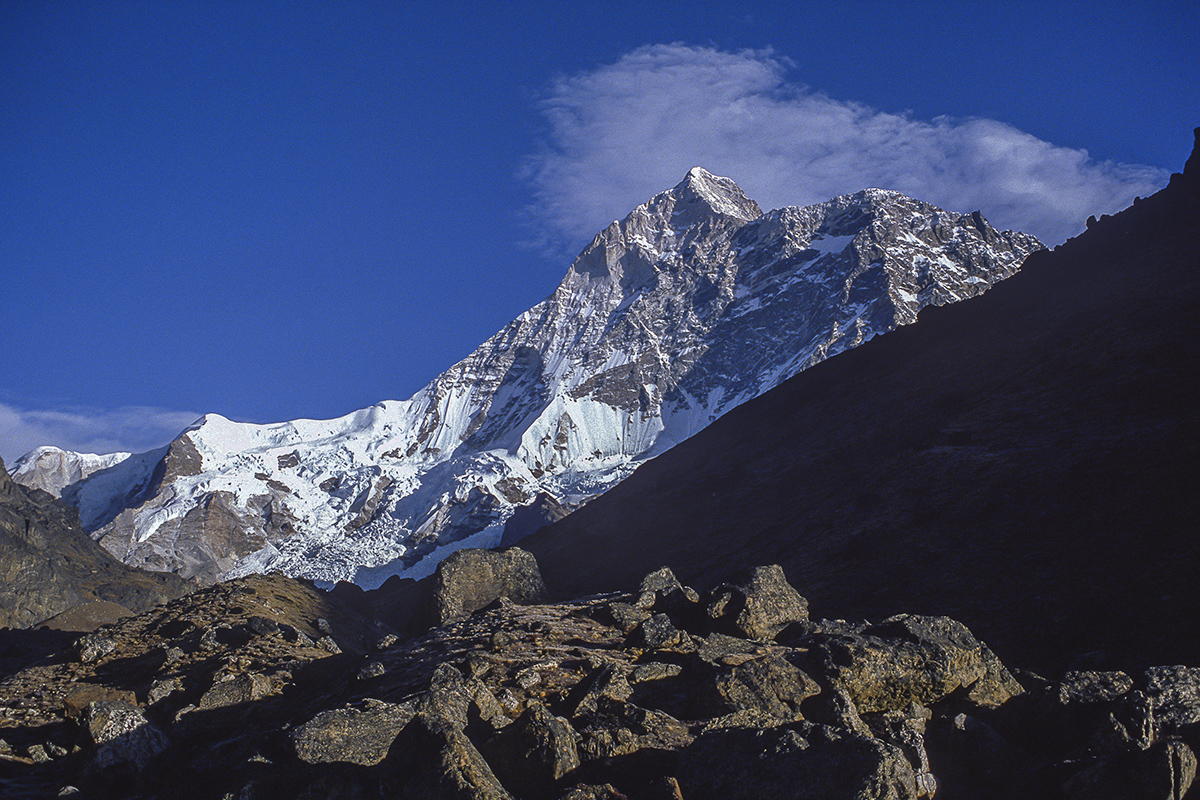
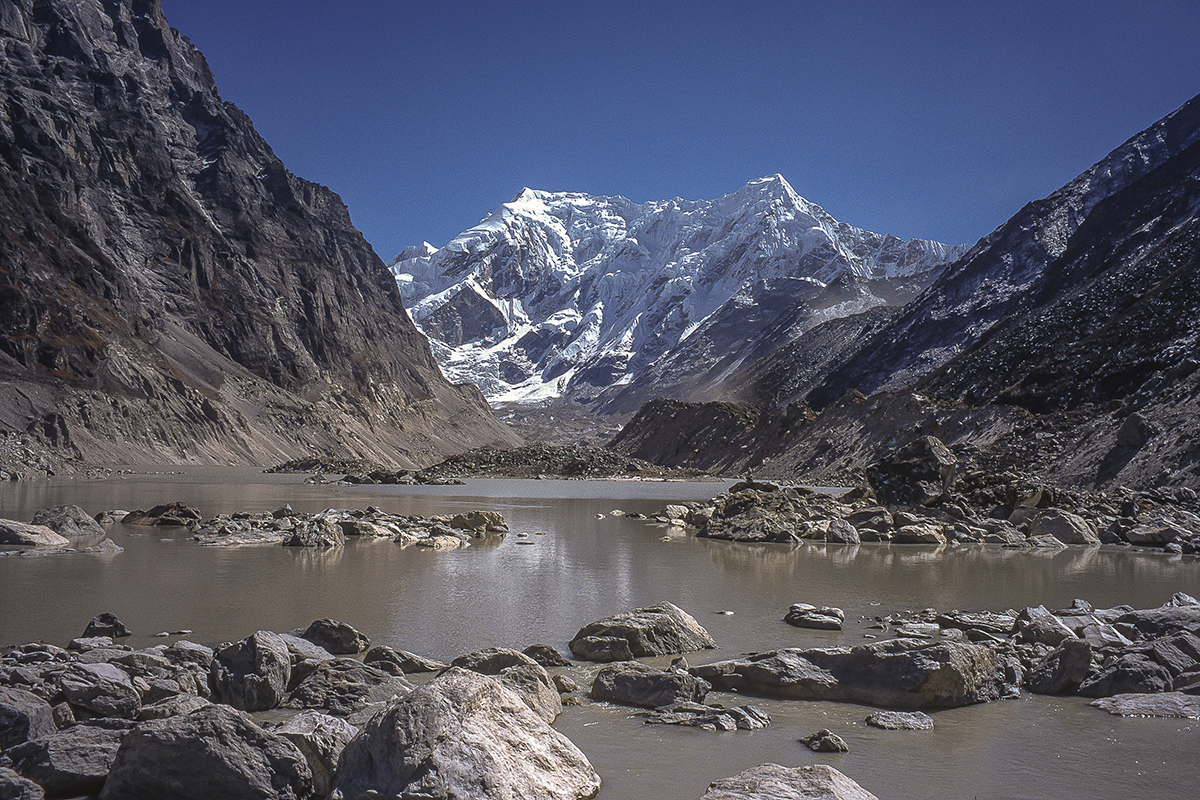
The collection of images exhibited here have been captured from a wide variety of locations scattered across most of the Himalayan countries mentioned earlier. Nepal, on whose borders stand no less than eight of the world’s highest peaks, features heavily for that very reason. The Karakoram Himalaya which contains the highest concentration of the world’s 7,000 metre peaks is also given prominence.
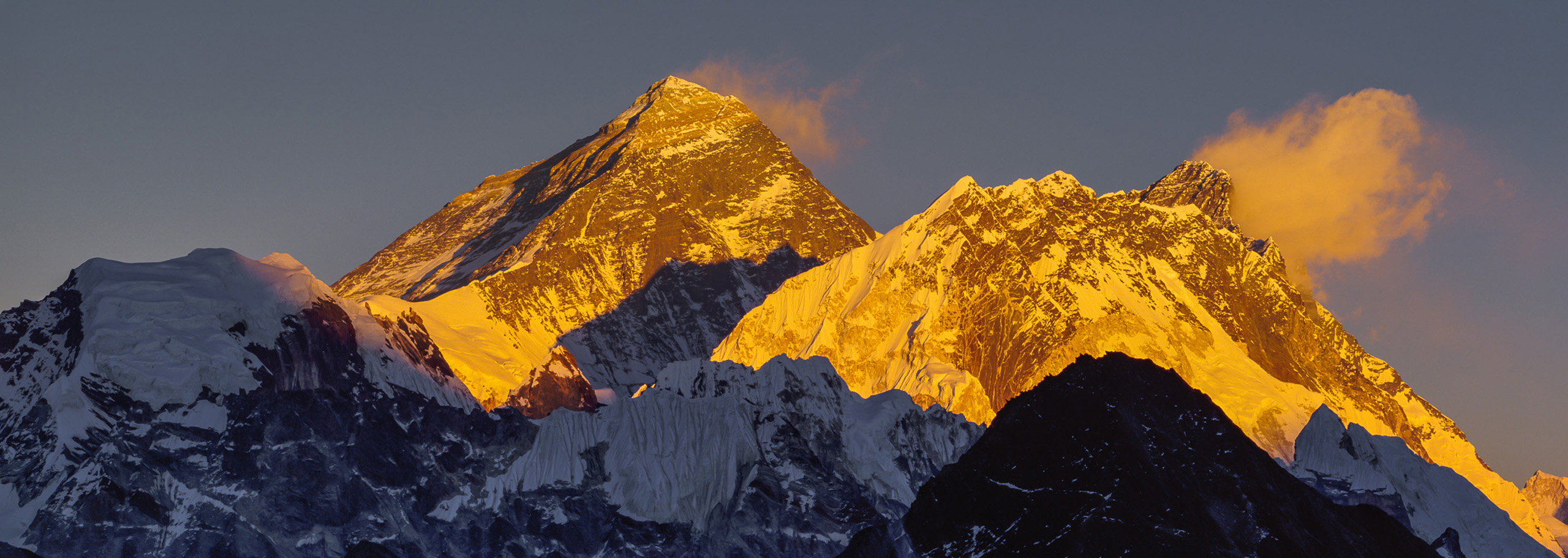
Everest Khumbu Sunset Panorama
Everest, Lhotse, Nuptse and the Khumbu Glacier from Kala Pattar at sunset.
Everest and The Khumbu Glacier
Everest, Lhotse, Nuptse and the length of the Khumbu Glacier from Kala Pattar.
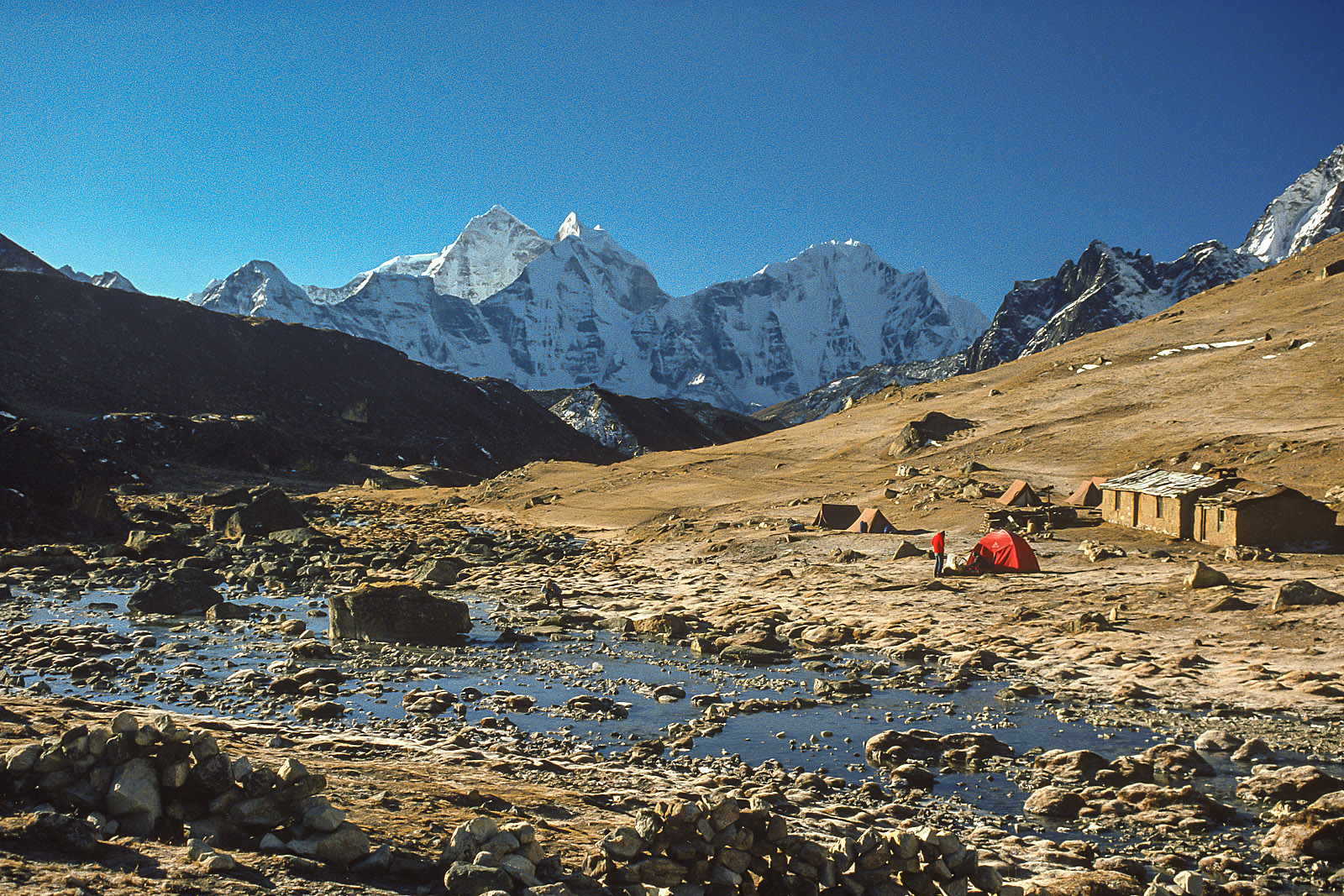
Khumbu Dawn
From Lobuche, first light on Pumori and Lingtrense peak at the head of the Khumbu Valley.
Ama Dablam from Khumjung
Ama Dablam from the Sherpa village of Khumjung in the Khumbu Himalaya, Nepal.
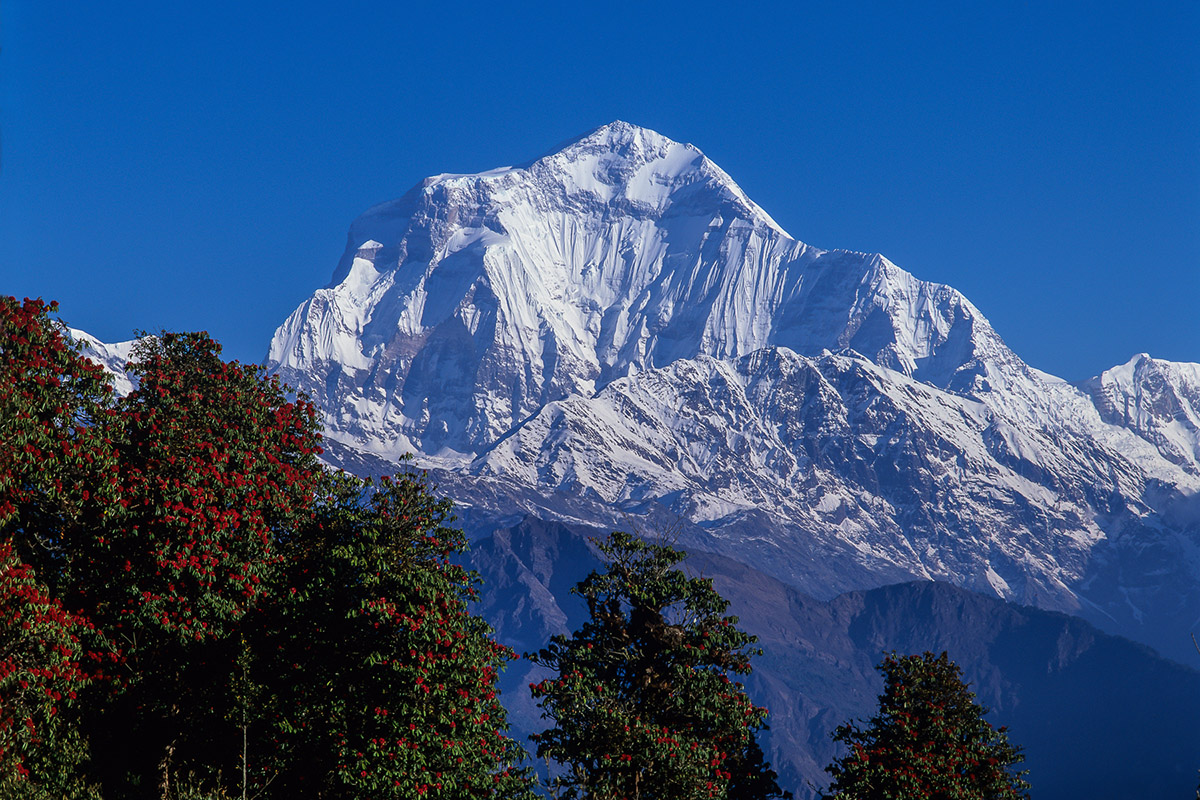
Dhaulagiri from Ghorapani
The mighty south east face of Dhaulagiri from across the Kali Ghandaki valley at Ghorapani.
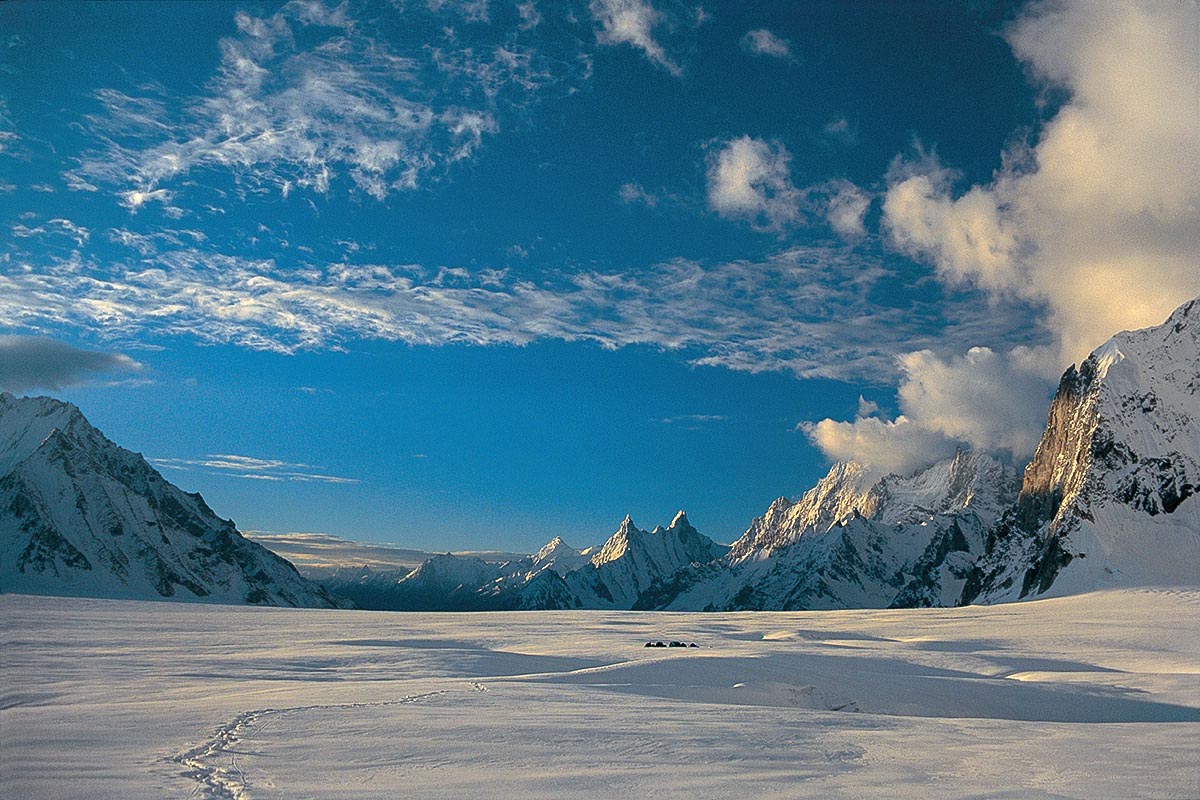
Evening Light on Gasherbrum 4
Sunset on Gasherbrum 4 from a camp on the Baltoro Glacier, Karakoram Himalaya.
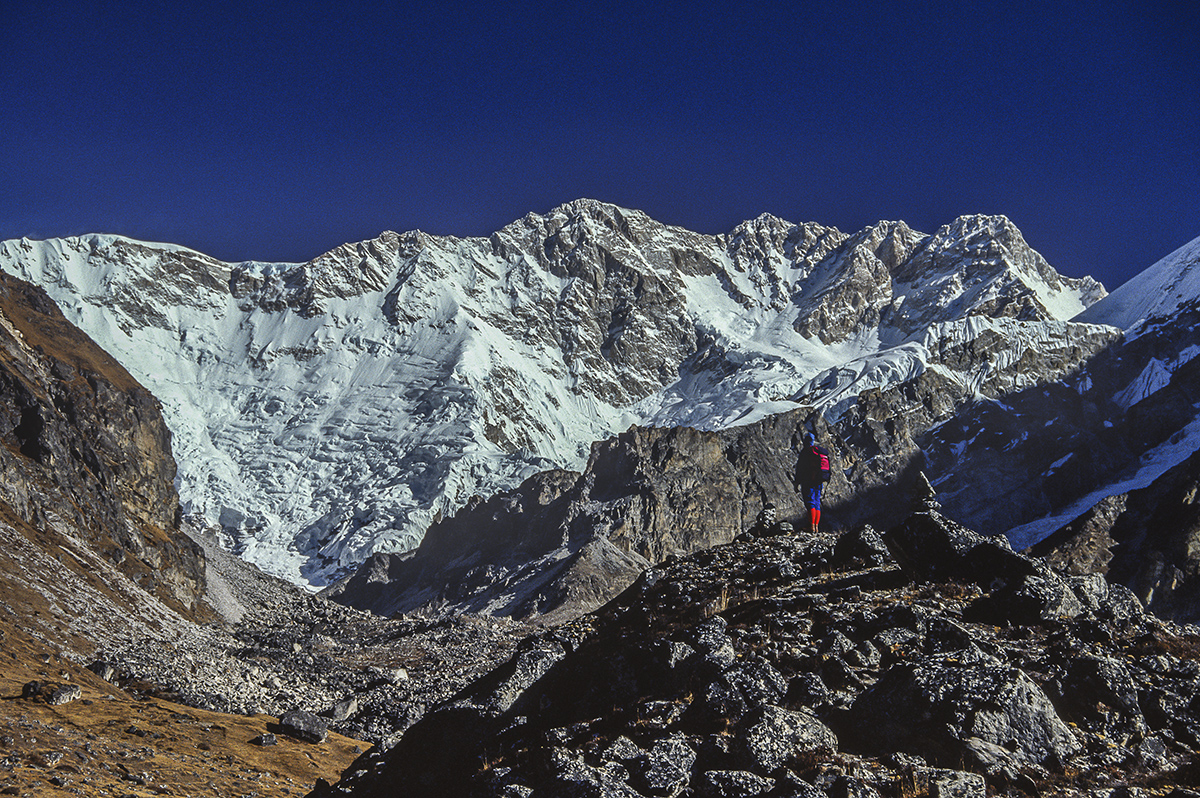
Kangchenjunga Sunset
The peaks of the Kangchenjunga massif from the Singalila Ridge on the Sikkim-Nepal border.