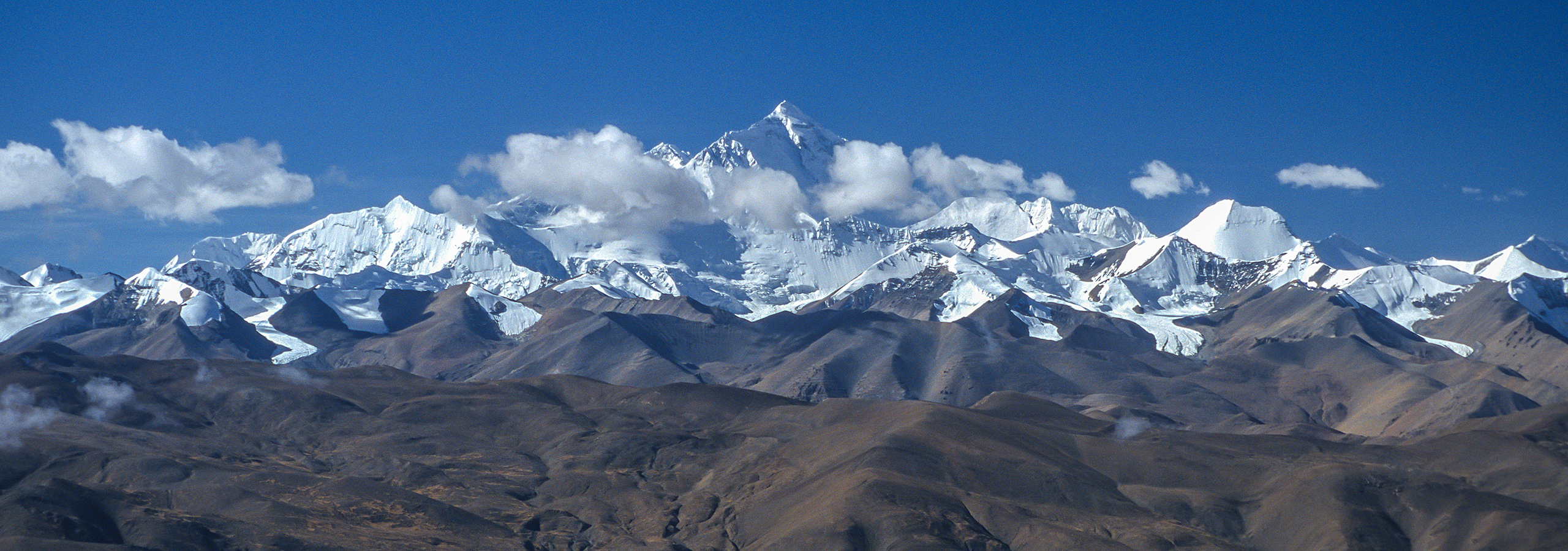
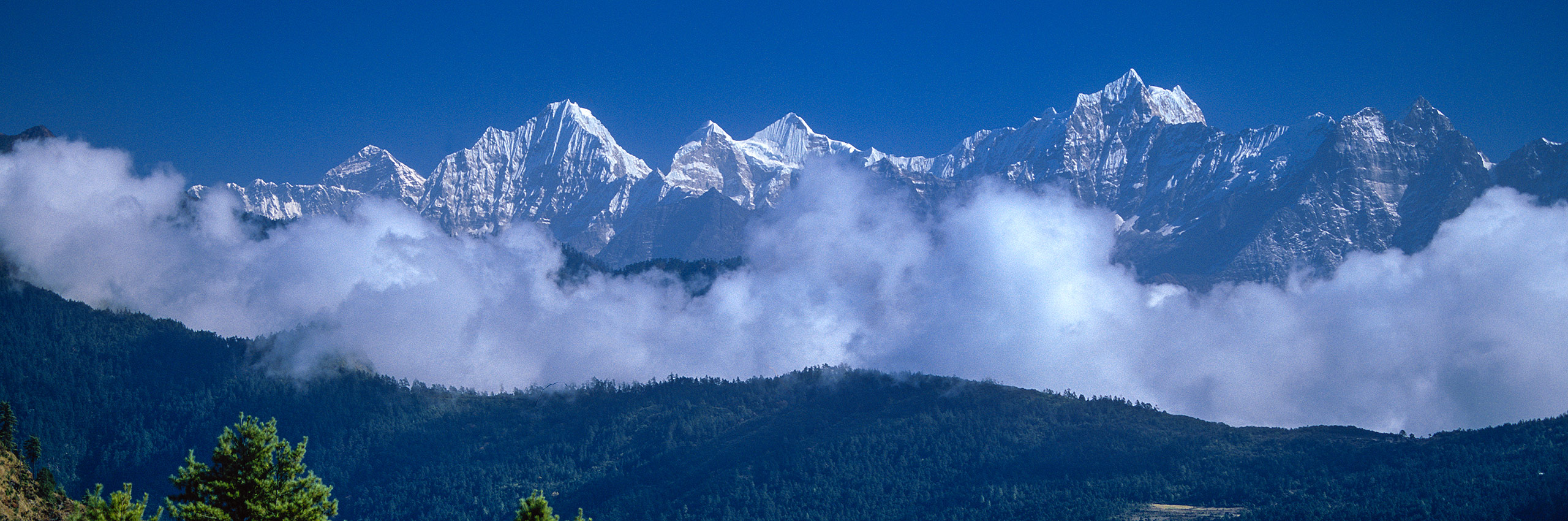

The Himalayan Adventures
Travels through The Himalaya and Karakoram
When I decided to extend my portfolio of work beyond Britain, I was so inspired by images in Galen Rowell's book ‘The Throne Room of The Mountain Gods’ about K2 and the Karakoram Himalaya, and by those of climbers on Chris Bonington’s successful 1975 British Everest South West Face expedition, that my eyes were inextricably drawn towards these distant horizons.
I embarked upon my 'Himalayan Adventures' in 1979, and in the years that followed I established commercial relationships with several specialist travel companies including Mountain Travel Nepal, The Ultimate Travel Company and KE Adventure Travel. For nearly 40 years, with their encouragement and support, I organised and led numerous trekking, climbing and photographic expeditions to Nepal, Pakistan, India, Sikkim, Tibet and Bhutan.
At the time they were accomplished, many of these expeditions were pioneering and required detailed research and planning. They would, in time, provide me with the opportunity to visit and to photograph some of the remotest valleys, the longest glaciers and the highest peaks of the Himalaya and Karakoram including, amongst many others, Everest, K2 and Kangchenjunga.
During this period there was also a developing interest in travel to this part of the world from the outdoor press, and I was regularly asked to provide detailed illustrated accounts of my travels for several of its magazines. I have reproduced a selection of those accounts in this section of the website
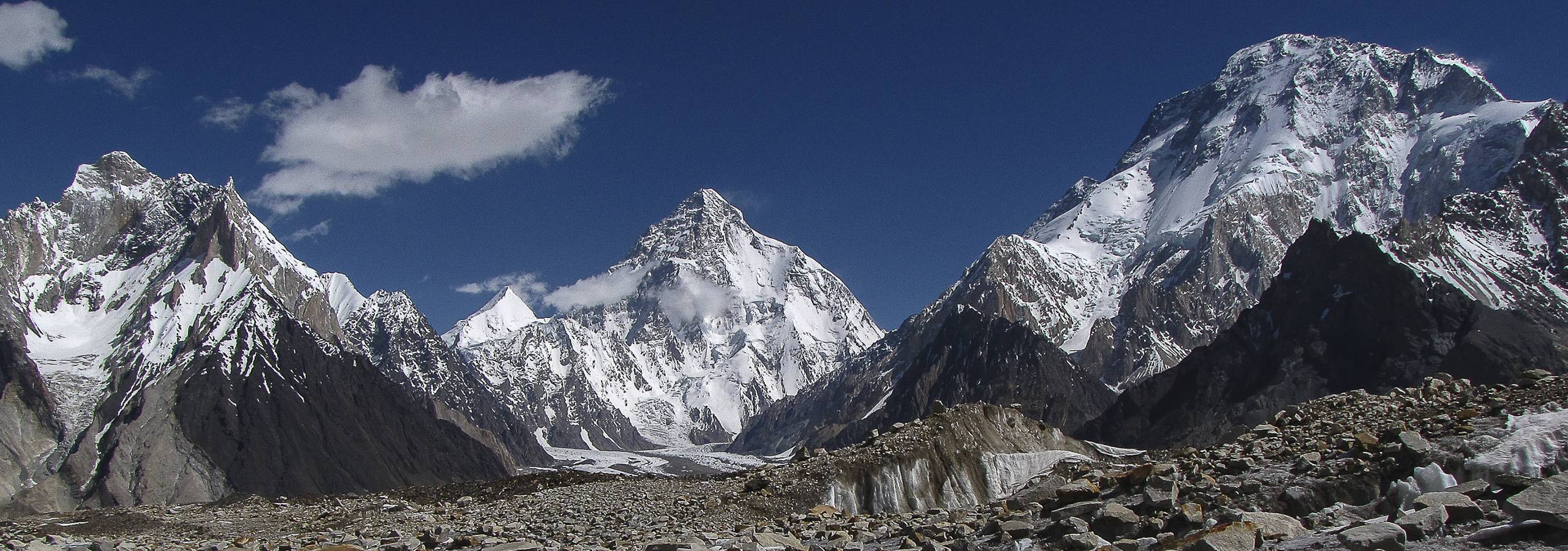
Baltoro - Icy Highway to K2
THE ‘ROOF OF THE WORLD’ is popularly defined as that region which lies along the Nepalese-Tibetan border and contains the highest summits of the Greater Himalaya. However, well-informed mountaineers and geographers will justly argue that it is the Karakoram, a sub-range of the Himalaya in northern Pakistan, which contains the world’s greatest concentration of really high and spectacular mountains.
Kangchenjunga - Five Great Treasures Revealed
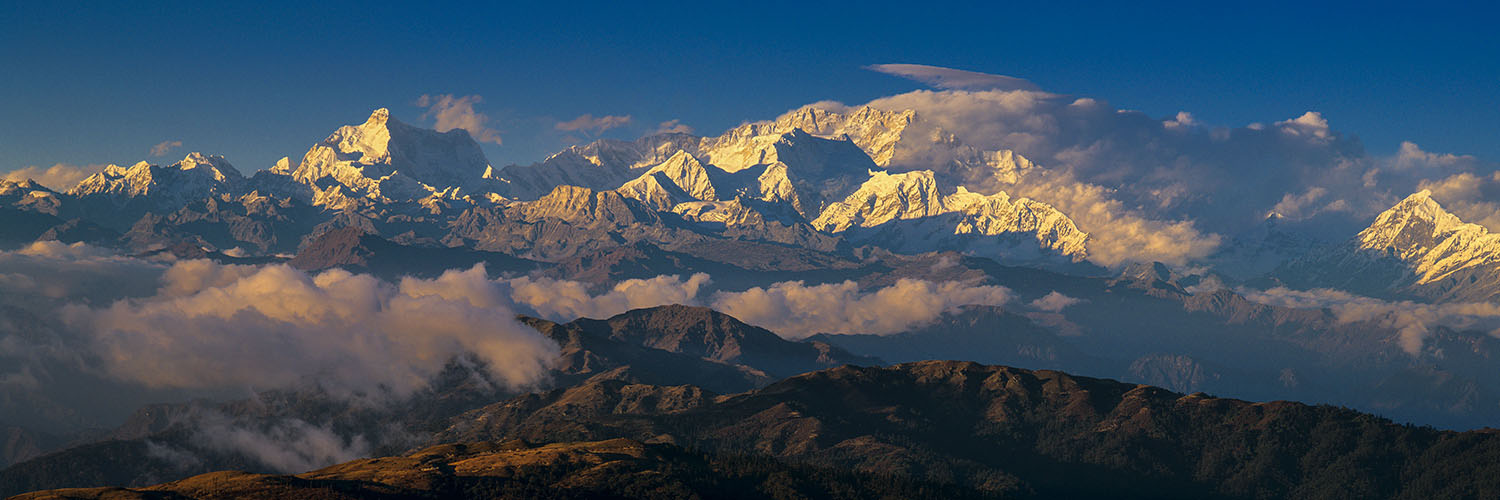
KANGCHENJUNGA is the third highest mountain in the world. Rising to 8,595 metres or 28,205 ft., it is the culminating point of a proliferation of summits and ridges that form the borders of Nepal, Tibet and the once independent, and now Indian protected, state of Sikkim. It is a sacred mountain and its translated name ‘The Five Great Treasures of the Mountain Snows’, appropriately describes the summit and its satellites when seen from afar.
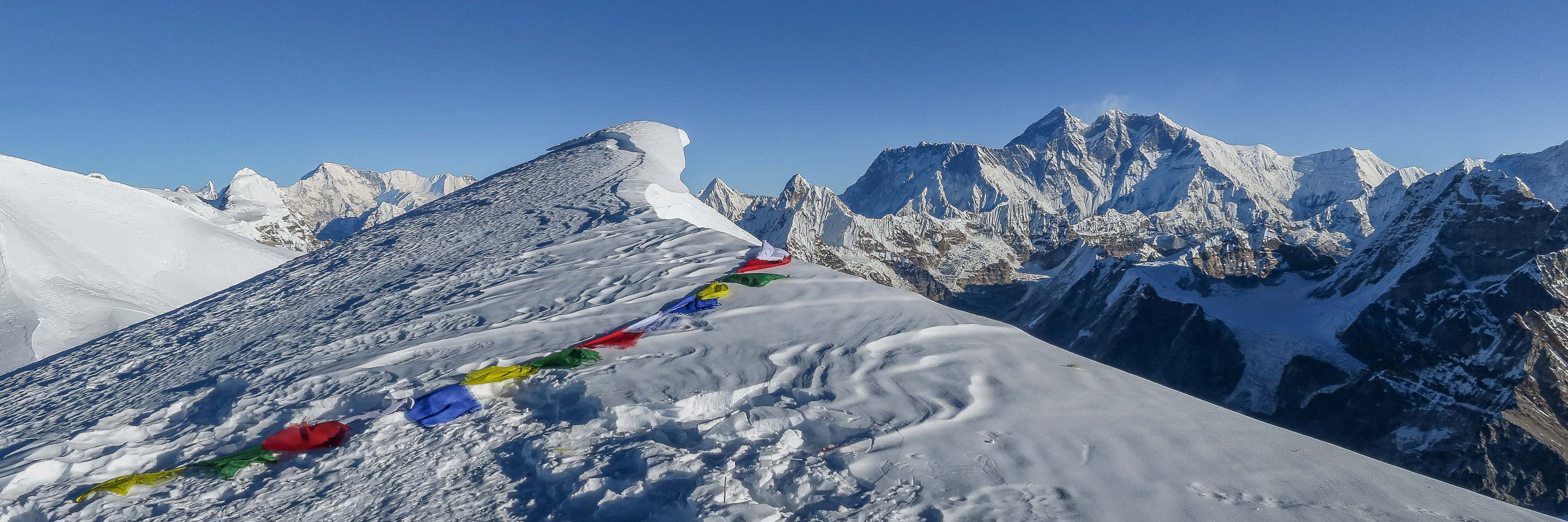
Mera Peak by The Tilman Approach
STANDING IN SPLENDID ISOLATION above the remote and beautiful Hongu and Hinku valleys in north-eastern Nepal, the summit of Mera Peak, 6654m, 21,831 ft, is regarded by many as one of the finest viewpoints in the Himalaya. Listed by the Nepalese authorities as one of the peaks open to attempts by small recreational groups of climbers, and despite being the highest of such peaks available in the Khumbu region, the normal route to the summit via the north ridge is without major technical difficulty.
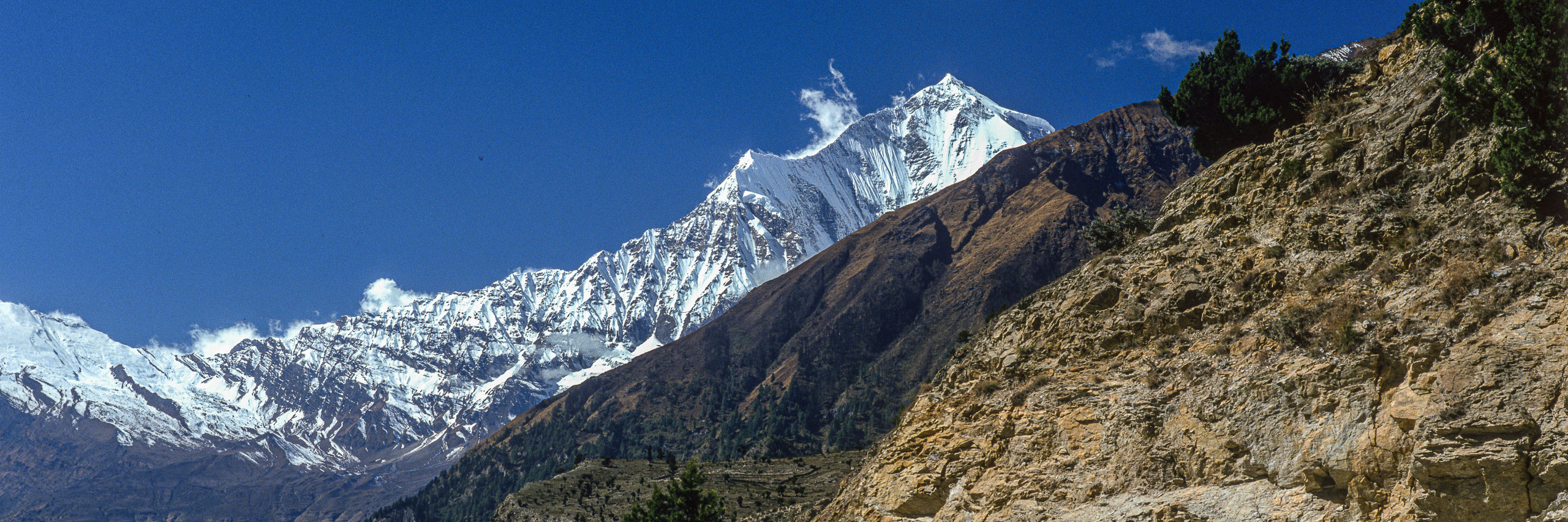
Dhaulagiri - A Circuit of the Great White Mountain
DHAULAGIRI is Nepal’s most westerly 8000 metre peak and one of the really great mountains of the Himalaya. Taking the form of a huge wedge of glistening ice punctuated by pale, steep and seemingly unscalable rock buttresses, its true size and magnificence are best appreciated when viewed from across the Kali Gandaki valley. Standing in solitary and unrivalled splendour, it floats above a sea of haze, apparently dissociated from the world beneath.
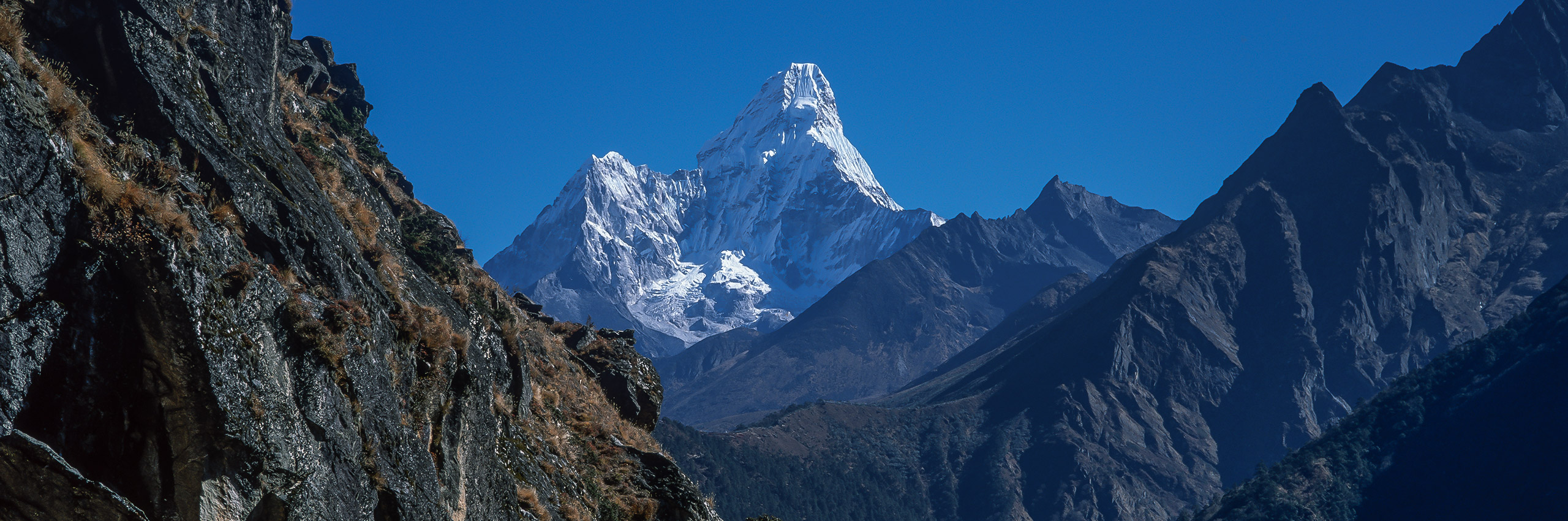
Everest Expedition Route
SINCE THE FIRST ASCENT OF EVEREST nearly seventy-five years ago, thousands of people have trekked through Nepal or Tibet in hopeful anticipation of seeing the world’s highest mountain. Having approached Everest from all sides, there is no doubt in my mind that the trek from Jiri through the foothills of Nepal remains unquestionably one of the finest mountain walks in the world; one which any real lover of mountains could not fail to enjoy. If one is mindful of the significance of Everest in local culture and of its mountaineering history, then the climax of the trip will also be an emotionally charged experience.
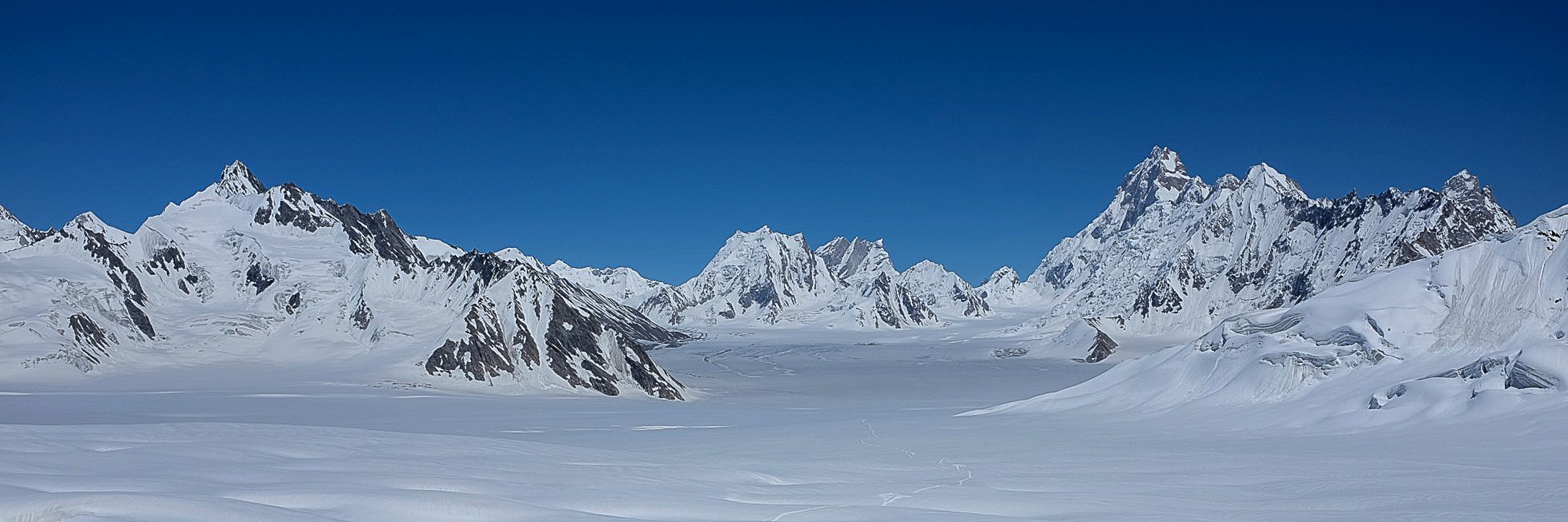
Snow Lake - Karakoram's Glacial Wilderness
STRADDLING THE REMOTE and often troubled border between India and Pakistan, the Karakoram Himalaya is undoubtedly one of the world’s most formidable mountain ranges. Not only does it contain the greatest concentration of the really high mountains of the world, culminating in K2, the world’s second highest mountain, but it also embraces the longest glaciers outside of the polar regions.
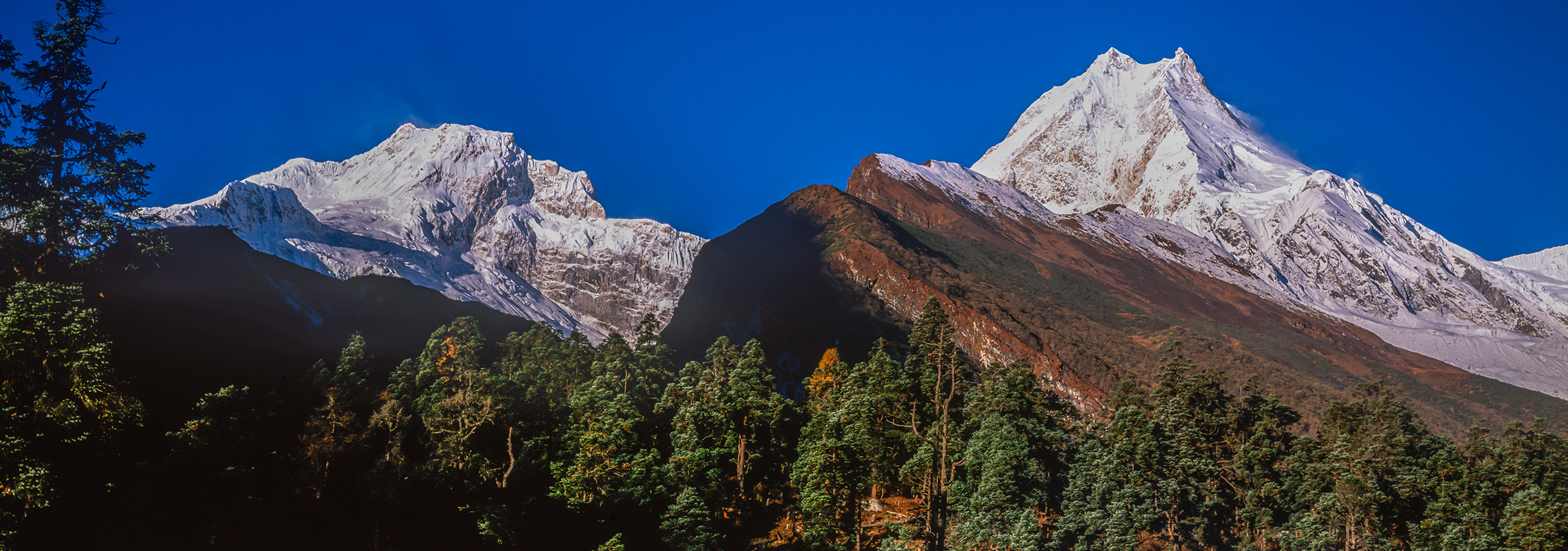
Close Encounters with Manaslu
THE WELL DEFINED and fully documented routes to Everest Base Camp and those around the peaks of the Annapurna range are the obvious magnet for the ‘once in a lifetime’ visitors to Nepal. But the real challenges and experiences are to be enjoyed elsewhere, often in the remoter and undeveloped parts of the country and amidst truly wild and magnificent mountain scenery.
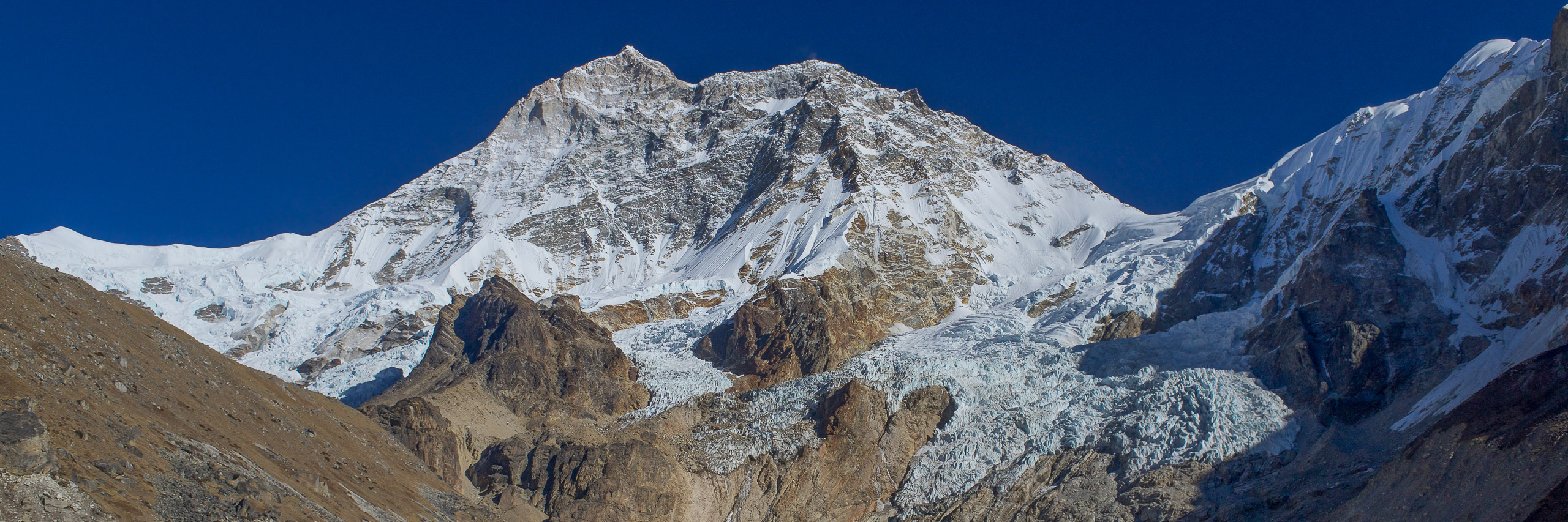
Makalu - East of Everest
THE FINAL OBJECTIVE was almost in sight. I took a momentary glance back down towards the rubble of the lower Barun Glacier and then pressed on towards the small col above. I struggled for every breath, cursing my clumsy body for not keeping pace with my mental impatience. Slowly the ground ahead levelled out and then, from behind a ridge, Makalu finally appeared.
Kangschung - The Secret Side of Everest
THE FAMILIAR FACE OF EVEREST is the one seen from Nepal, where the world’s highest mountain rises above a complex assemblage of high ridges and fine peaks including the attendant summits of Lhotse and Nuptse. But across the border, in the once forbidden land of Tibet, Everest stands in complete and unrivalled supremacy, overlooking expansive valleys of outstanding and contrasting beauty. It was to these northern and eastern flanks of the mountain that I found myself inextricably drawn, lured by the inspirational accounts of tweed-jacketed pioneers in whose footsteps few westerners had followed for almost half a century.