
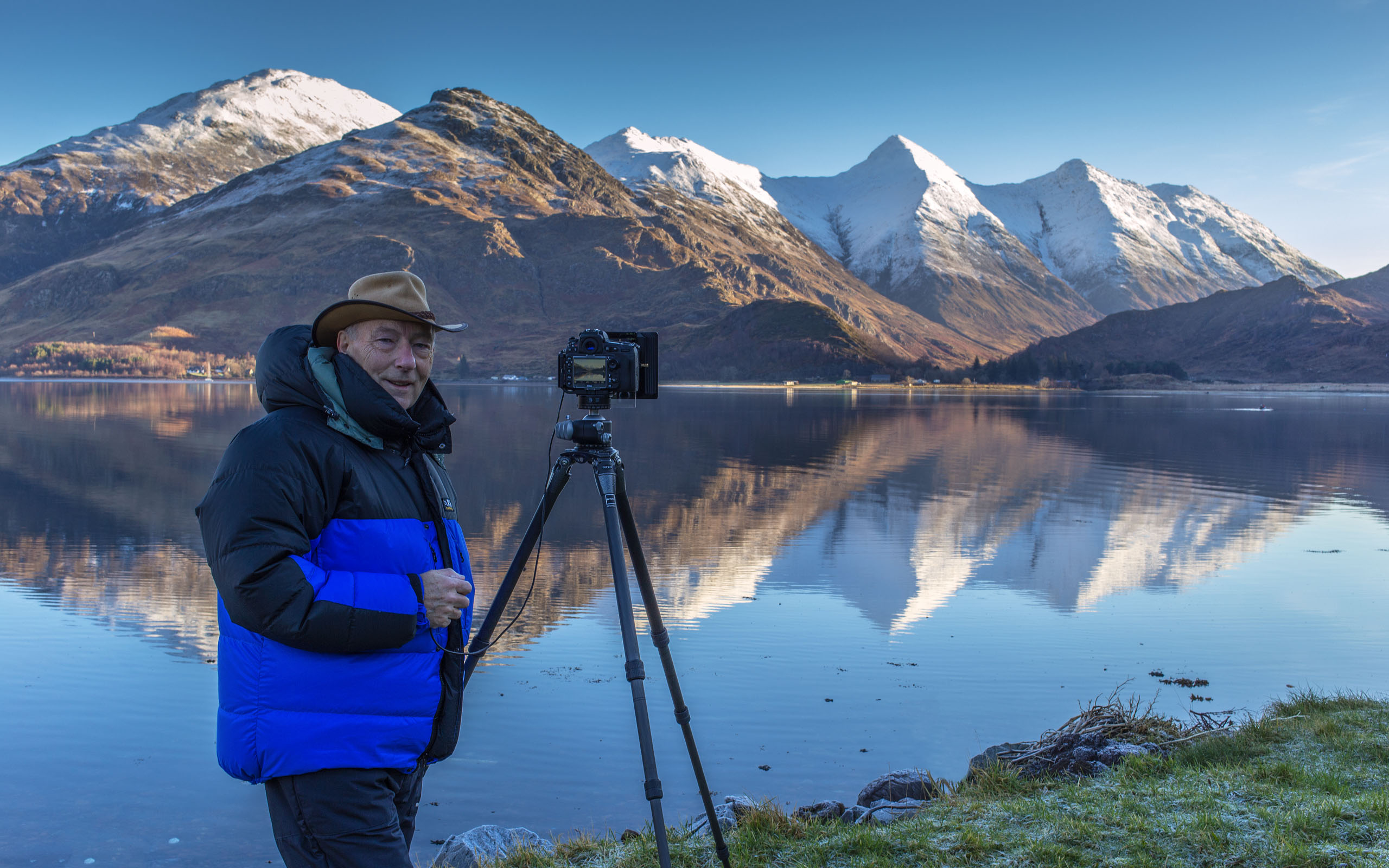

About Ian Evans
Mountain Photographer and Writer
I WAS BORN A SCOUSER and raised and educated in that great city of Liverpool, so an interest in mountain photography seems a far remove from my native heath. It was only when I married Shiela and set up home in North Wales that weekend excursions into the Principality awakened an interest in mountains. Moving to Fort William in 1981 and later to Invermoriston in 2011 has enabled me to enjoy quick and easy access to many of Scotland's finest mountains.
My photographic interests have always been through the perspective of a mountaineer, and were inspired by a wish to capture images of the many remarkable places that I visited on my travels both at home and abroad which, between 1979 and 2016, included twenty-four treks and expeditions to the Himalayan regions of Nepal, Pakistan, India, Sikkim, Tibet and Bhutan.
I do not hold any formal qualification or award in photography, so any skills that I possess are entirely self-taught. In the early years my guide and mentor was W.A. Poucher; his black and white guidebooks were an inspiration to any aspirant photographer, and they provided me with a solid foundation in mountain photography, particularly composition and the changeable nature of mountain light. The importance of light, its characteristics and qualities was further emphasised through my appreciation of the work of the late American mountaineering photographer Galen Rowell, who became the second major influence in the development of my emerging photographic skills.
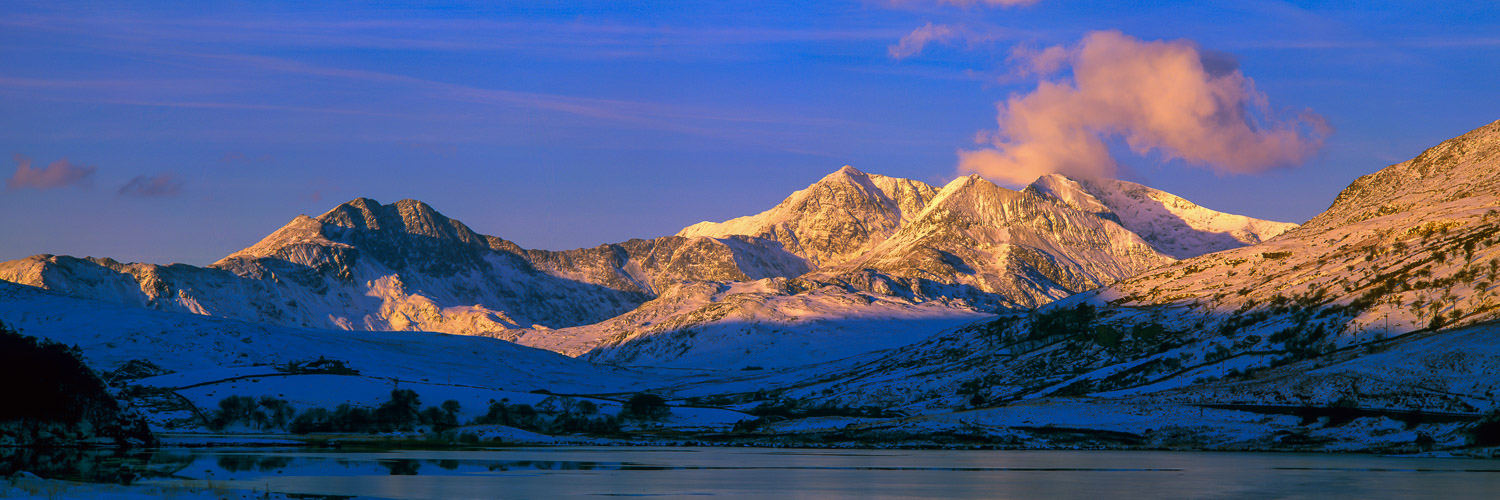
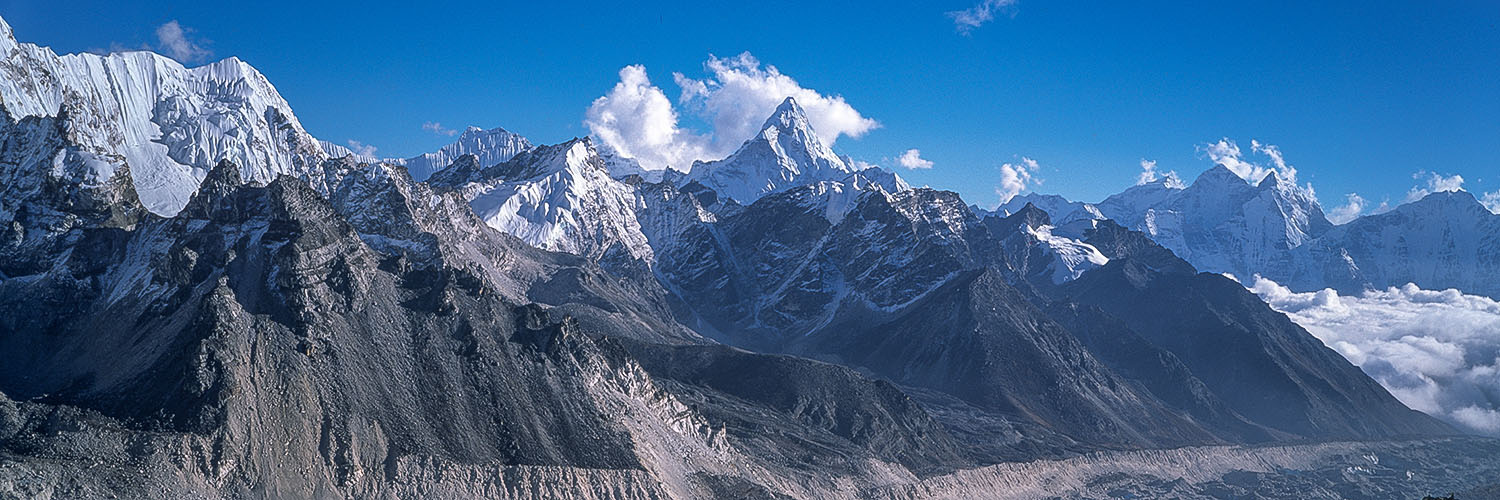
I have worked for most of my life with film cameras of various formats; these have included several Olympus OM 35mm series cameras from the OM1 through to the OM4, the medium format Fuji GA645Zi and Mamiya 6, and finally the challenging panoramic Fuji GX617. I have always held the view that the skill of the accomplished mountain photographer rested in his or her ability to visit a location and obtain a correctly composed and exposed image on site. When working with transparency film there is no means of correcting an image if it is later found to be wanting after the processed film has been returned from the laboratory. The arrival of the digital camera has completely changed this dynamic and made the entire process of mountain and landscape photography more forgiving, less challenging and therefore, I believe, much less rewarding.
That said, I have welcomed the arrival of the digital era for the many benefits and new opportunities that it offers the mountain photographer. My own experiences over the last 25 years with Canon and now Nikon DSLR and mirrorless cameras have demonstrated that the image quality now achievable with today's professional digital cameras and lenses far exceeds that available with film.
However, photographic trends are undergoing continuous and rapid change. In recent years, influenced and driven by the development of ever more sophisticated digital cameras and complex and powerful computer software, a point has now been reached where many photographers, in the preparation of the finished image, will otfen carry out more work in the studio post capture than at the actual location itself.
This has led to the appearance on the market of an avalanche of material that quite simply is contrived, over-manipulated, over-saturated and over-sharpened. I find this alien to my long held beliefs and understanding of what mountain and landscape photography is all about, so I am even more resolved to capture and share images that are both a simple and an honest representation of the view that I encountered on the day that I visited the location.
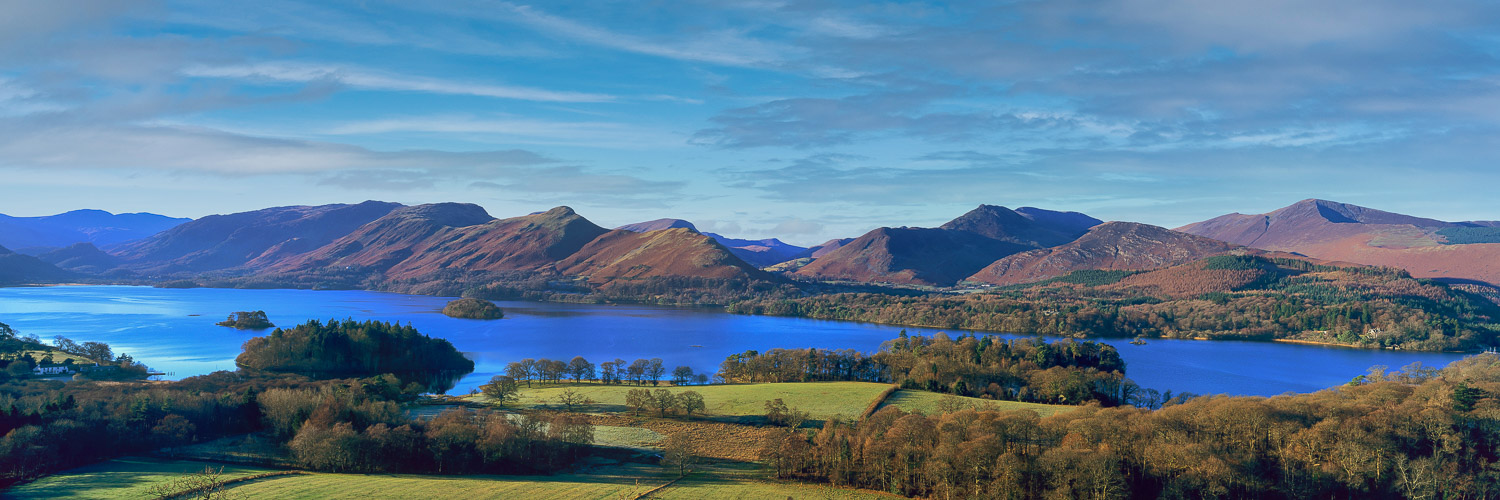
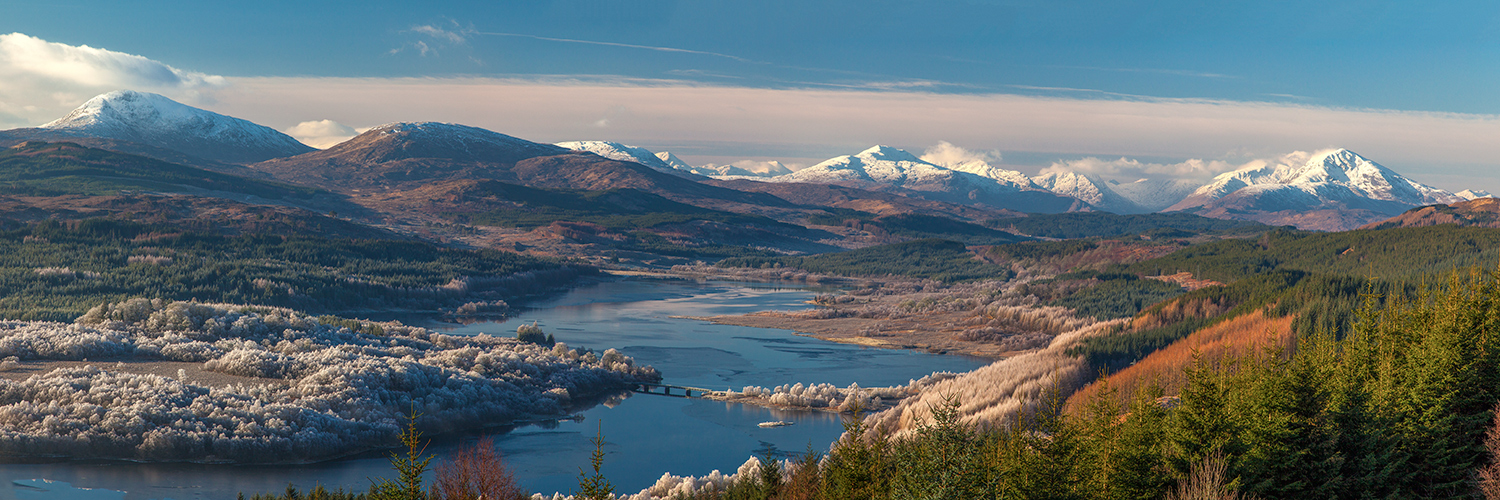
When I am working in Britain, and when given the opportunity, I will always favour and seek out an elevated mountain viewpoint rather than a roadside or valley alternative. Sadly, with advancing years, I have found it necessary to tailor some of my photographic objectives to match my failing ability to carry heavy and complex equipment onto the high mountains; however, my fascination with mountain form and mountain light remains undiminished.
I prefer to shoot at dawn and dusk when the light is usually most colourful and directional. However, this is not always possible and there are occasions when a compromise must be made. That said, except in winter when the sun is always low in the sky, I rarely shoot in the middle of the day.
In the Himalaya one does not always have the same flexibility, so the mountain photographer needs to be able to judge quickly what can be best achieved given the circumstances and conditions that prevail. On a moving trek or expedition there is simply no time to wait for the perfect light nor to seek out alternative compositions. This is when a photographer's experience, skill and intuitive feeling for what works, and what does not, plays a vital role in the process of achieving the perfect image.
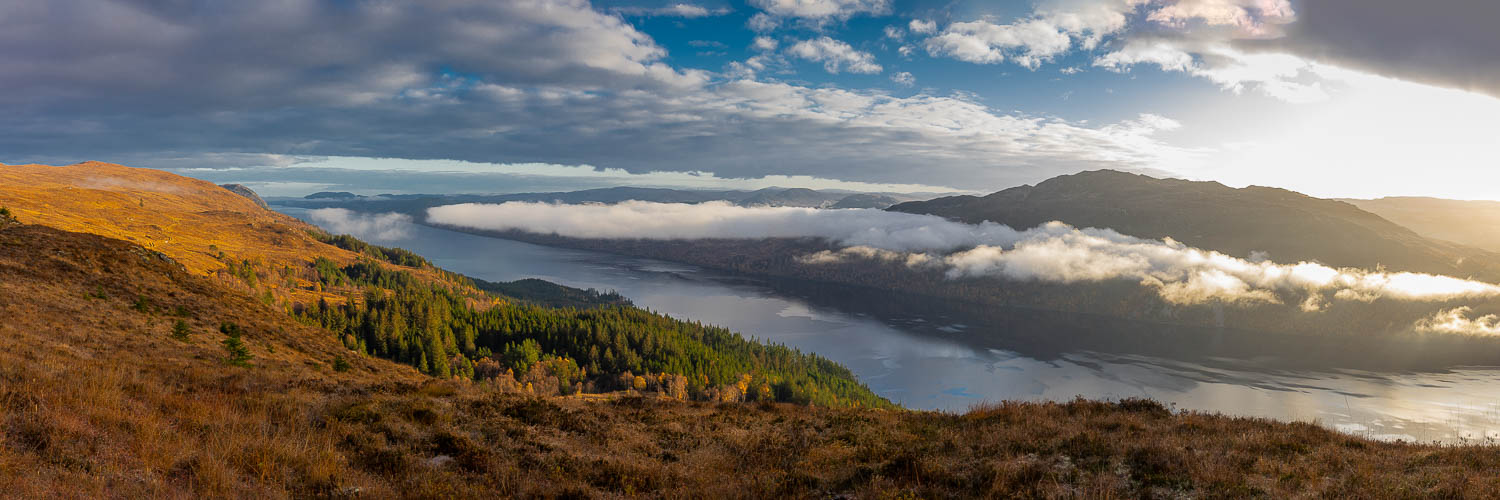
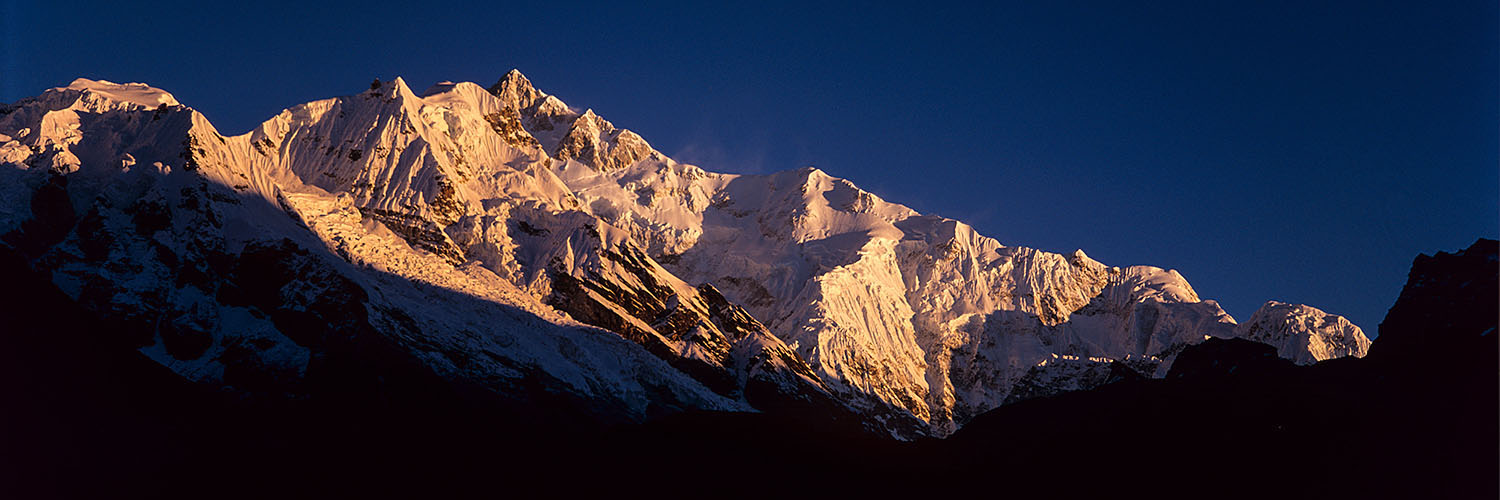
Photography is a very personal vocation; most mountain and landscape photographers are seeking similar objectives but the direction of travel that we each choose to take and the results we achieve as a consequence can be very different. Any assessment as to whether we have succeeded or failed is always very subjective and can be judged either by the perceived standards of others or those we set ourselves.
My motivation has always been to capture simple but stunning images of mountains and mountain landscapes and to share them in a manner that actively encourages the viewer to appreciate, to respect, to value and, above all, to protect this very precious, fragile and now steadily disappearing wilderness.
Whether or not I have achieved this objective, I shall leave it to you, the visitor to this website, to decide !