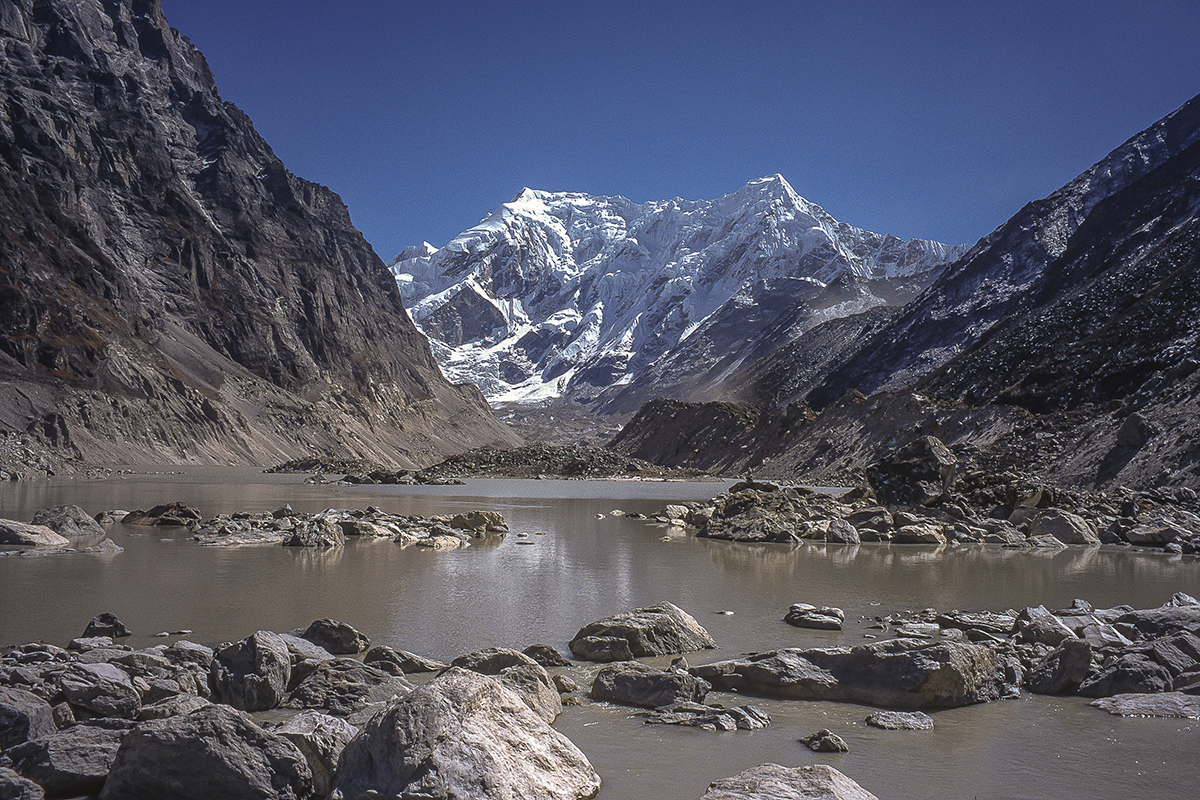
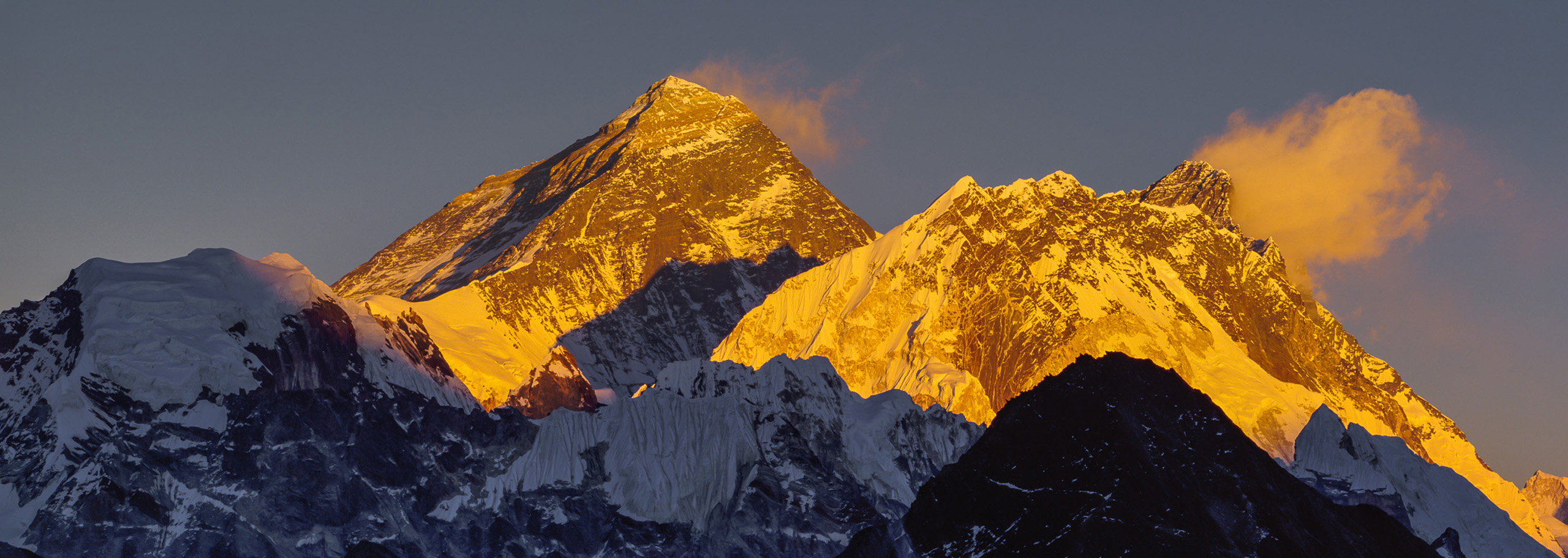

The Himalaya and Karakoram
Images of the Mountains of The Himalaya and Karakoram
The Himalayas, tall snow-capped and seemingly inaccessible summits that rise up into a cold breathless air from a land bathed in mystique and religious devotion. Literally translated as ‘Abode of Snow’ the name applies to the great mountain system of Asia separating the Indian subcontinent from the Tibetan Plateau.
The Himalayas consist predominantly of sedimentary and metamorphic rocks; lifted by the subduction of the Indian tectonic plate, the range runs north-west to south-east in an arc of over fifteen hundred miles from the peak of Nanga Parbat, 8126m., (26,661 ft.) in northern Pakistan to Namcha Barwa, 7782m., (25,532 ft.) in the state of Arunachal Pradesh in far eastern India. This core Himalaya is bordered on the north-west by the Karakoram which is often included in what is loosely called the ‘Greater Himalaya’.
The Himalayas are spread across five countries: Nepal, India, Bhutan, China (including the automonous region of Tibet) and Pakistan, and support most of the world’s tallest peaks including Everest, standing at 8,848 metres (28,029 ft) above sea level.
There are thirteen other distinct peaks rising to above 8,000 metres (26,248 ft), seven in Nepal, five in Pakistan and one entirely within the borders of Tibet. In addition there are over fifty peaks exceeding 7,200 metres (23,600 ft).
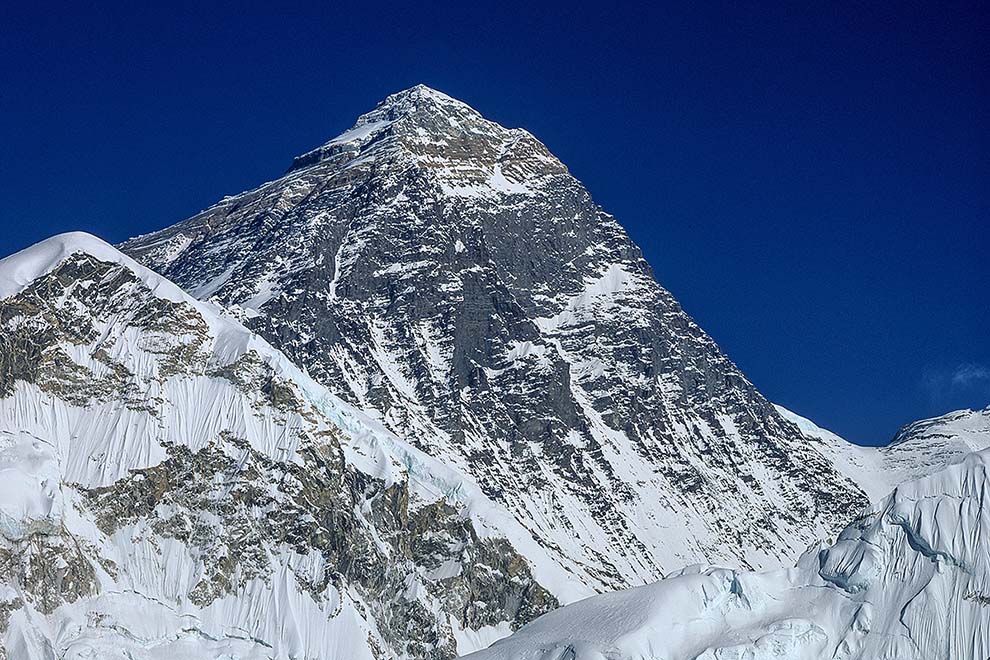
Everest
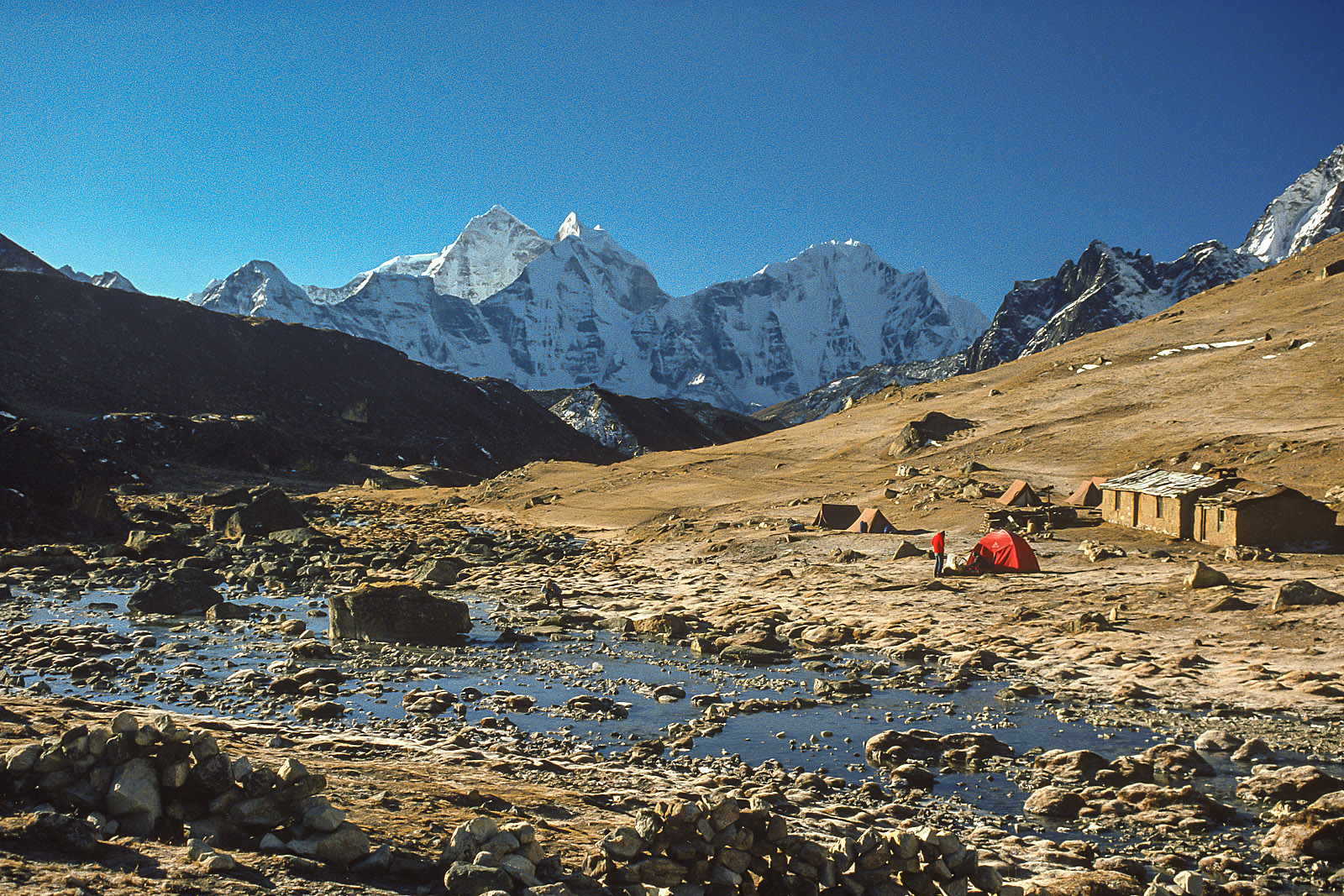
The Khumbu Himalaya, Nepal
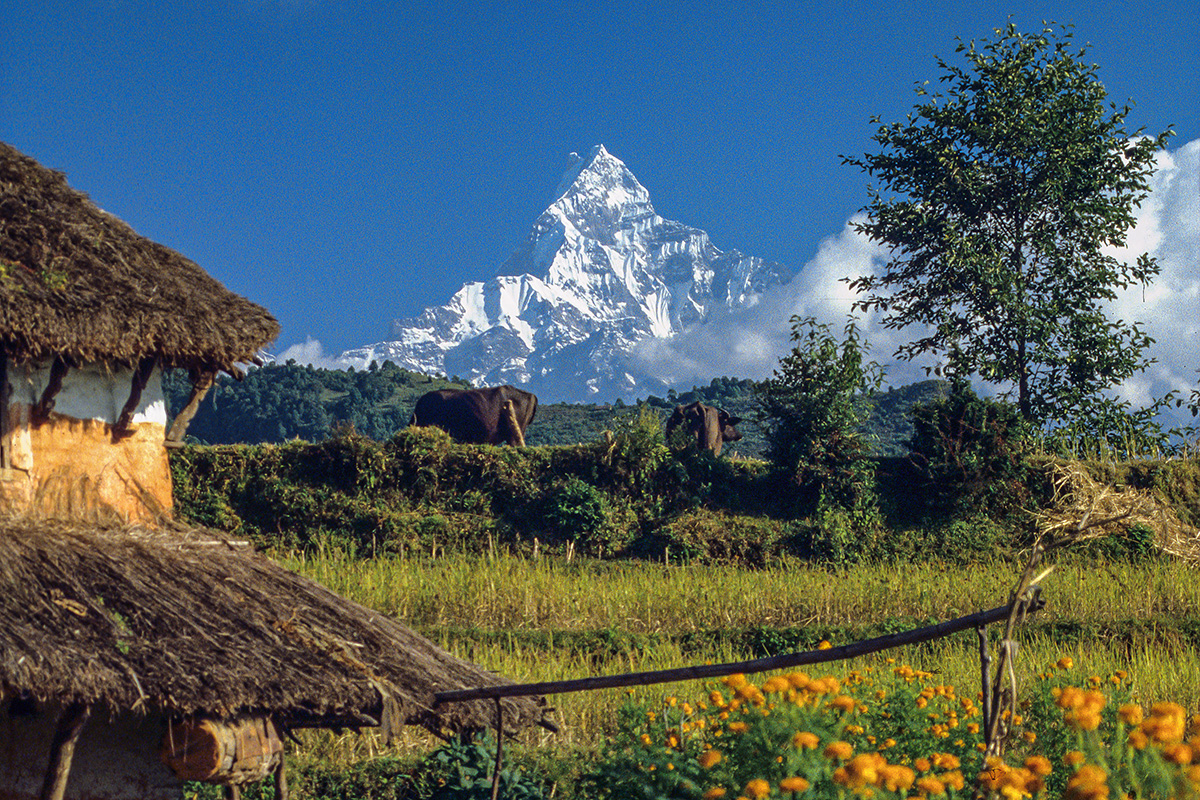
The Annapurna Himalaya, Nepal
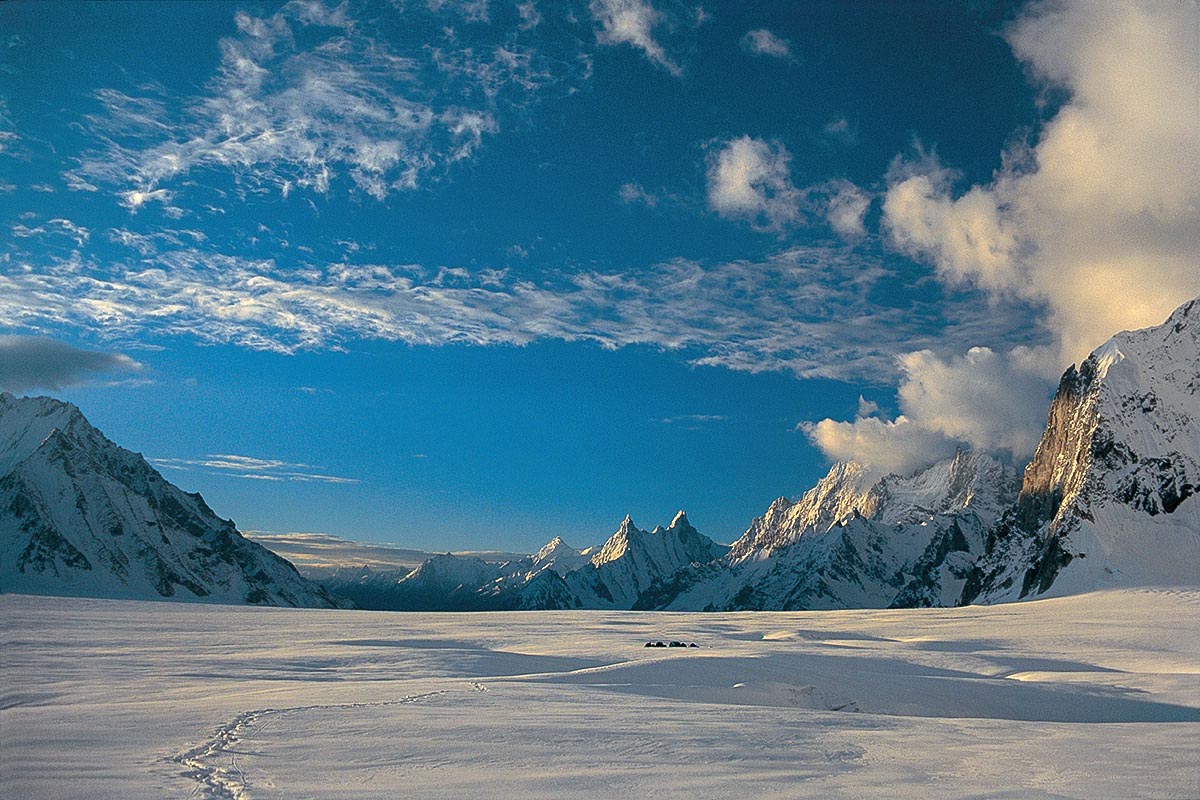
The Biafo-Hispar Mustagh, Karakoram Himalaya
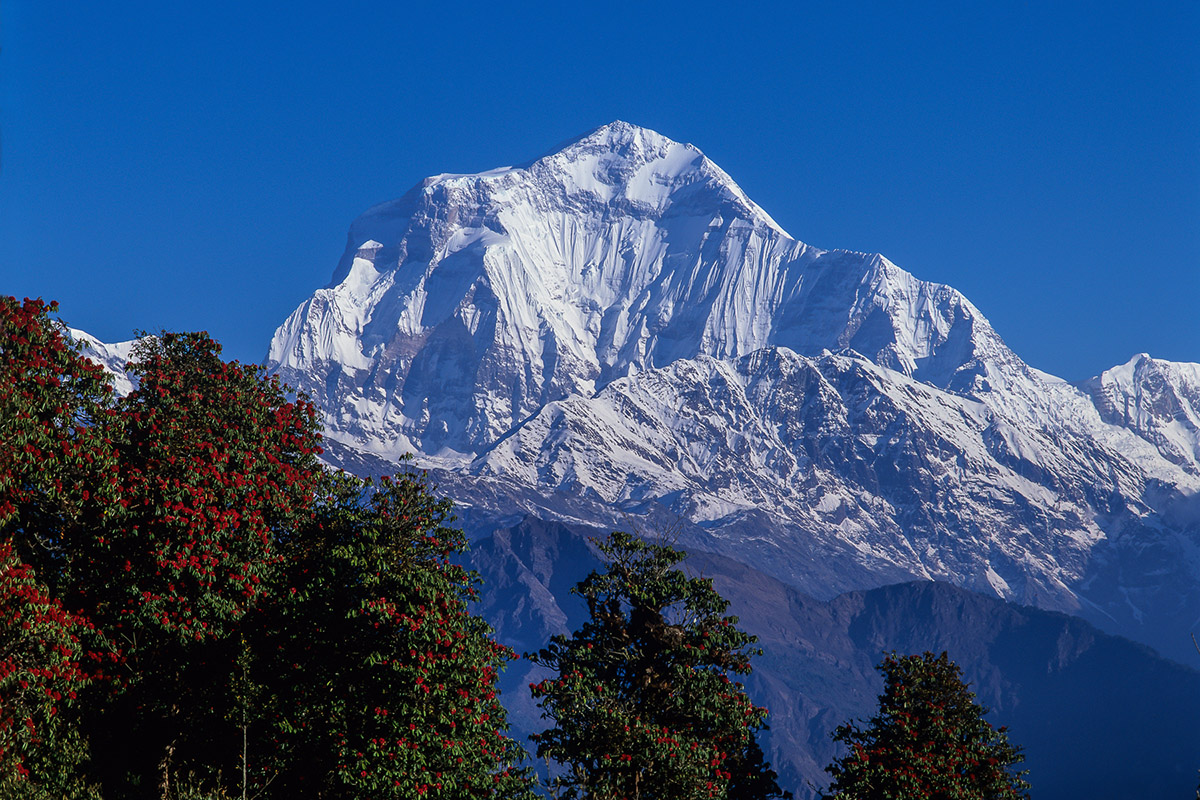
The Dhaulagiri Himalaya, Nepal
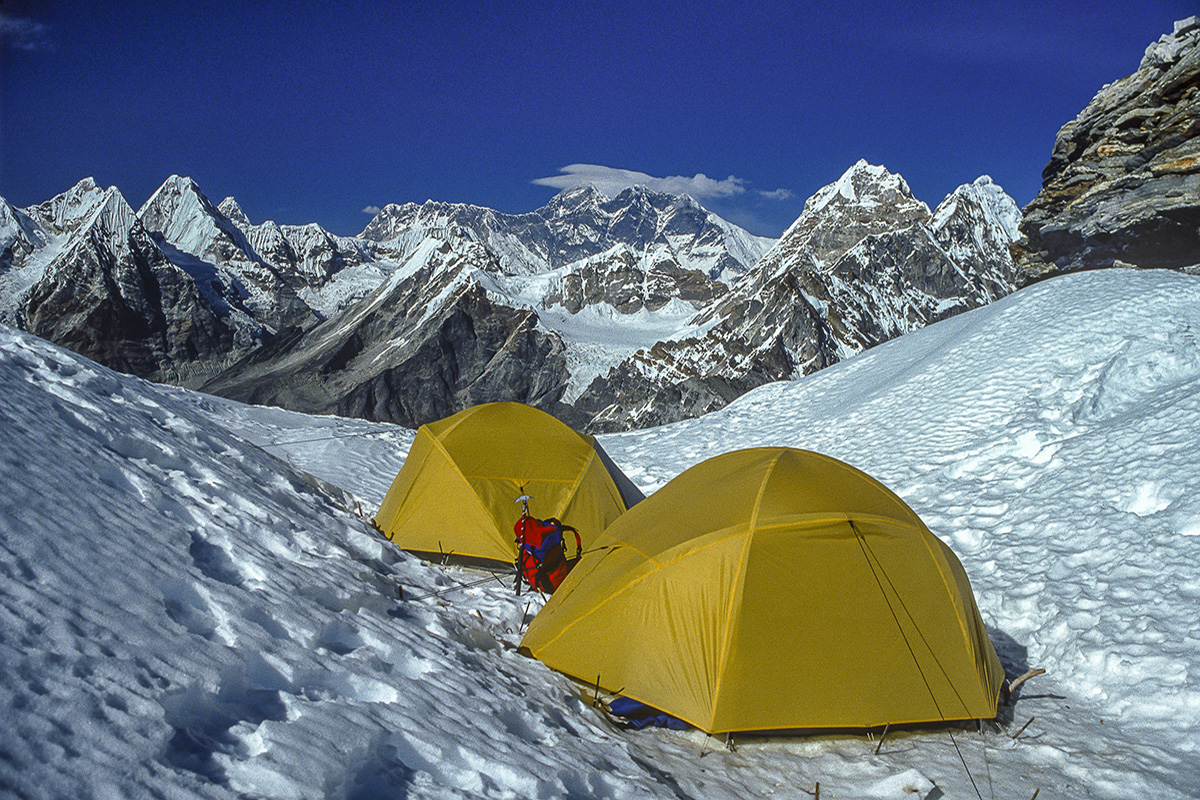
The Hinku Himalaya and Mera Peak, Nepal
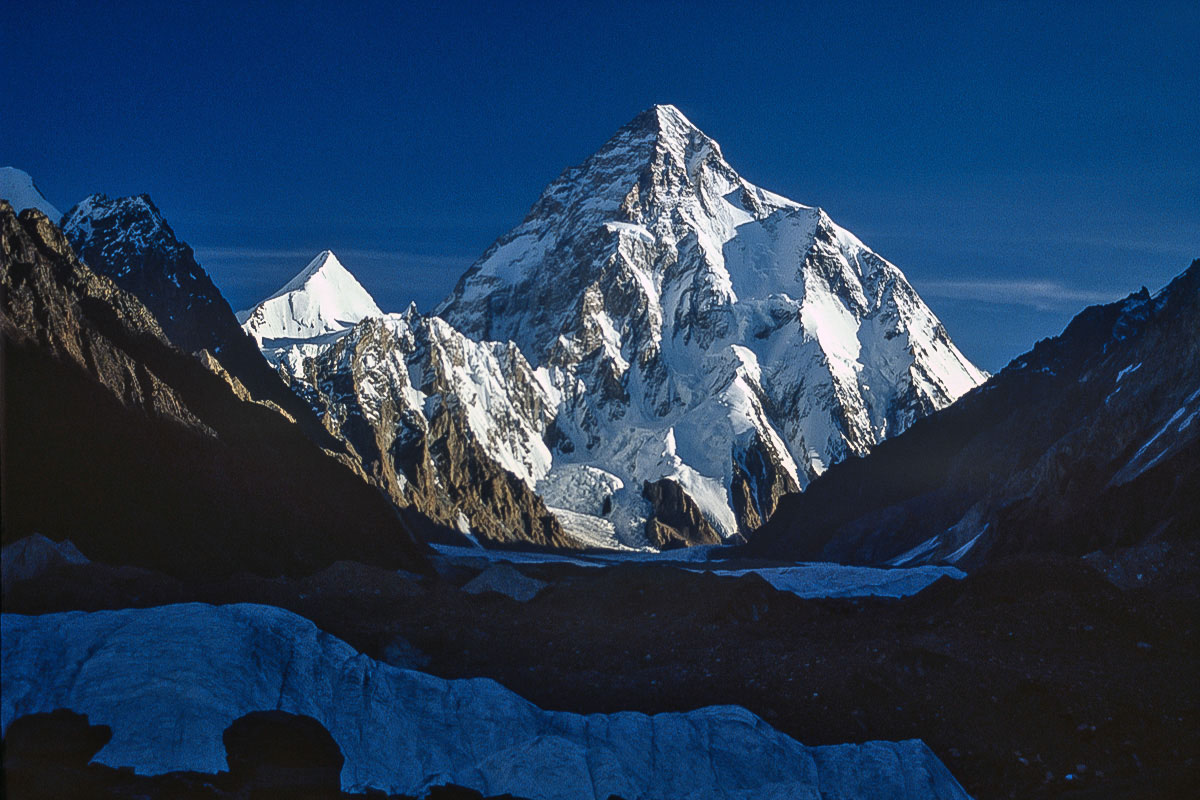
The Baltoro Mustagh and K2, Karakoram Himalaya
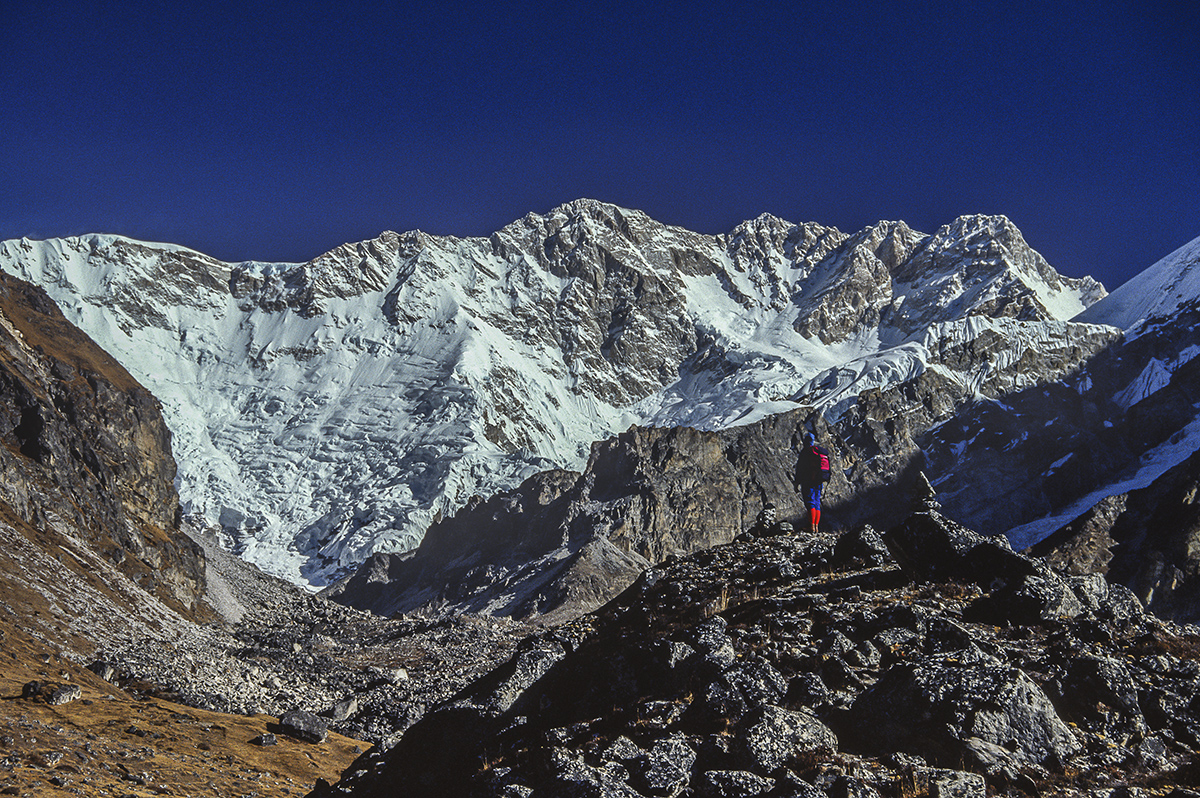
The Kangchenjunga Himalaya, Nepal and Sikkim
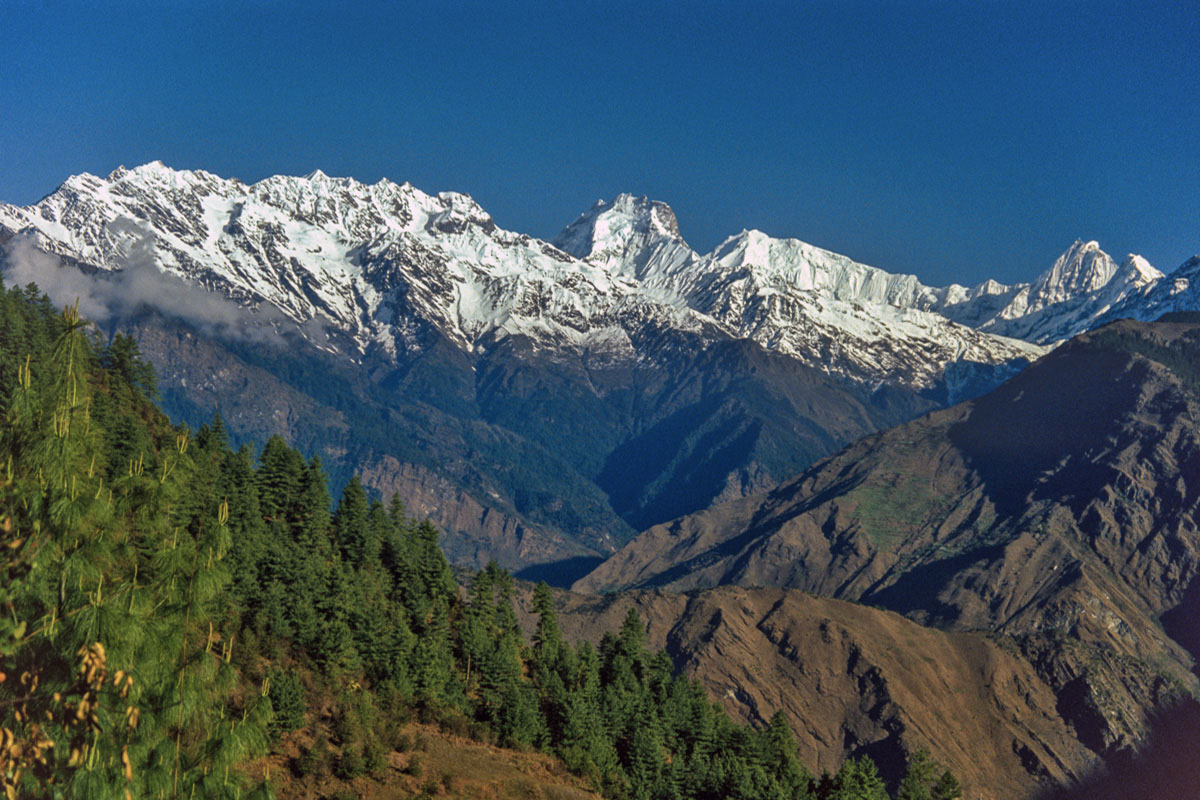
The Langtang and Ganesh Himalaya, Nepal
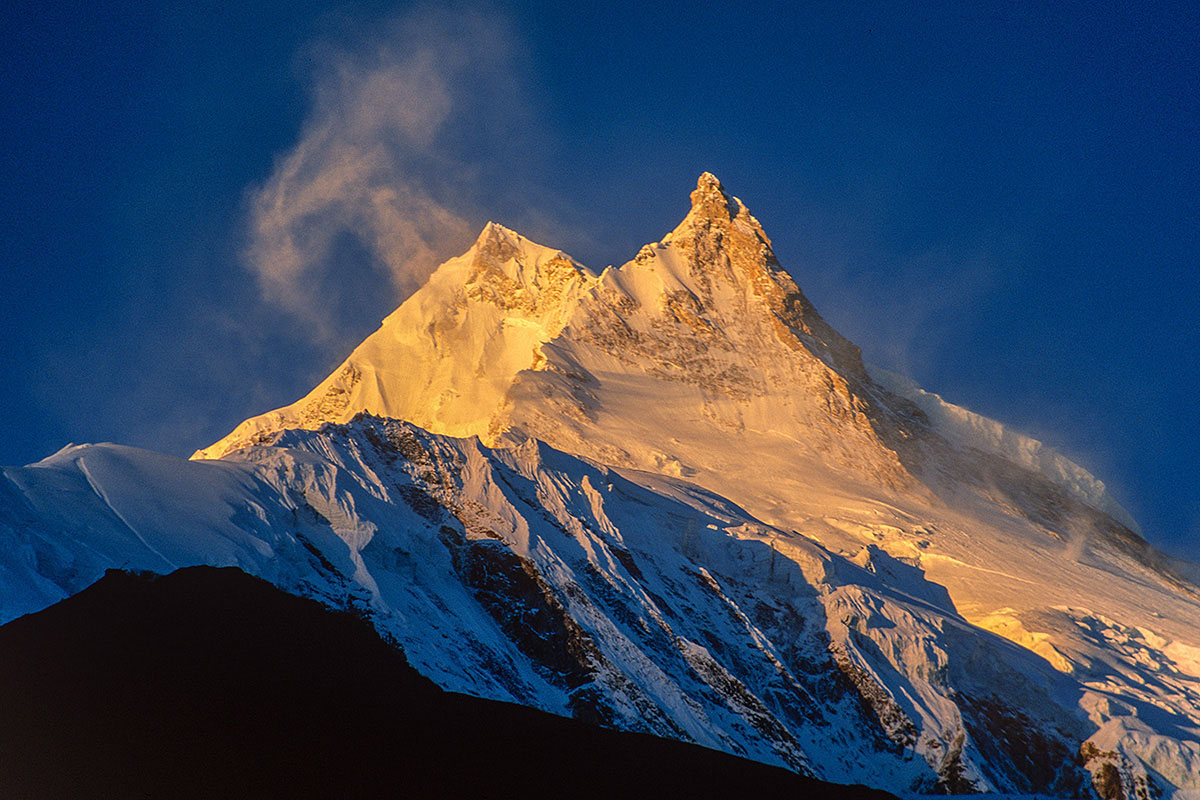
The Manaslu Himalaya, Nepal
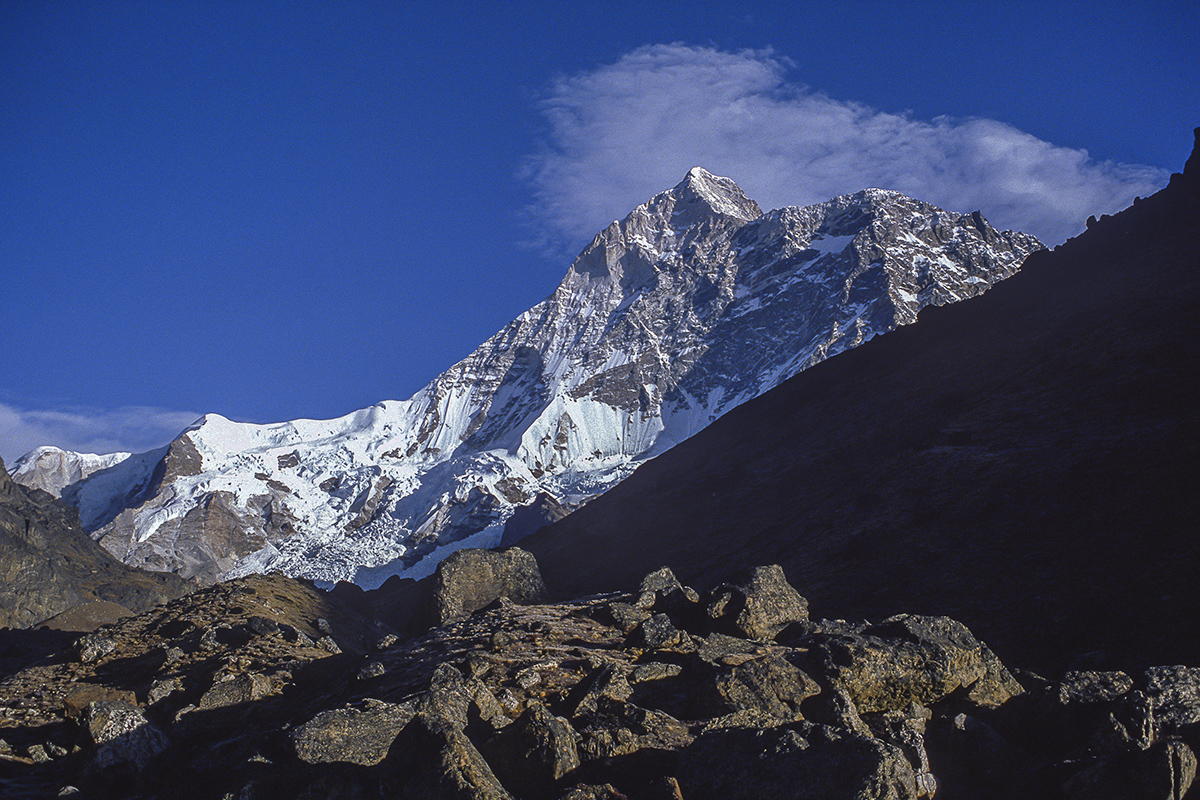
The Makalu Himalaya, Nepal