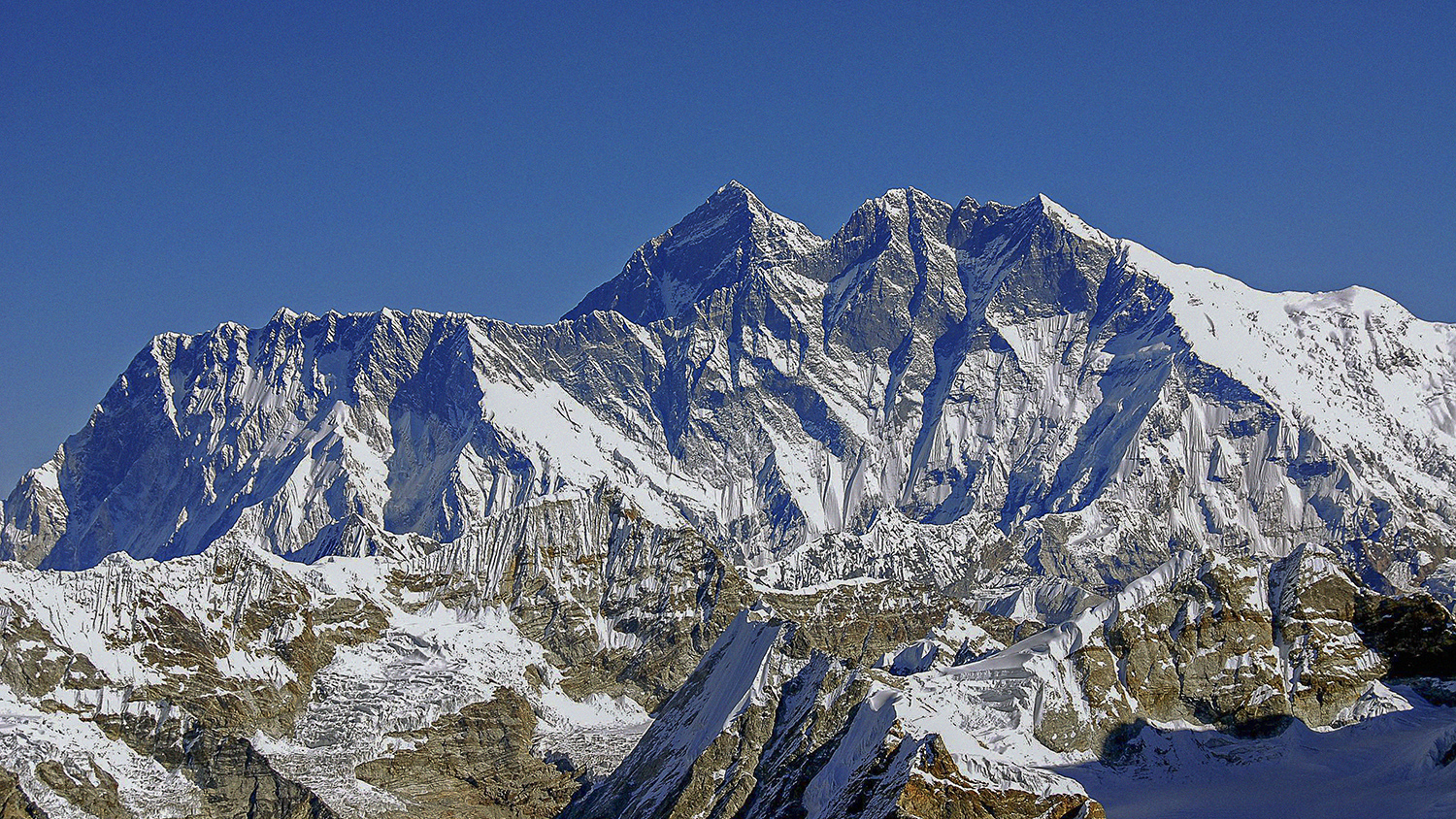
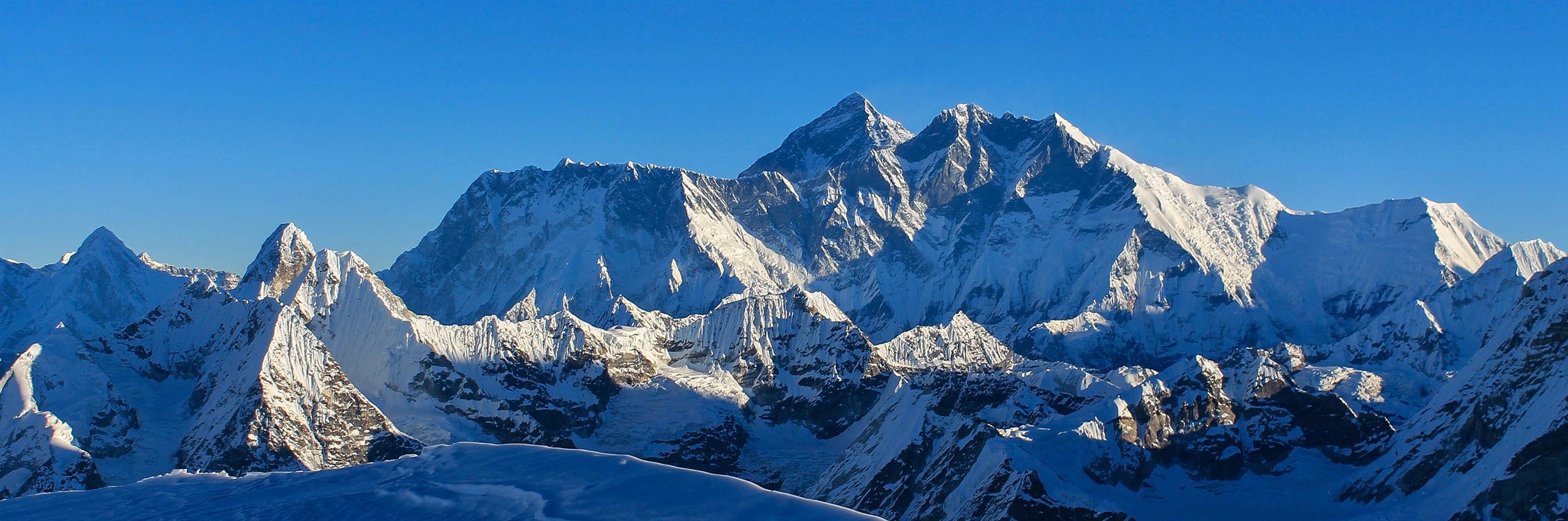

The Hinku Himalaya and Mera Peak
Photographs of the Hinku Himalaya and Mera Peak
Access from the west is best achieved via the 3,173 metre high Pangkongma La, a better and probably safer route than the considerably higher and steeper 4,900 metre Zatrawa La. In 1988 I pioneered a way from the east using an old and traditional trading route originating in the Arun Valley that crosses the Hongu Valley and the Salpa and then Surkie La Passes. This trail eventually carries on west to Lukla, The Khumbu and eventually Jiri and the Khumbu via the Pangkogma La, but to reach the upper sections of the Hinku Valley the way turns north to the Panch Pokhri lakes before descending steeply to the Hinku valley floor at Mosum Kharka.
The Hinku Valley is overloooked by several interesting and attractive summits all rising in excess of 6,000 metres. The twin summits of Kossum Kangurru, 6,373 metres (20,910 ft) rise high above the tea houses at Tagnag, but are nowhere near as impressive as they are when seen from the Dudh Kosi, which is in stark contrast to Tagnagtse (aka Peak 43), 6,770 metres (22,212 ft) that dominates the valley from all directions. However, of all the many fine peaks hereabouts, the one generating the most interest is Mera. Classified as a trekking peak, it comprises three distinct summits, Mera North, 6,476 metres (21,247 ft); Mera Central, 6,461 metres (21,198 ft); and Mera South, 6,065 metres (19,898 ft).
The first ascent of Mera Central was on May 20, 1953 by Colonel Jimmy Roberts and Sen Tenzing Sherpa and the standard route from the north involves high-altitude glacier walking from a base at Khare. The way climbs onto the Mera La, then on and up over a crevassed glacier with superb views of Thamserku, Kangtaiga, Cho Oyu and the Gokyo Valley beyond. An attack camp is usually established on a rocky platform that separates the Mera and Nau Lekh glaciers and the ascent competed on a second day. The final section continues over ever the steepening glacier and a minor bergschrund to a broad summit platform. The panoramic vista from the summit is regarded as one of the finest in the Himalaya and contains no less than five 8,000 metre peaks, the highest mountains in the world, Everest, Lhotse, Makalu, Cho Oyu and Kangchenjunga.
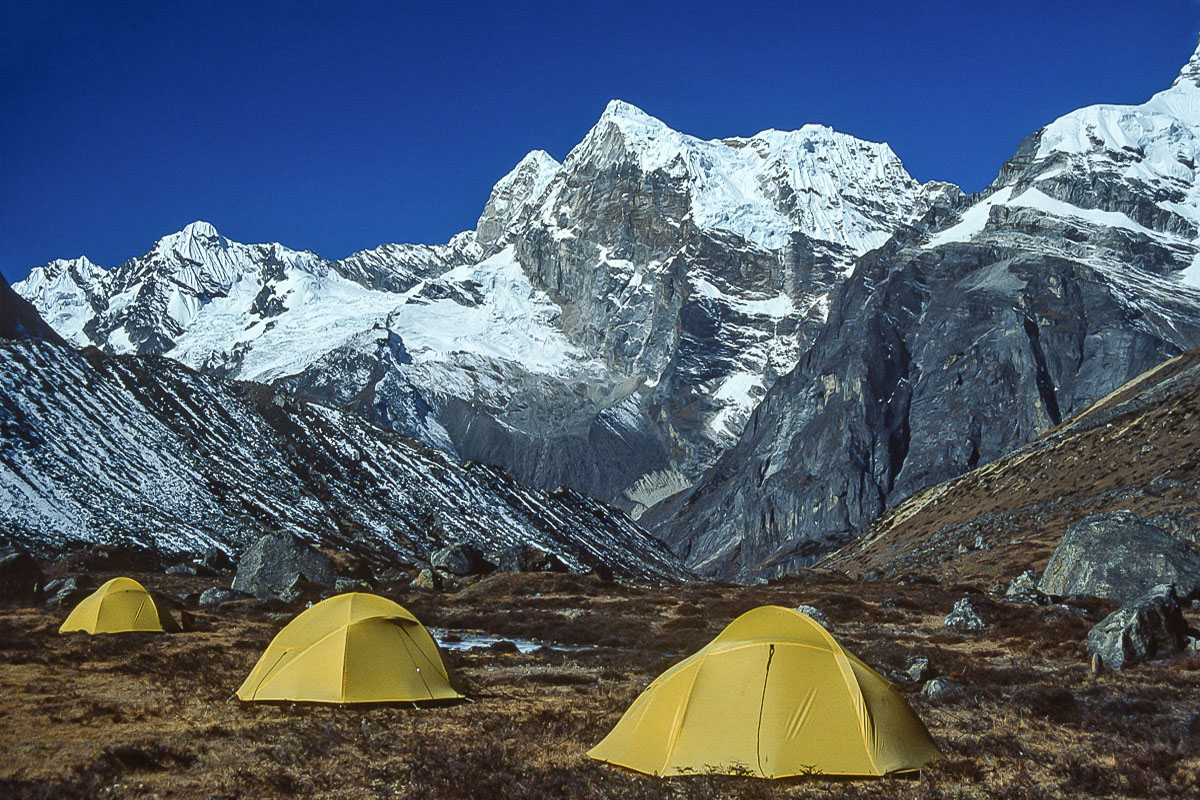
Kossum Kang from Dig Kharka
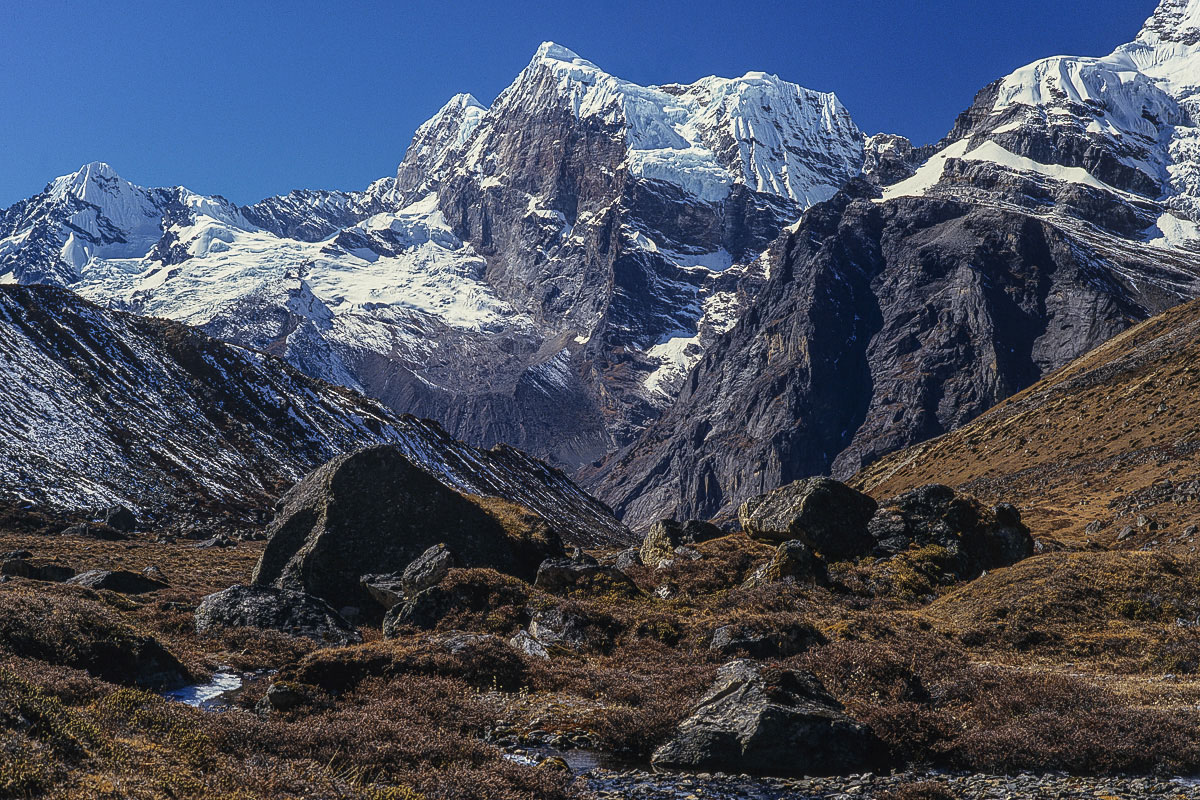
Kossum Kang from Dig Kharka
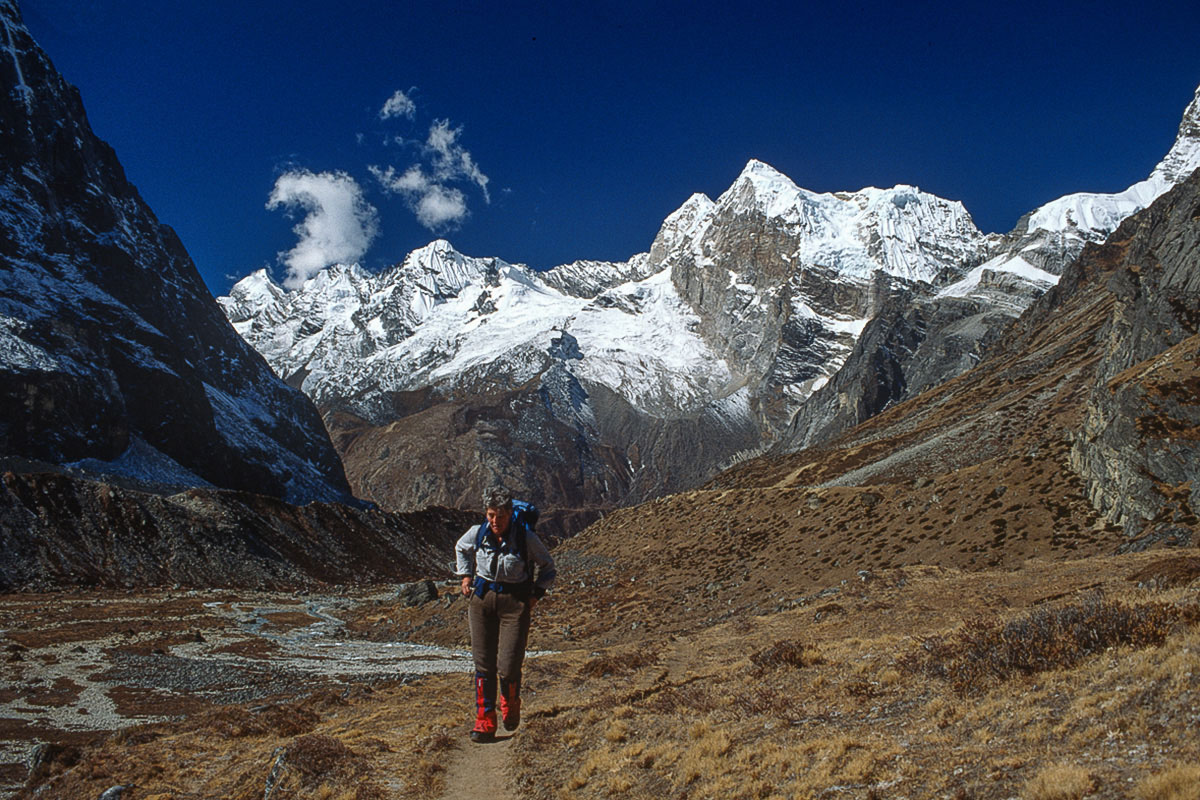
Kossum Kang from above Tagnag

The Mera La from Dig Kharka
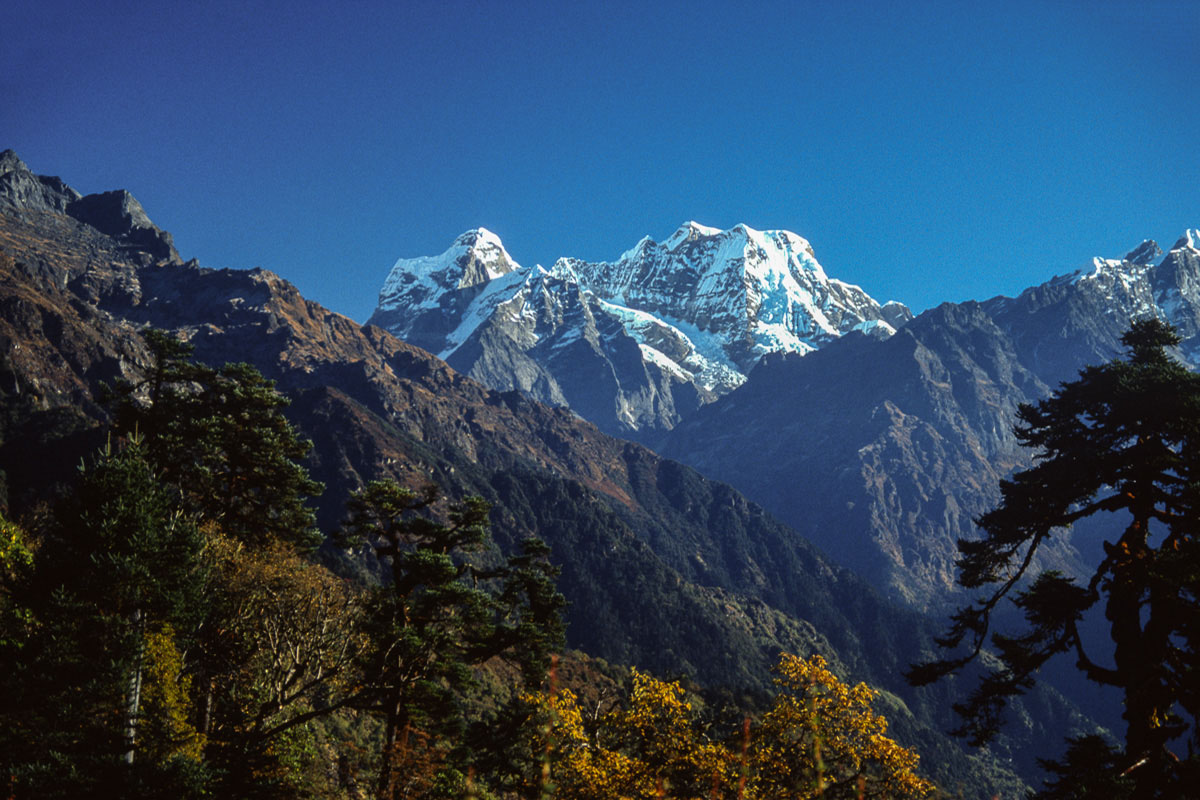
Mera Peak from the Zattara Danda
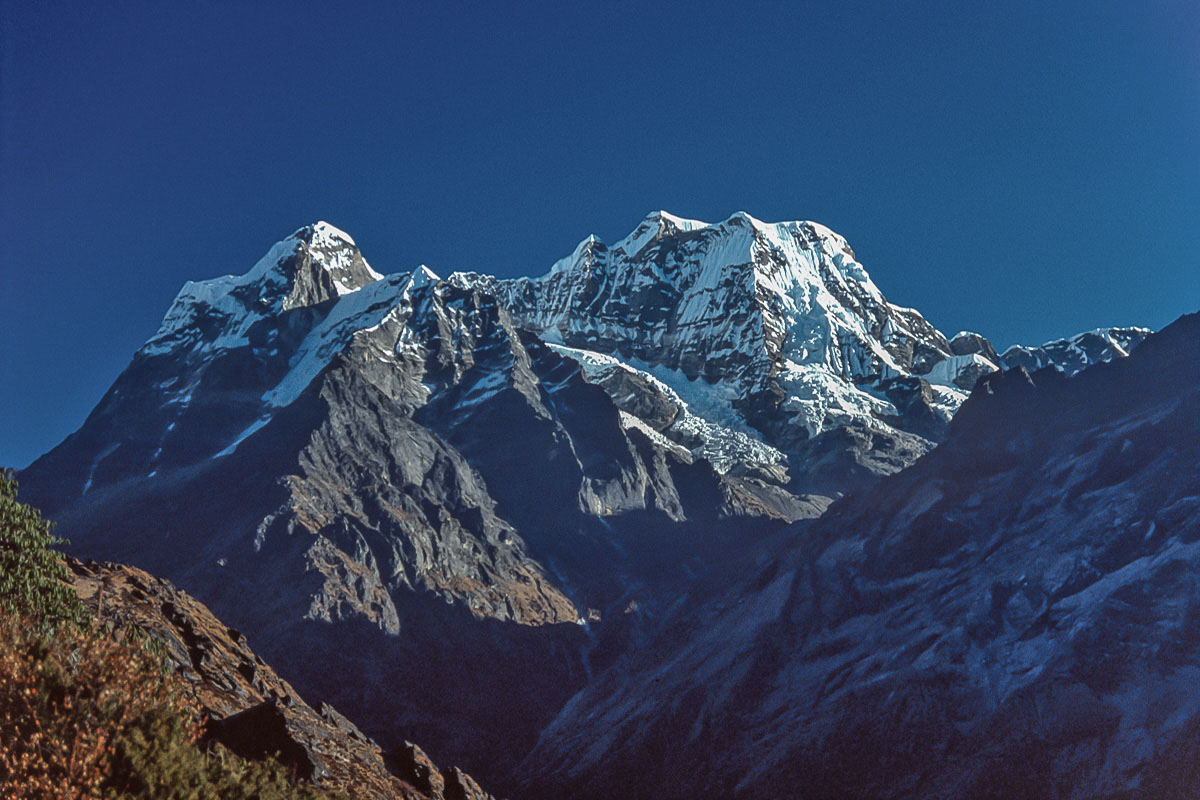
Mera Peak from the Zattara Danda
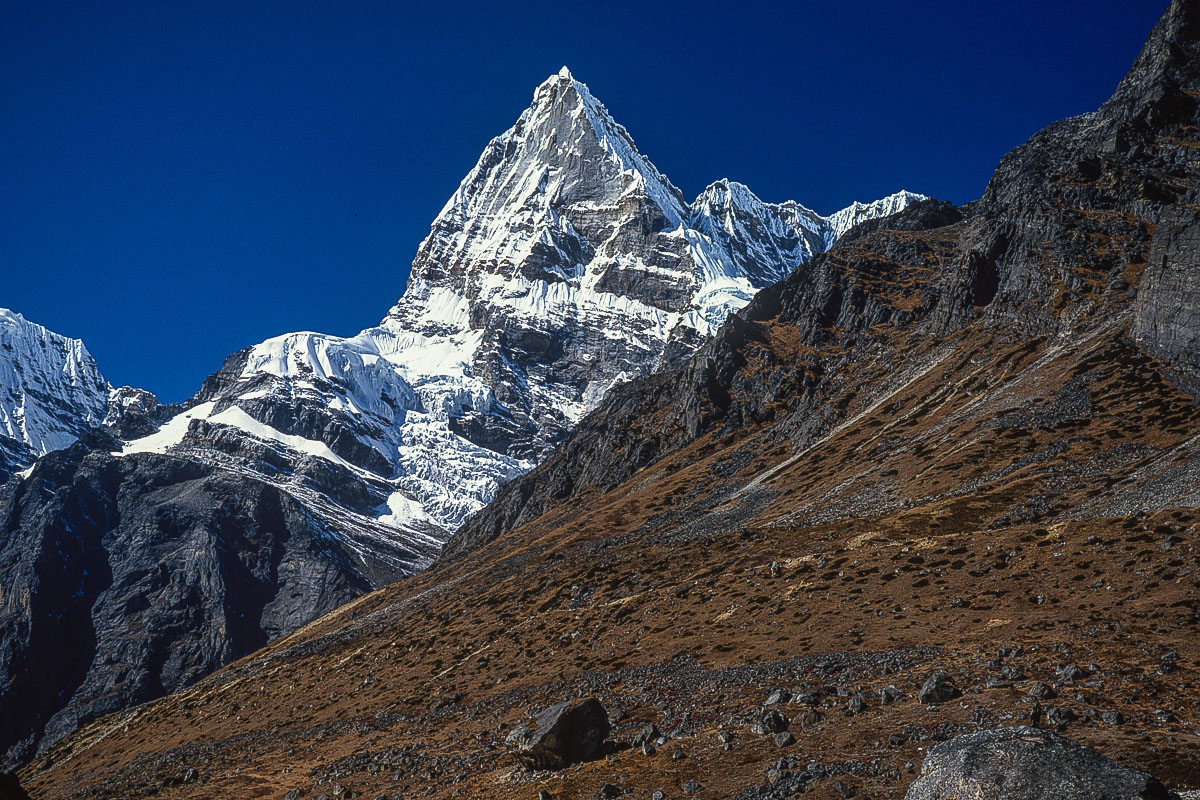
Tagnagtse Peak from Dig Kharka
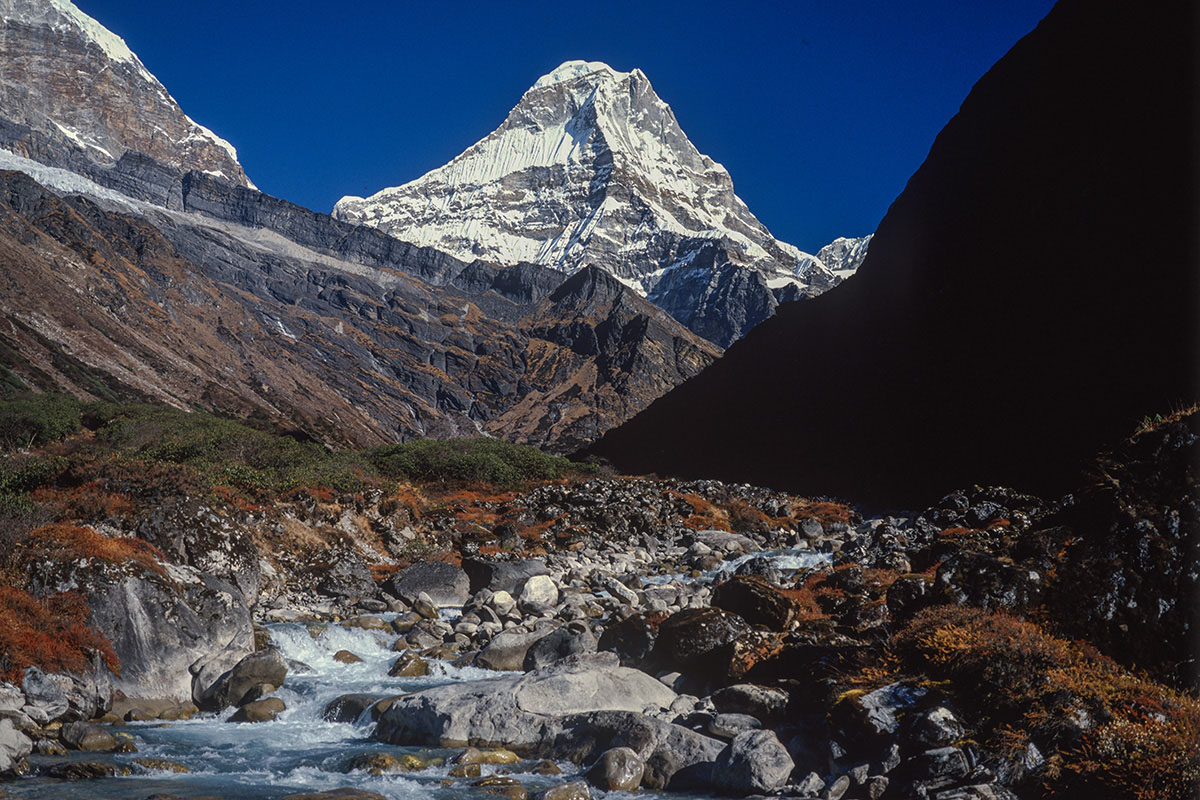
Tagnagtse Peak from Mosum Kharka
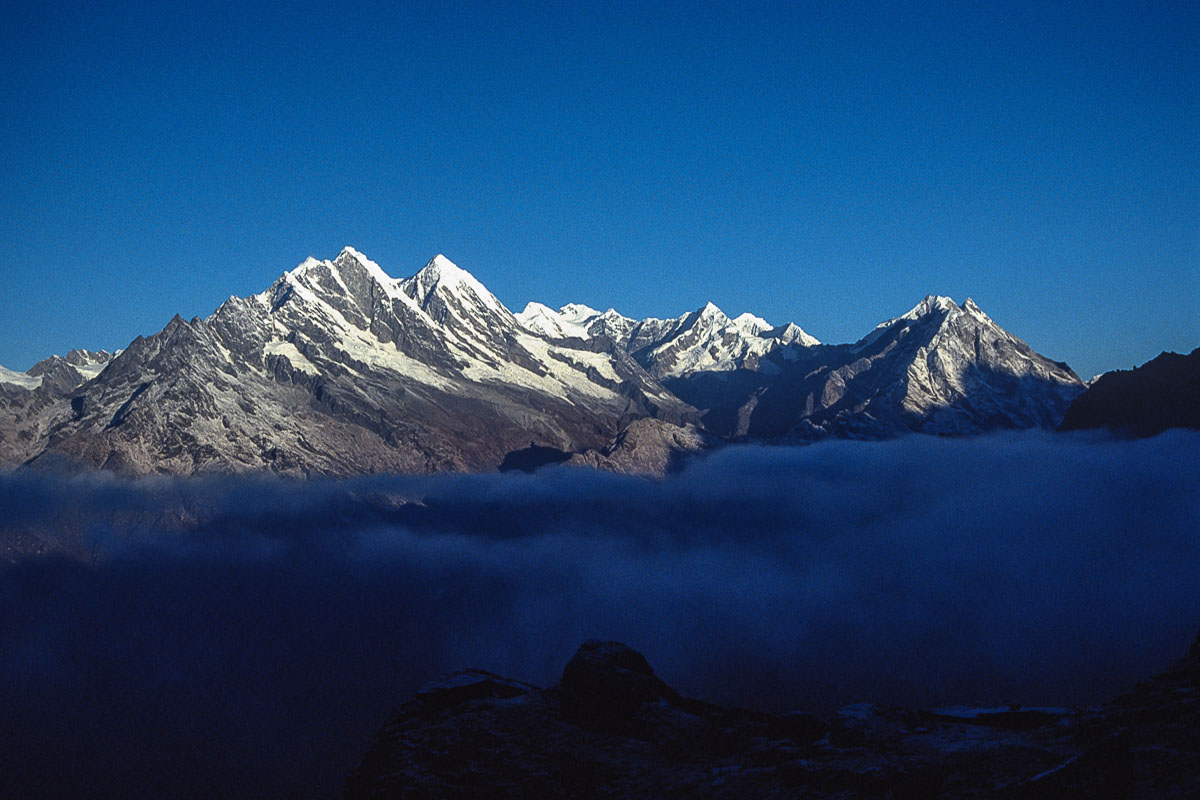
The Rolwaling Himal from the Zattara Danda
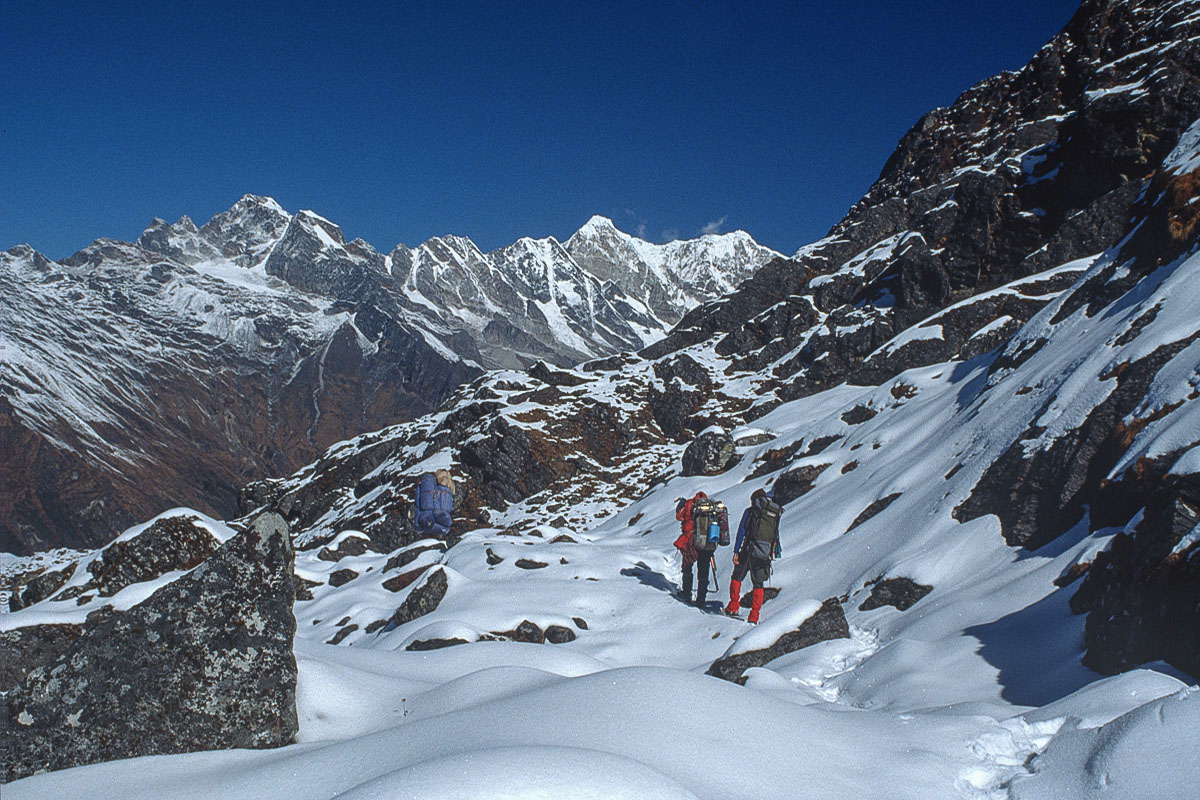
The Hinku Valley from the Surkie Danda
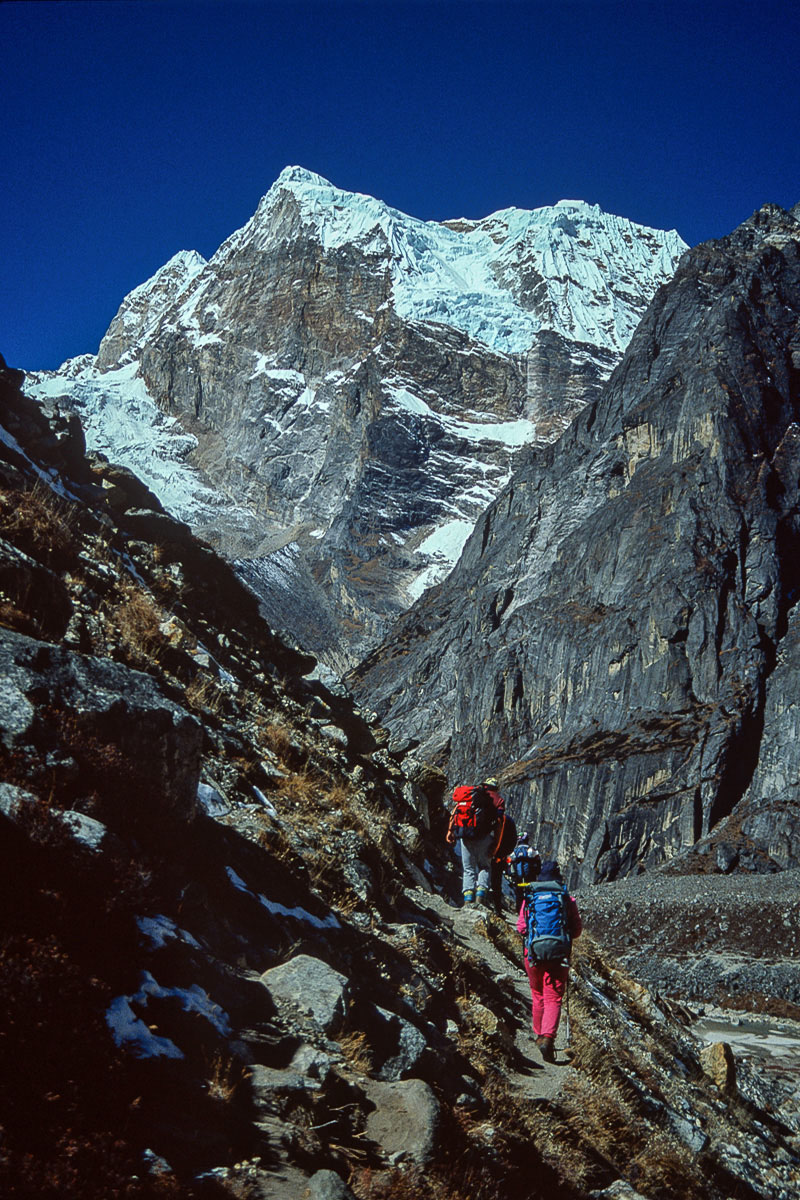
Kossum Kang from Dig Kharka
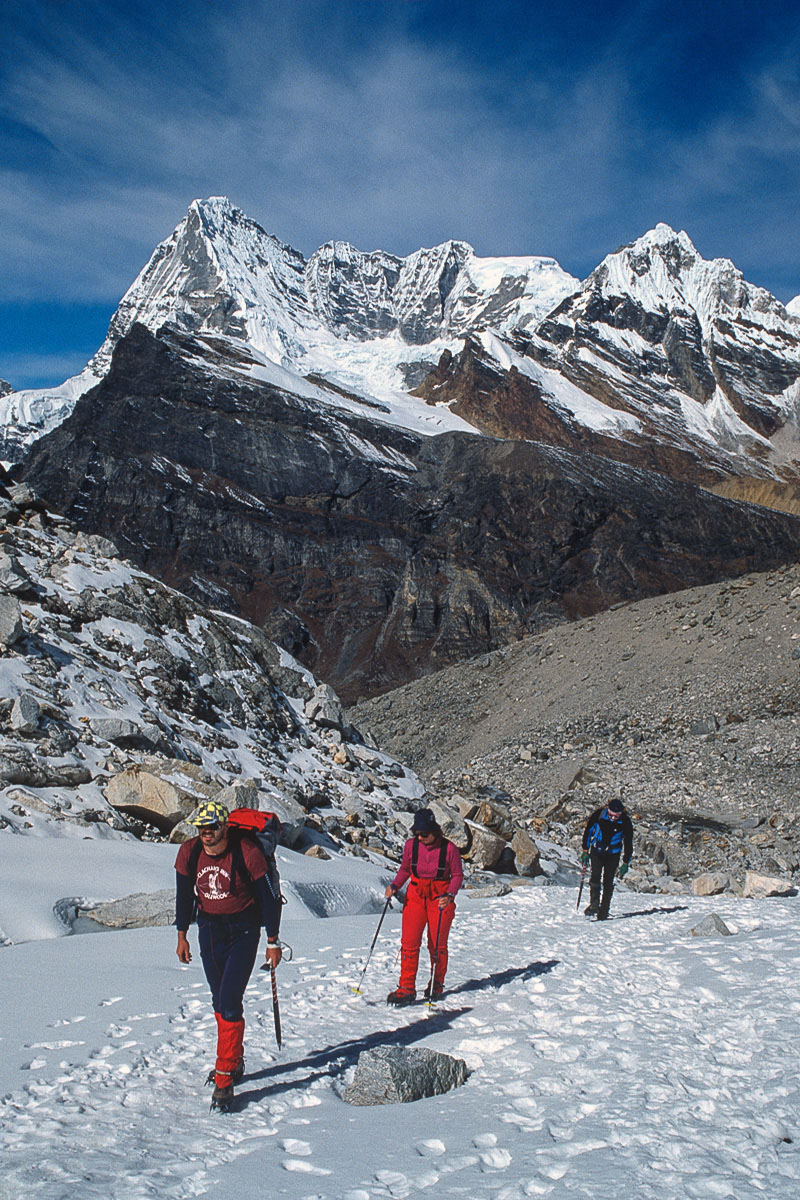
Kossum Kang from the Mera La
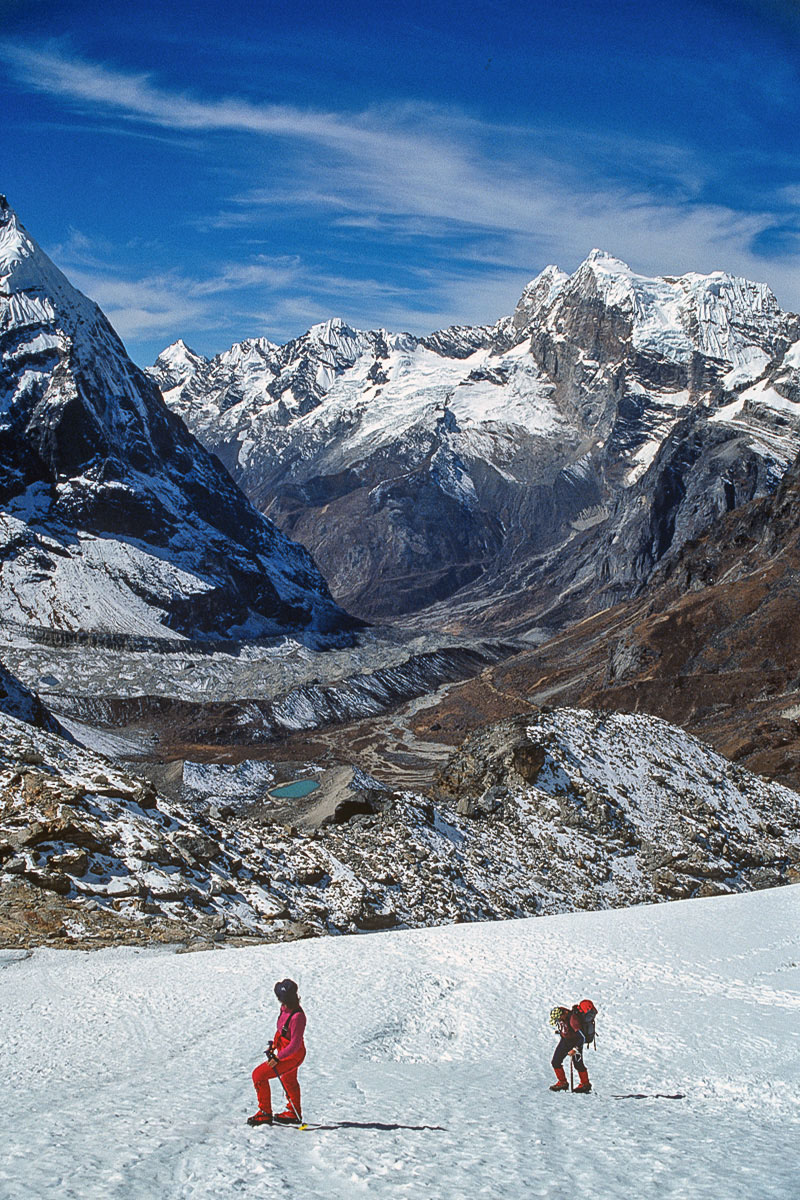
The Hinku Valley from the Mera La
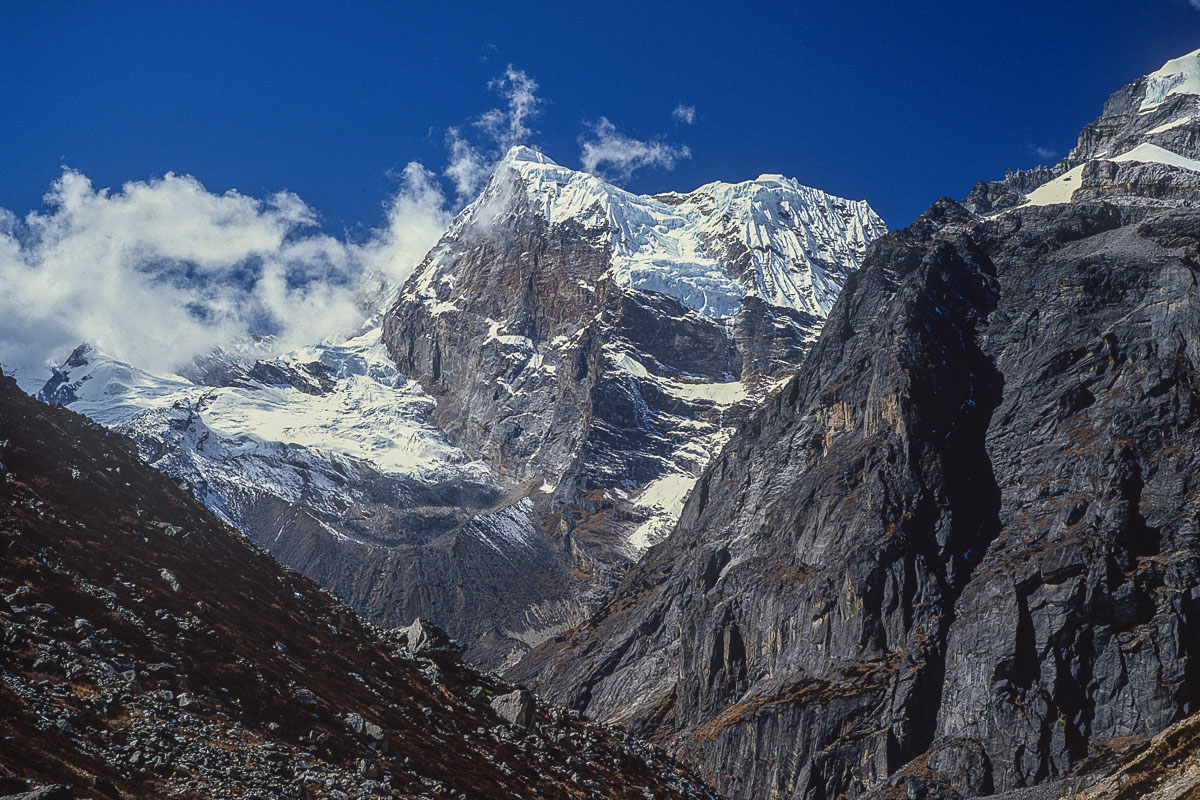
Kossum Kang
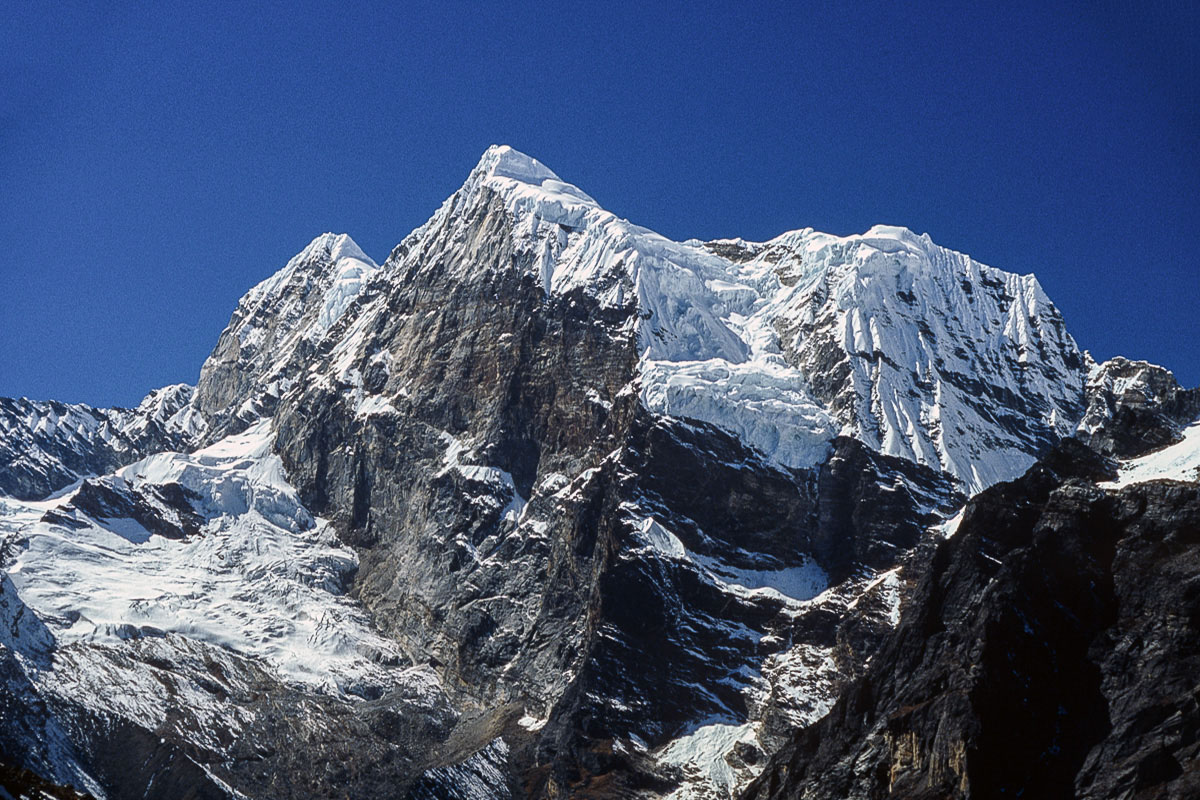
Kossum Kang
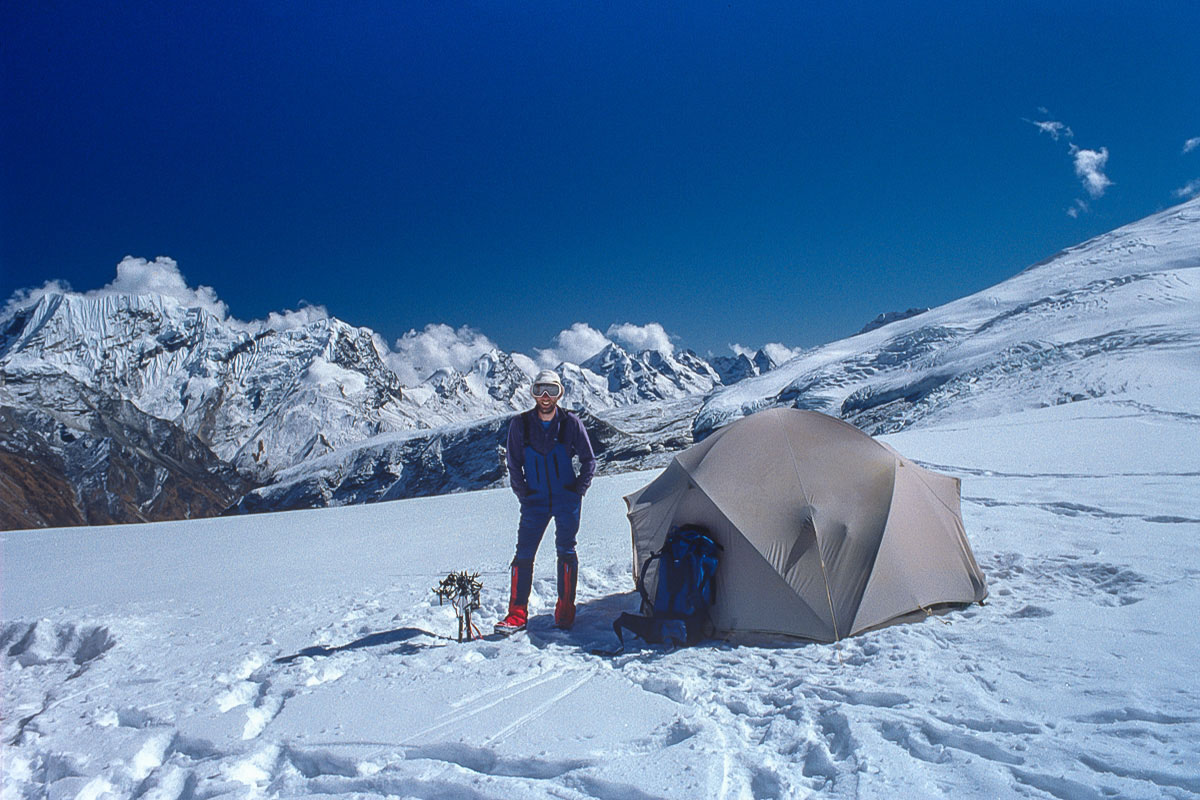
Camp above the Mera La
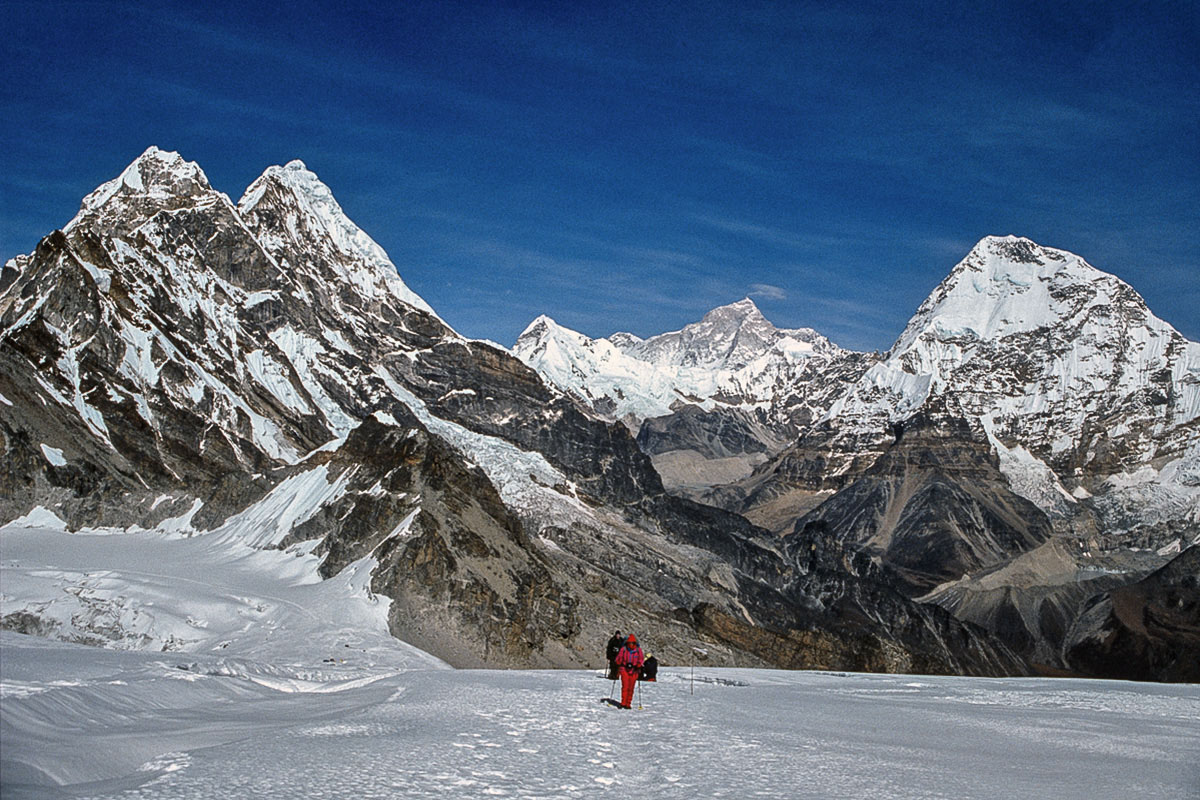
Makalu and Chamlang from above the Mera La
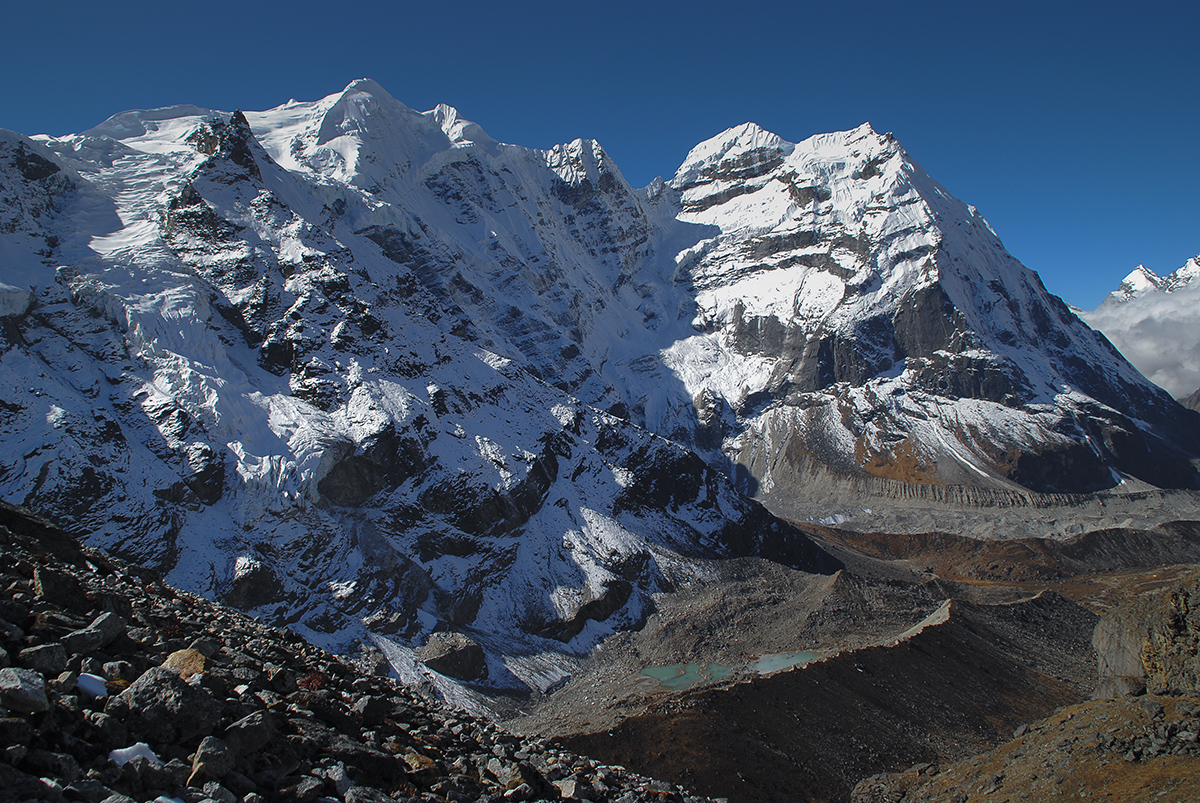
Mera Peak from the Mera La
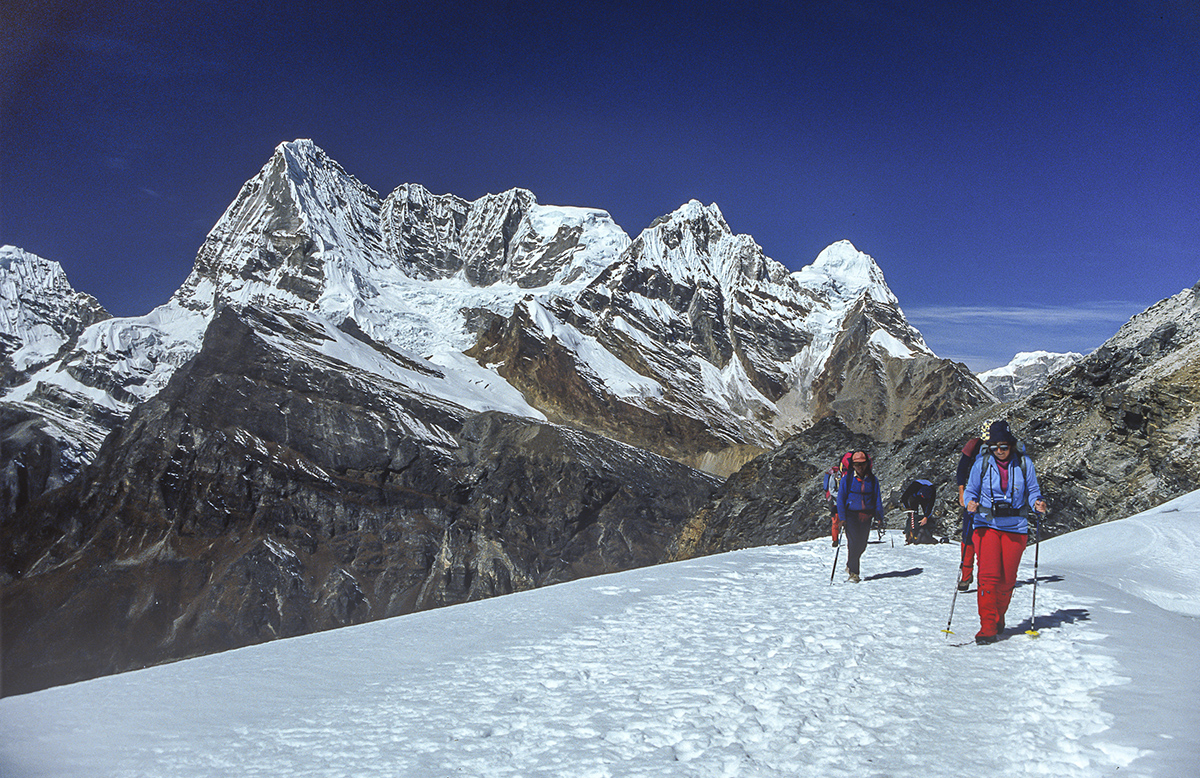
Above the Mera La
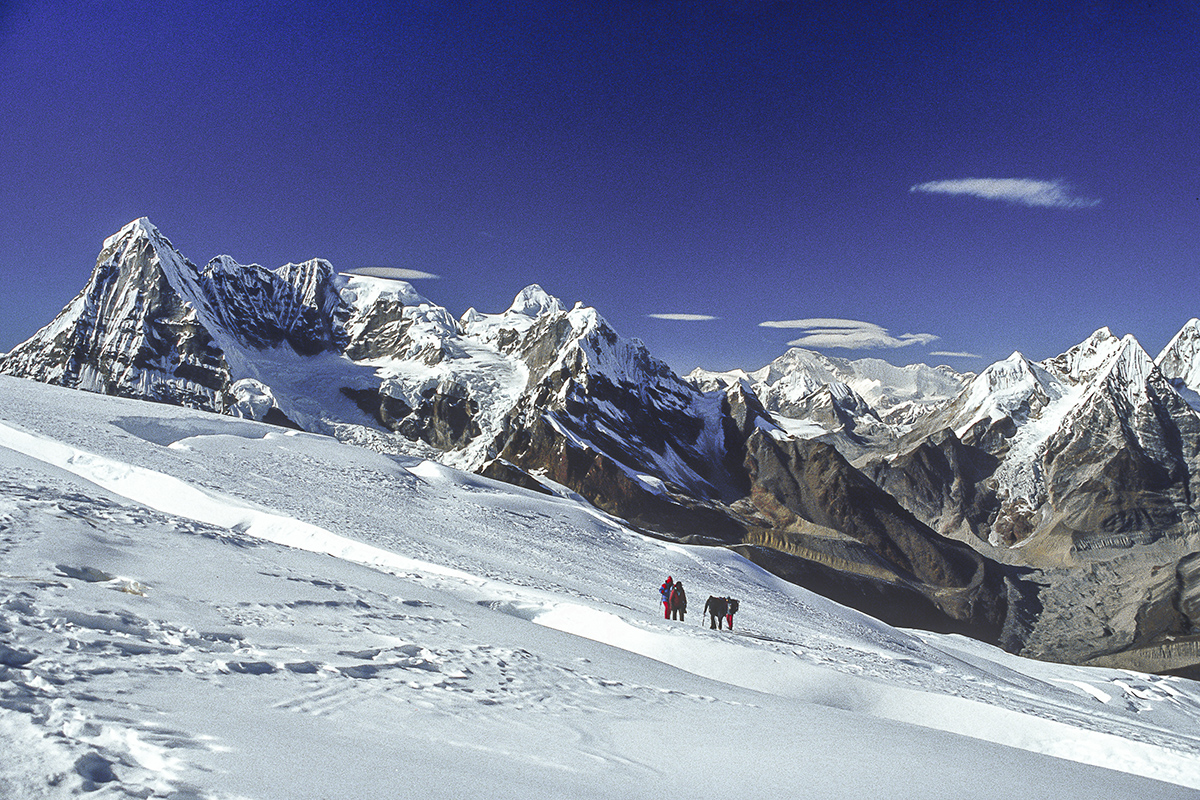
Ascending to High Camp on the Mera Glacier
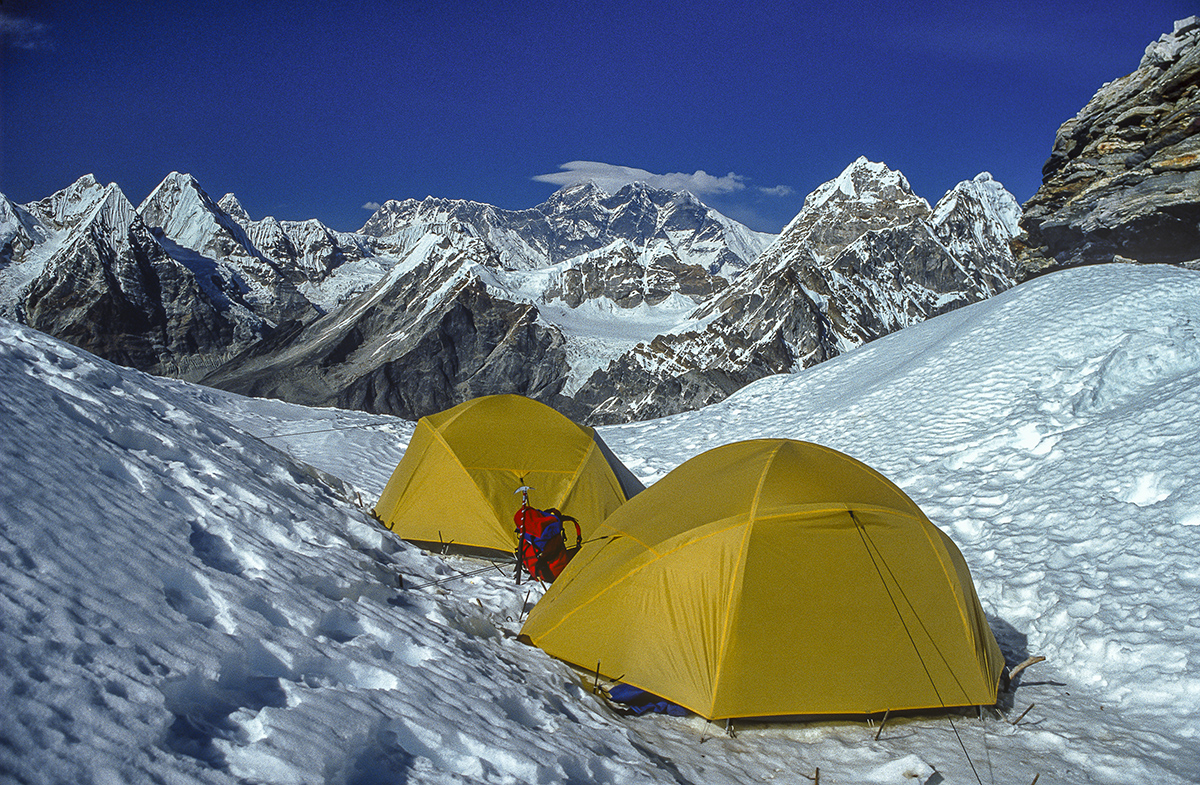
High Camp on the Mera Glacier
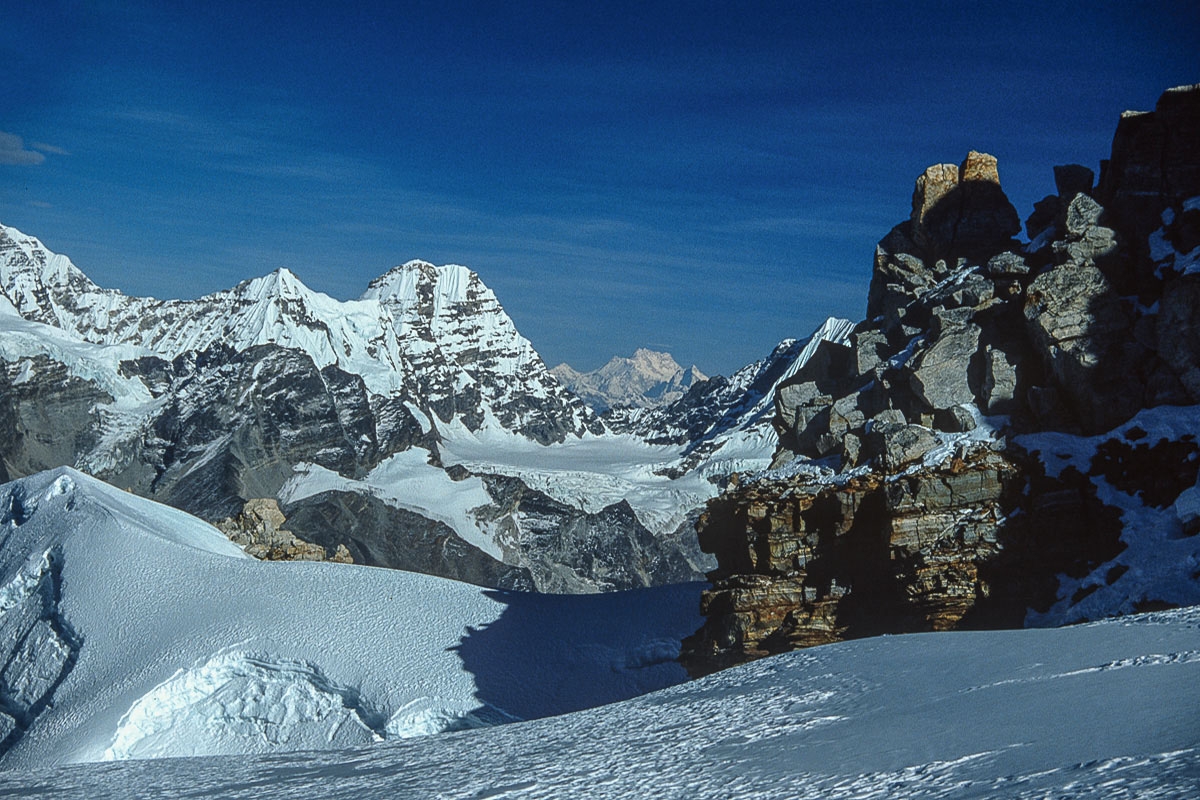
Distant Kangchenjunga from High Camp
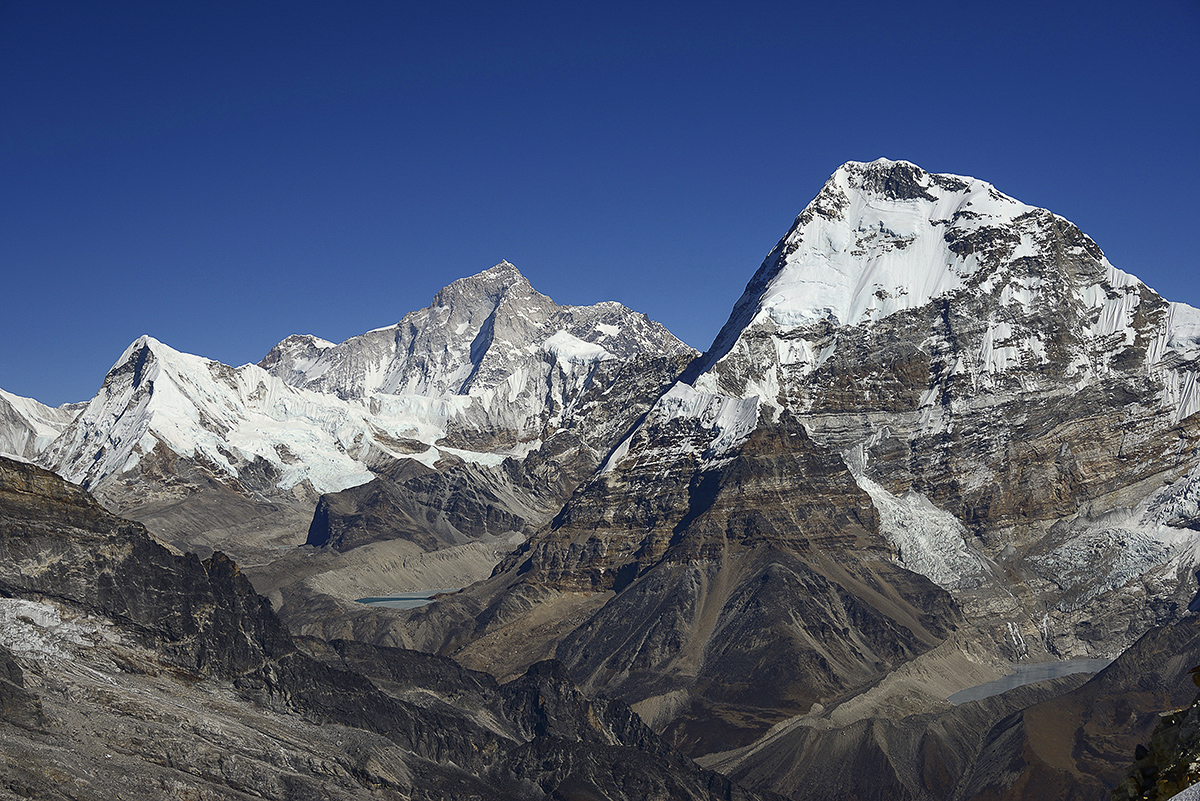
Makalu and Chamlang from high on Mera Peak
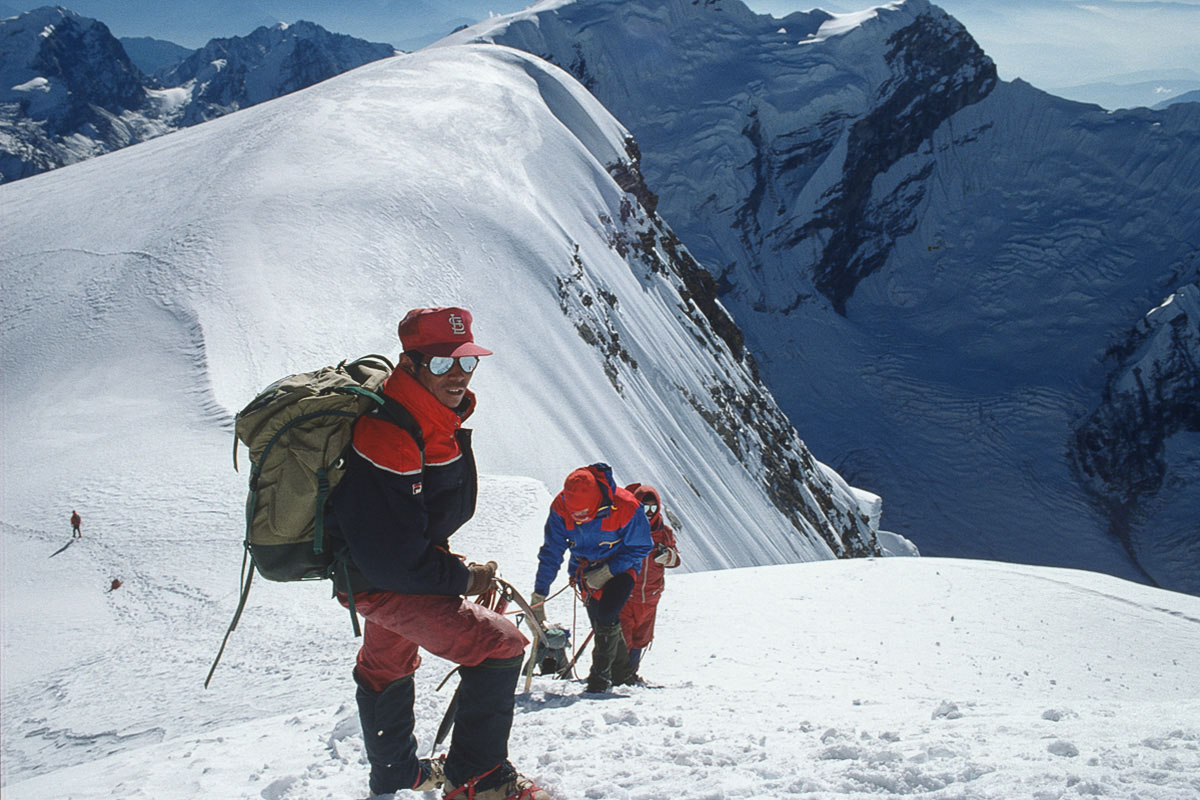
Reaching the summit of Mera Peak
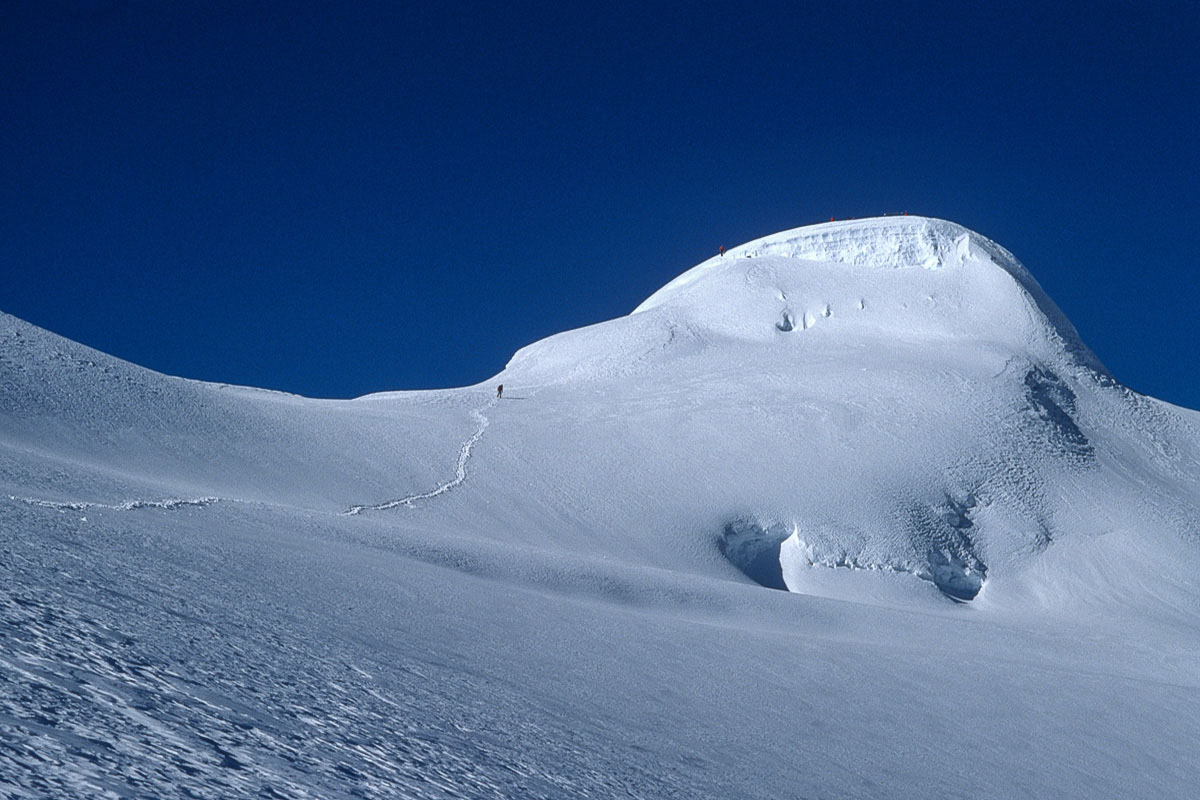
The Final section of the climb to Mera Peak Central
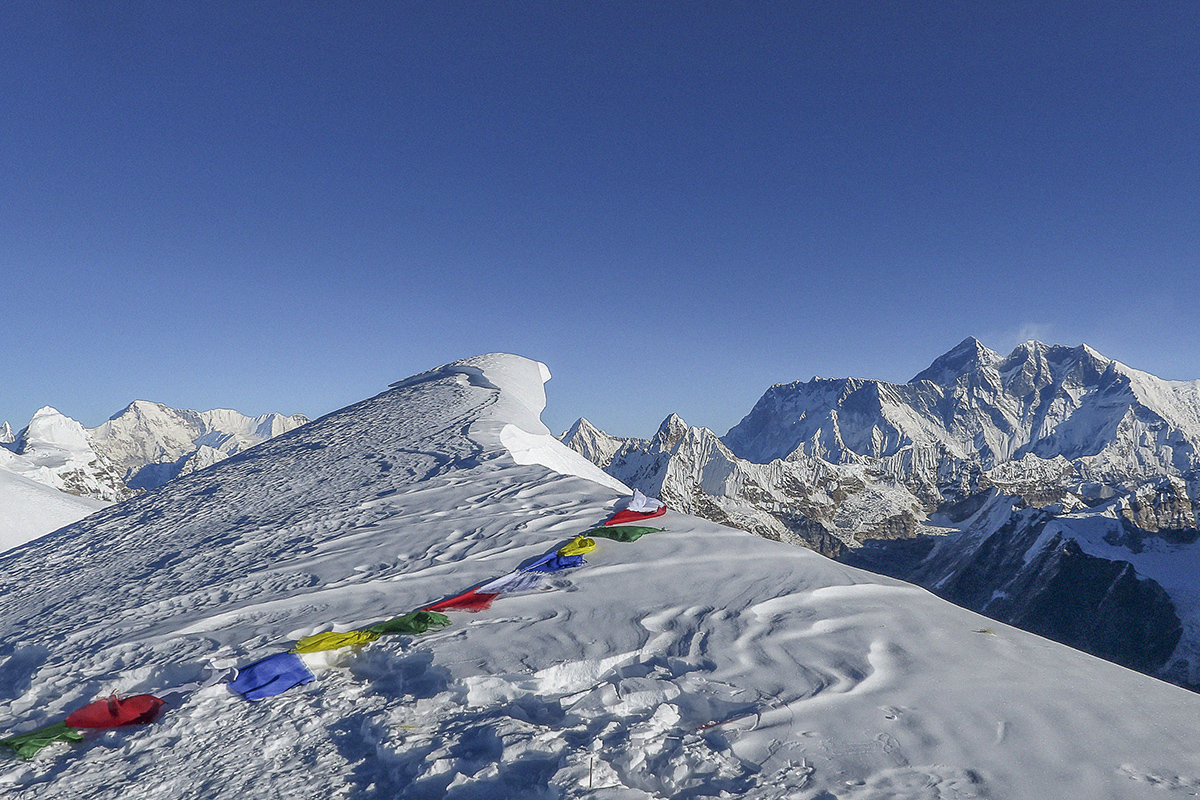
The Summit of Mera Peak Central, 21,247ft