
Biafo - Hispar Mustagh Karakoram Himalaya
Photographs of the Biafo-Hispar Mustagh Karakoram Himalaya
The Biafo Glacier is a 67 km long glacier in the Karakoram Mountains of Gilgit Baltistan, and meets the 49 km long Hispar Glacier at an altitude of 5,128 m (16,824 ft) at Hispar La Pass creating the world’s third longest glacial system outside the polar regions. This highway of ice connects two ancient mountain kingdoms, Nagar, in the west with Baltistan in the east.
The traverse of the Biafo-Hispar glaciers is a challenging journey passing beneath numerous spectacular rock towers and fine cliffs. In addition to the crossing of the Hispar La the journey includes the traverse of Snow Lake, or Lukpe Lawo, and its tributary glacier Sim Gang, a vast and highly crevassed high-altitude glacial basin located at 4,877 metres (16,000 ft) above sea level. The name ‘Snow Lake’ was afforded to it in 1892 by Martin Conway, the first foreigner to visit here. THere is speculation that Snow Lake might be an ice-cap from which glaciers flow out in all directions; its total size is estimated to be 300 square kilometres.
Snow Lake can be very difficult to reach and far fewer travellers pass this way than along the neighbouring Baltoro Glacier. Access to the Biafo Glacier is along the same route that is used to reach the Baltoro Glacier and K2 but only as far as Askole. The initial stages of the approach to the snout of the Biafo Glacier are to be found in the K2 and Baltoro Mustagh Karakoram Himalaya section of these galleries.
Campsites along the Biafo are located off the glacier, adjacent to the lateral moraines and steep mountainsides. Directly above Baintha, the third campsite, stands the peak of Baintha Brakk, 7,285 metres (23,901 ft), the highest and one of the hardest to climb in the region. Also known as “The Ogre”, Baintha Brakk is exceptional in its combination of altitude, height above local terrain, and steepness. It is because of this steep, rocky nature that Baintha Brakk has been both so difficult to climb and so attractive a target for extremely high-level mountaineers. The peak was first climbed by two Britons, Doug Scott and Chris Bonington, in 1977.
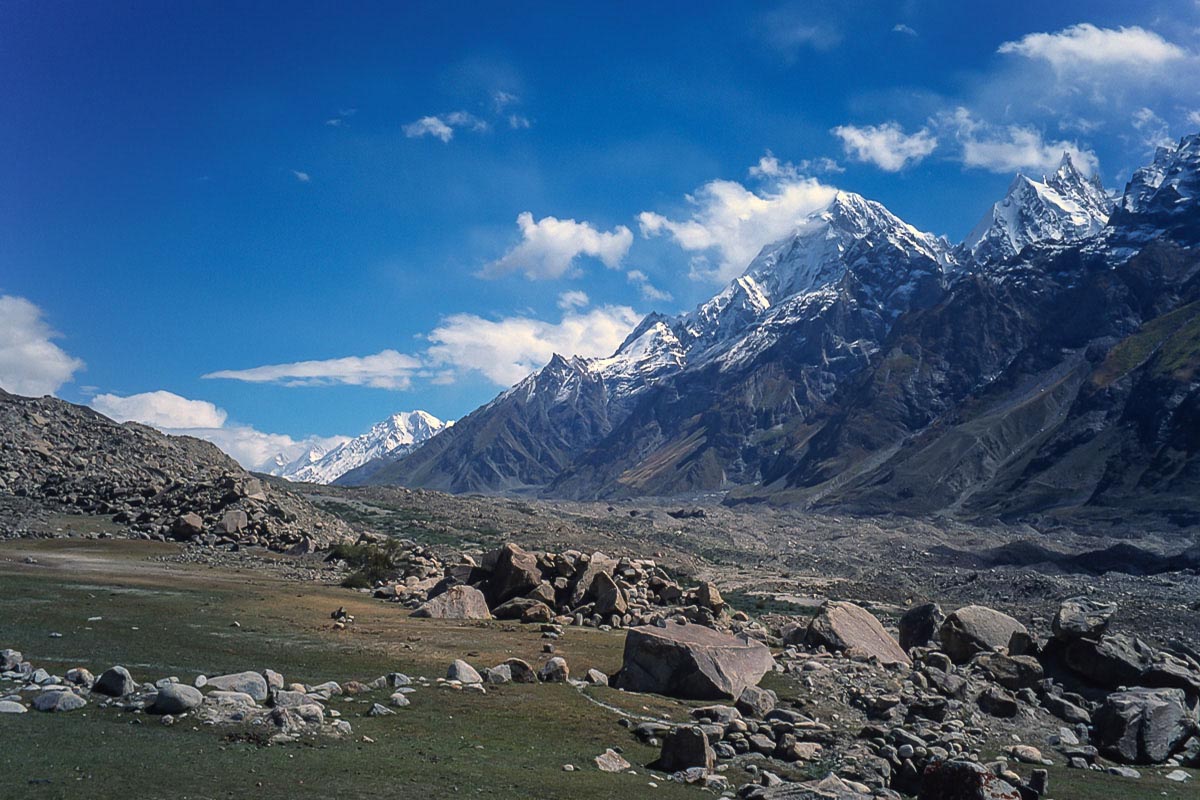
The Snout of the Biafo Glacier beyond Askole
The view north up the length of the Biafo Glacier
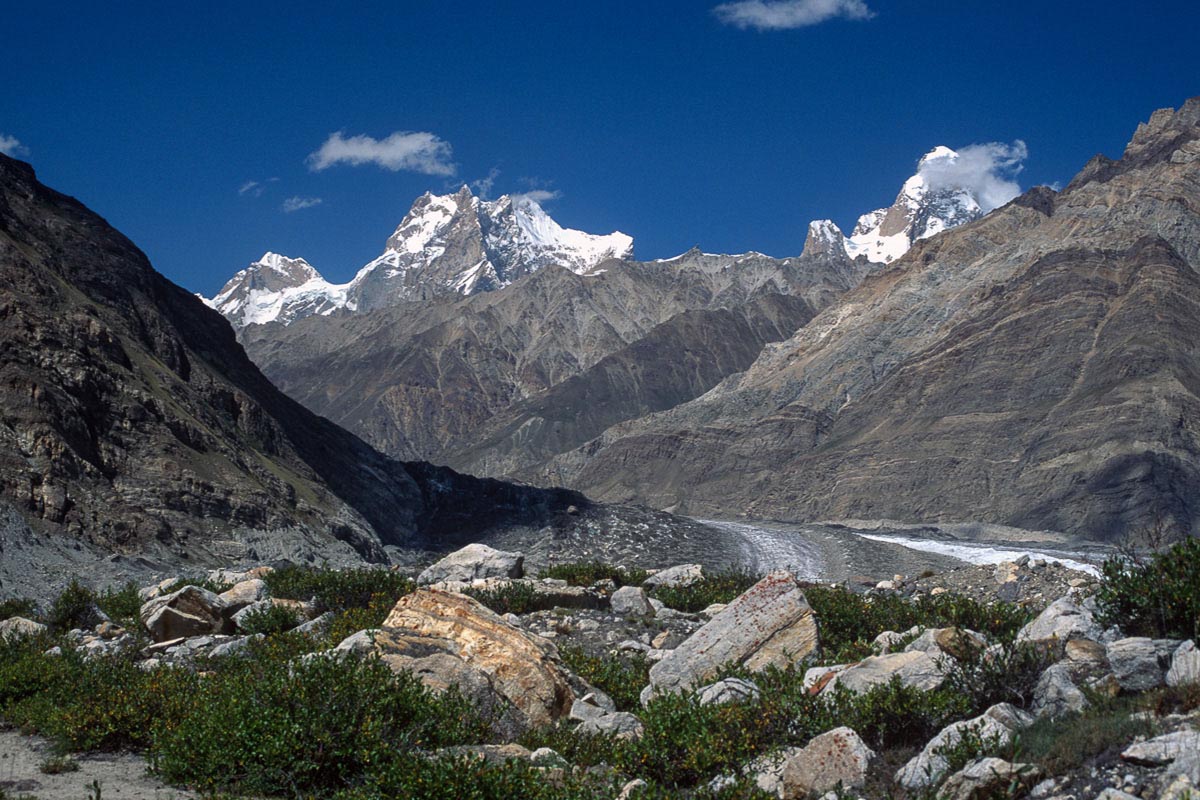
Baintha Brakk from Mango Camp
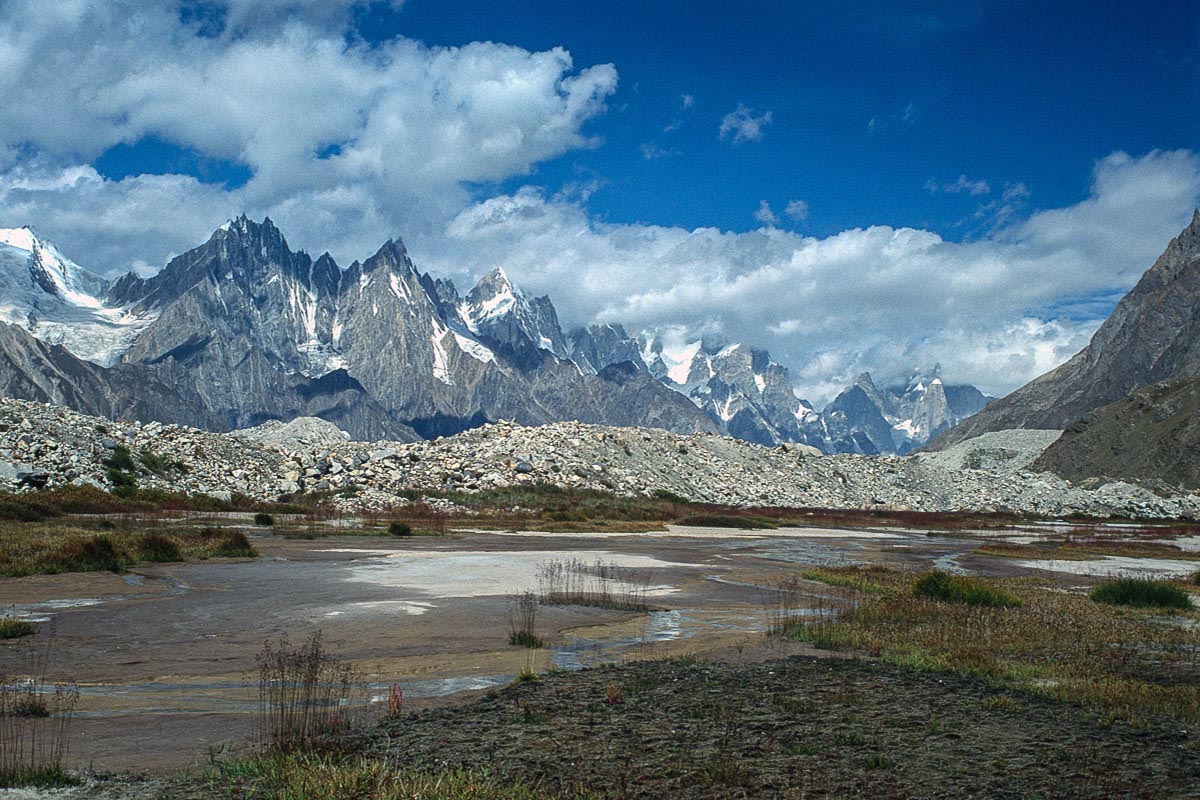
Ablation Valley on the approach to Baintha
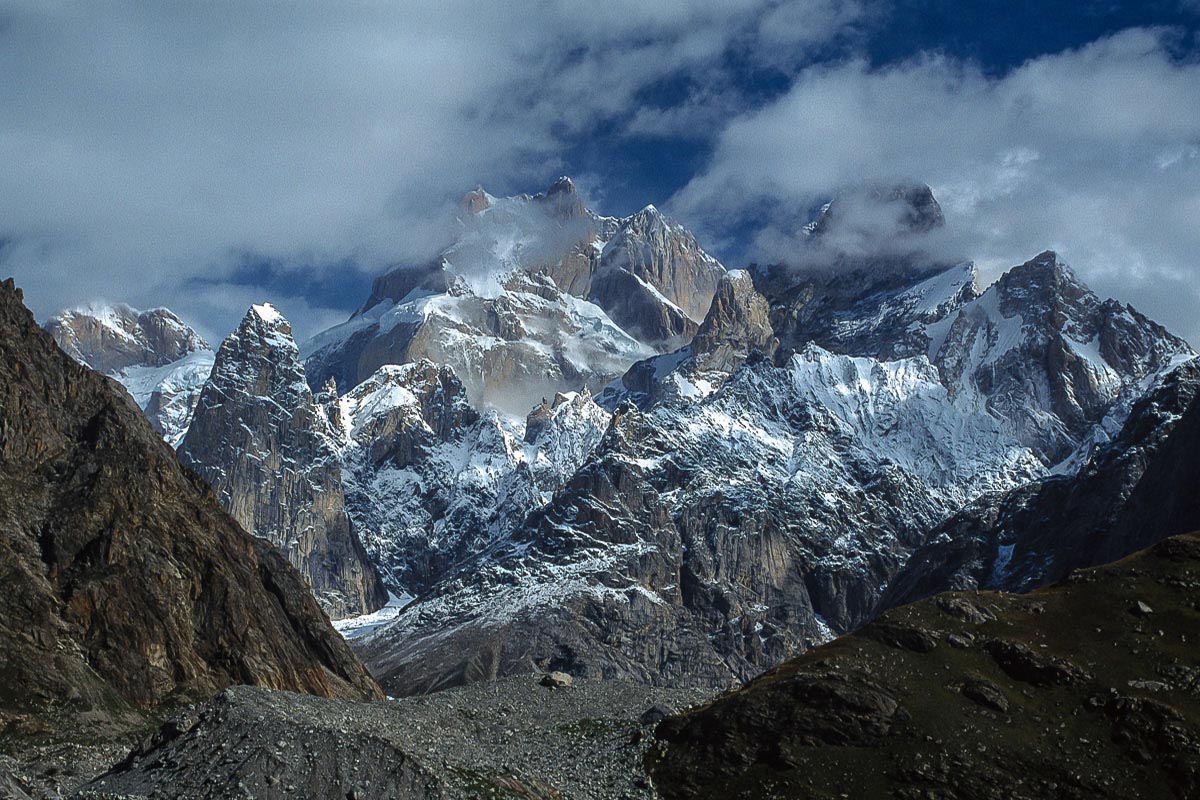
Baintha Brakk (The Ogre) from the Biafo Glacier
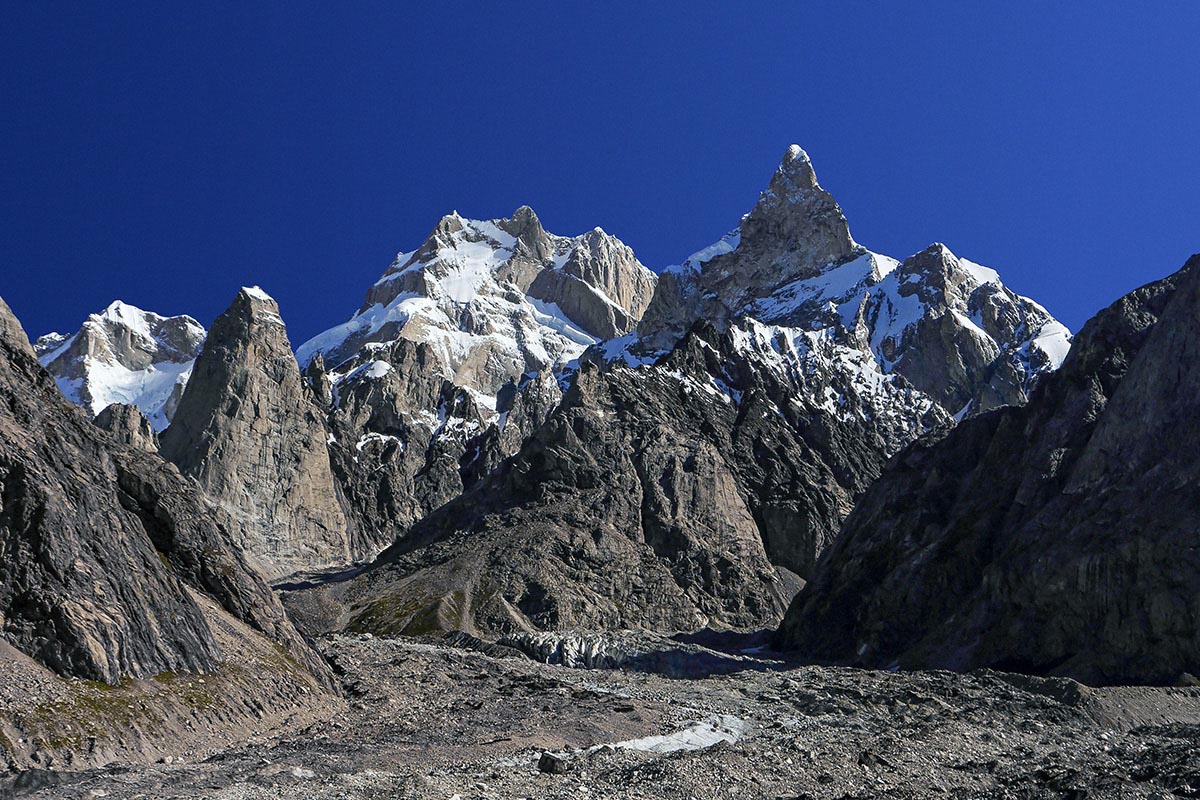
The Ogre and Latok 1 from the Biafo Glacier
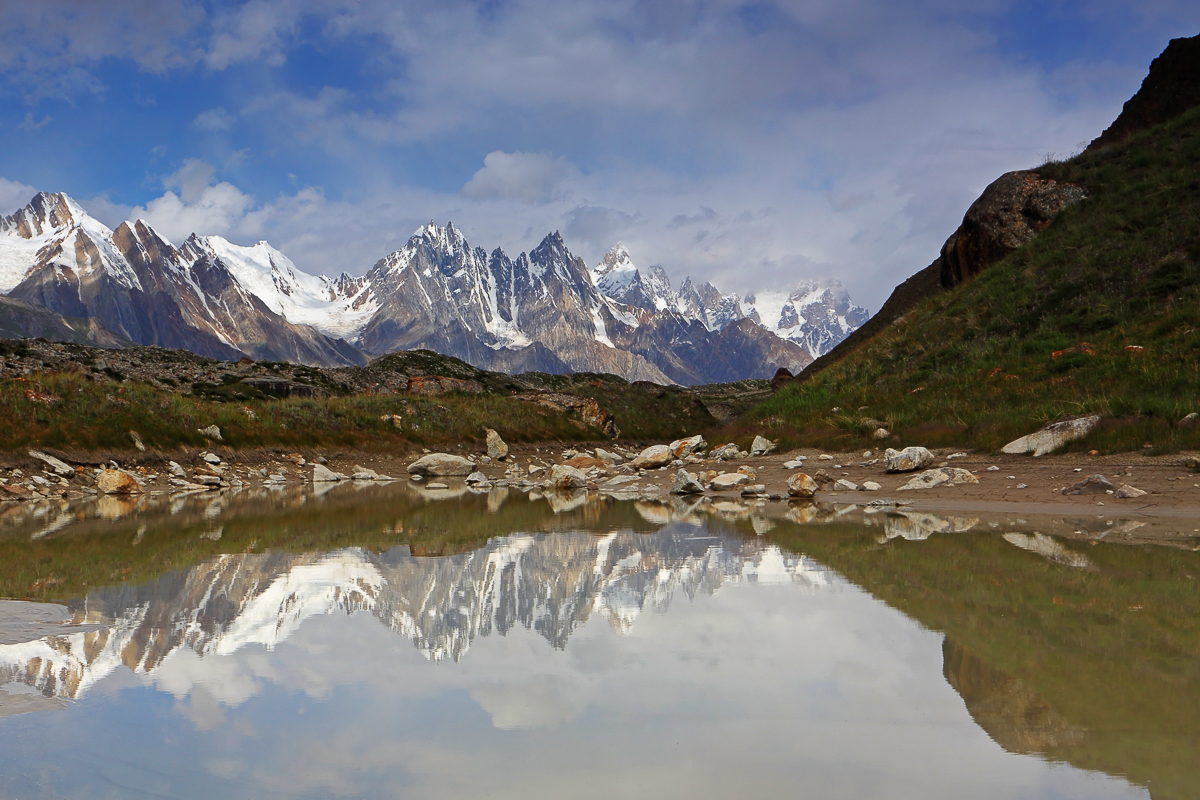
Ablation Valley beside the Biafo Glacier
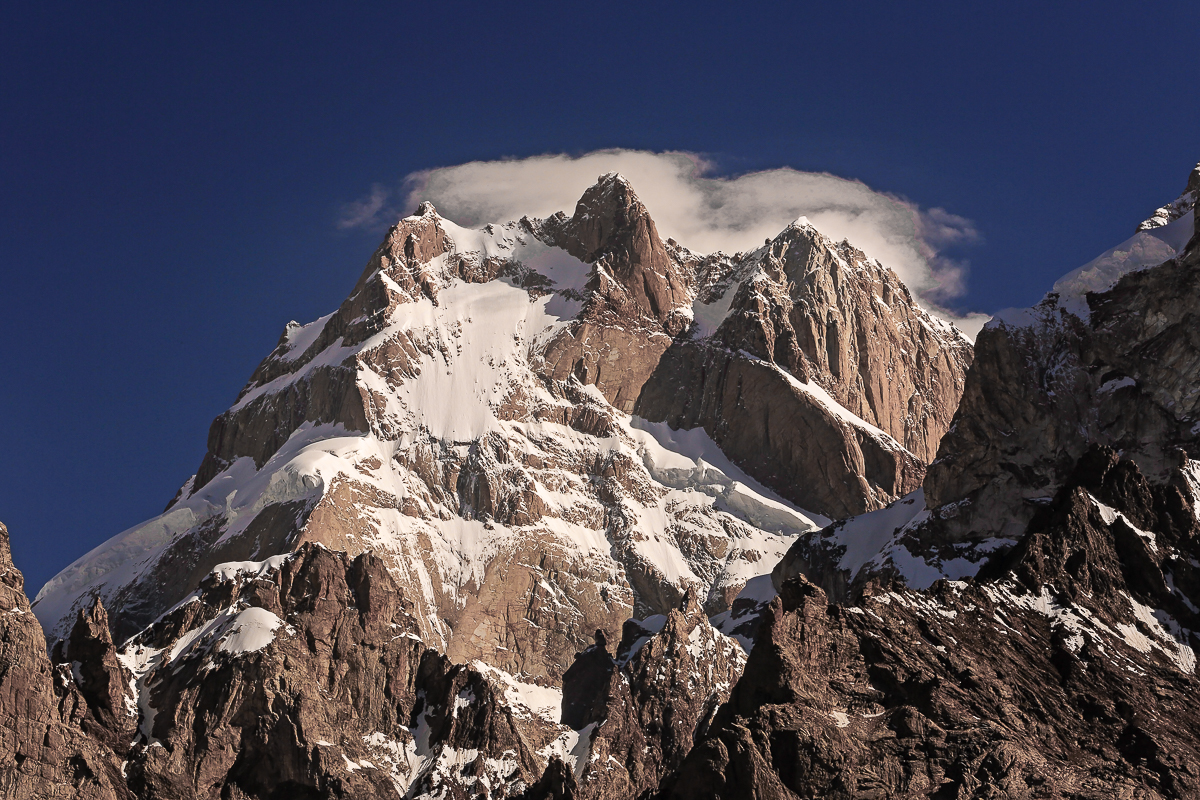
The Ogre from Baintha
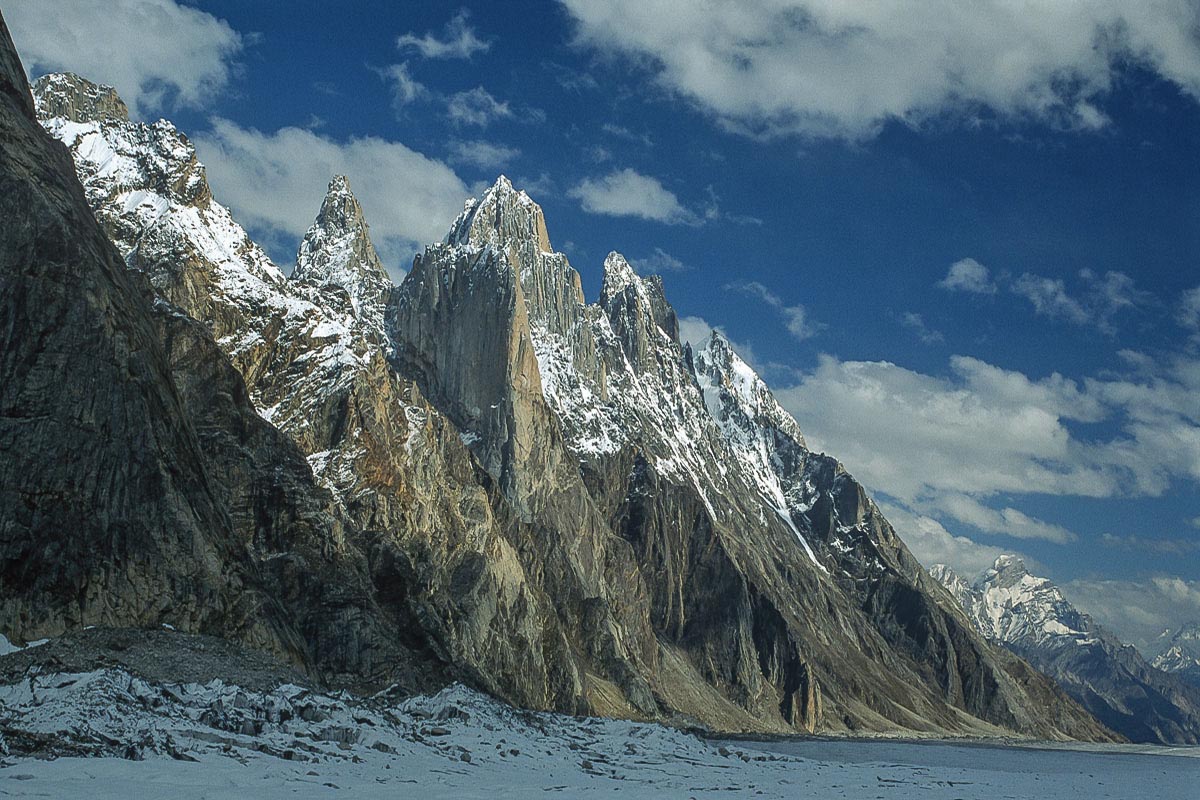
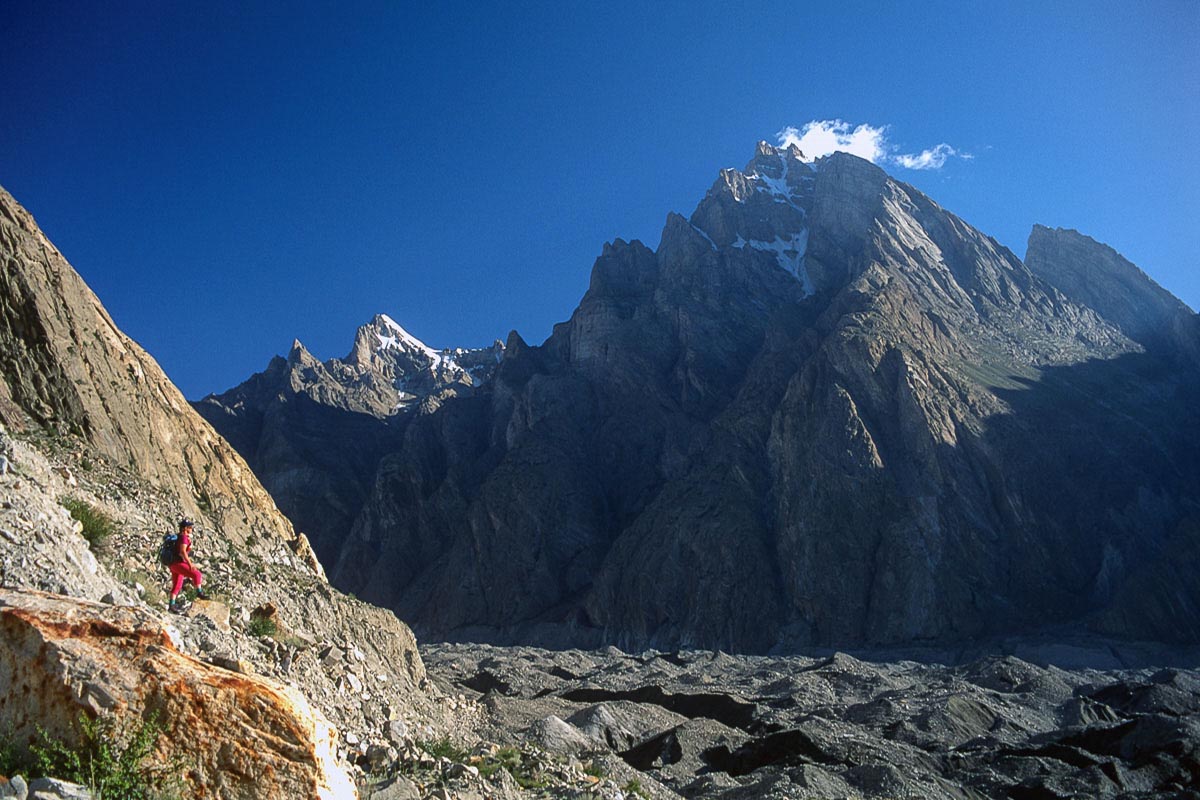
Rock Towers of the Biafo Glacier
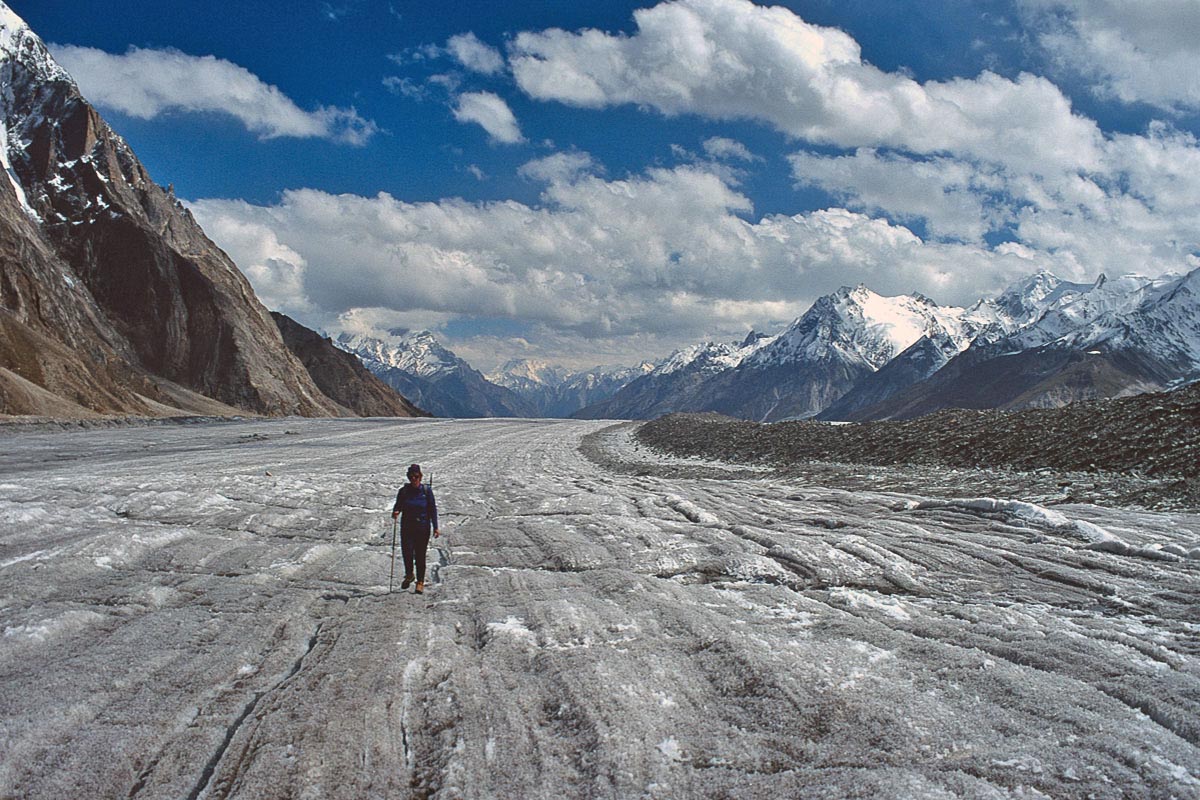
Looking Back down the Biafo Glacier
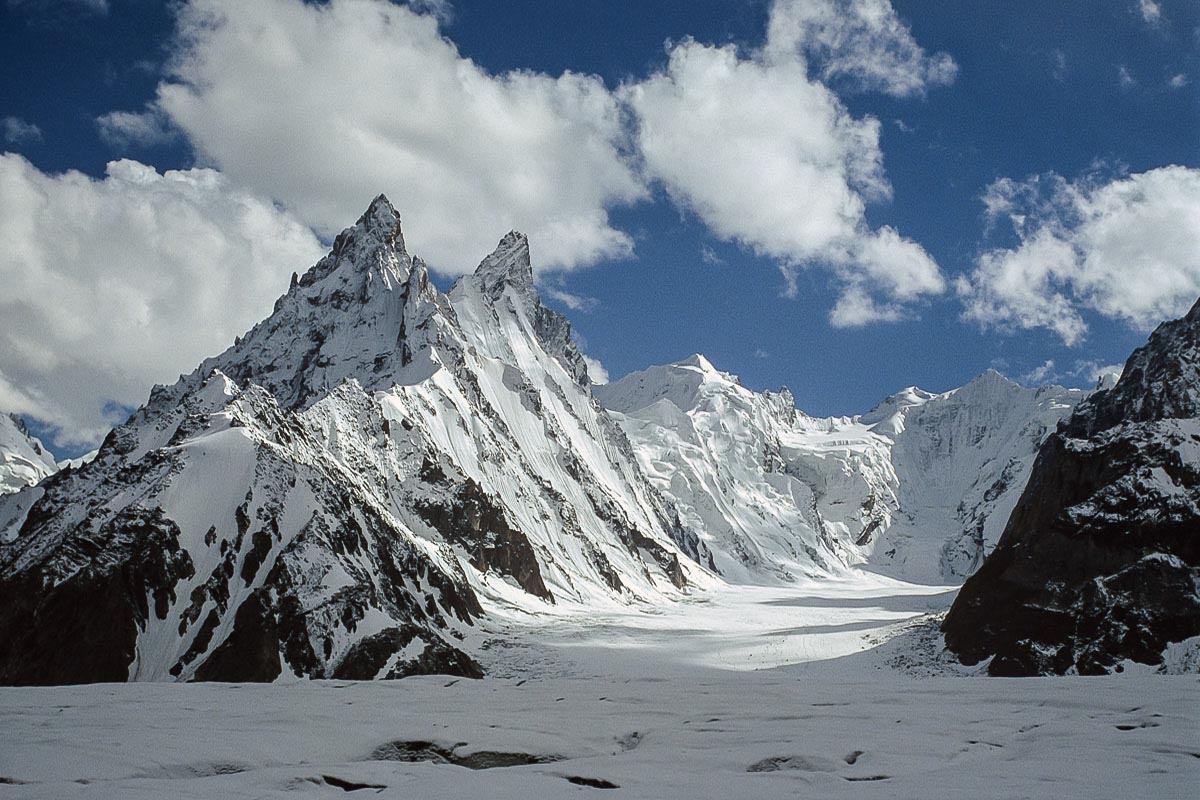
Sossbun Brakk from the Biafo Glacier
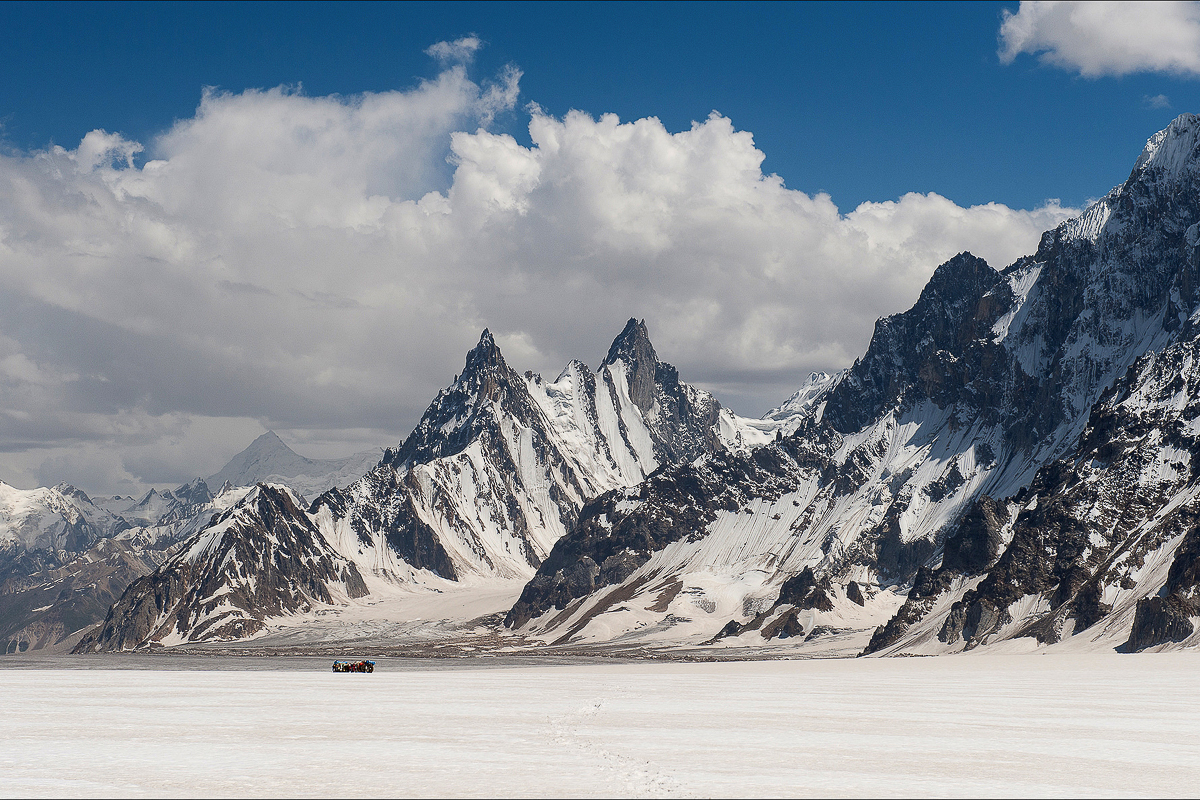
Sossbun Brakk from the Biafo Glacier
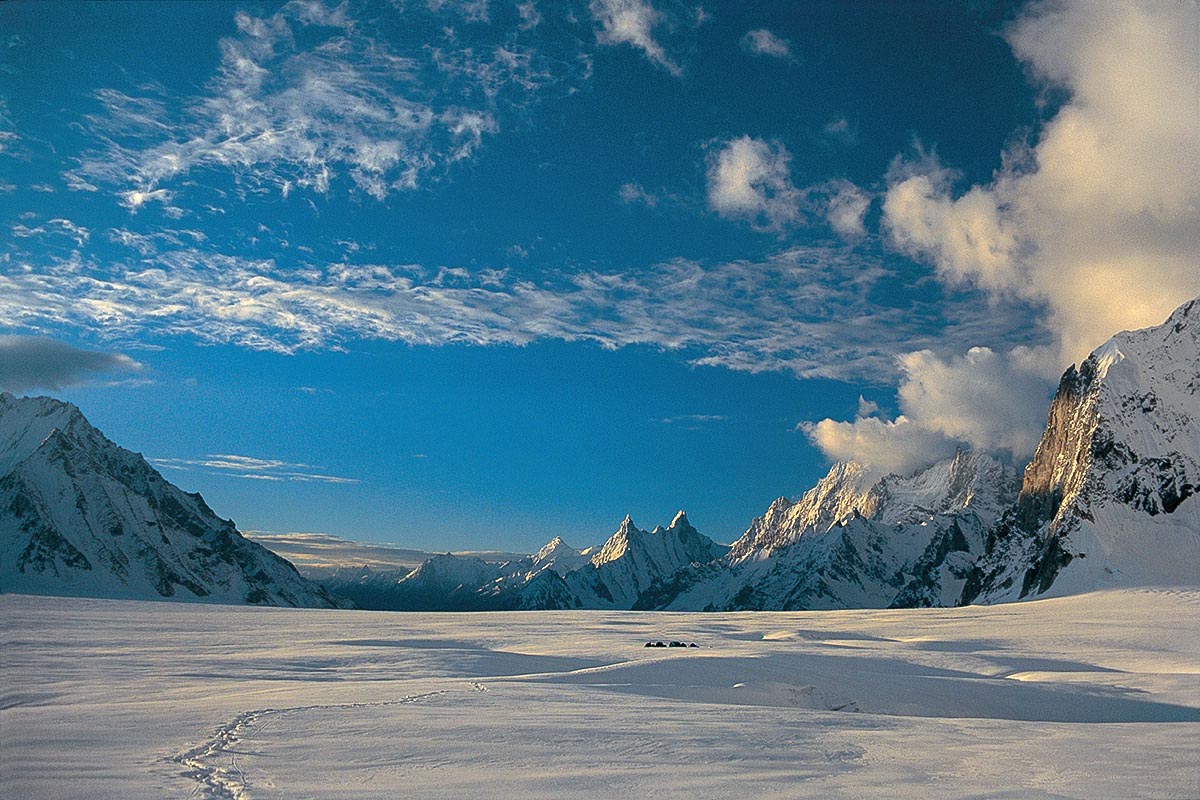
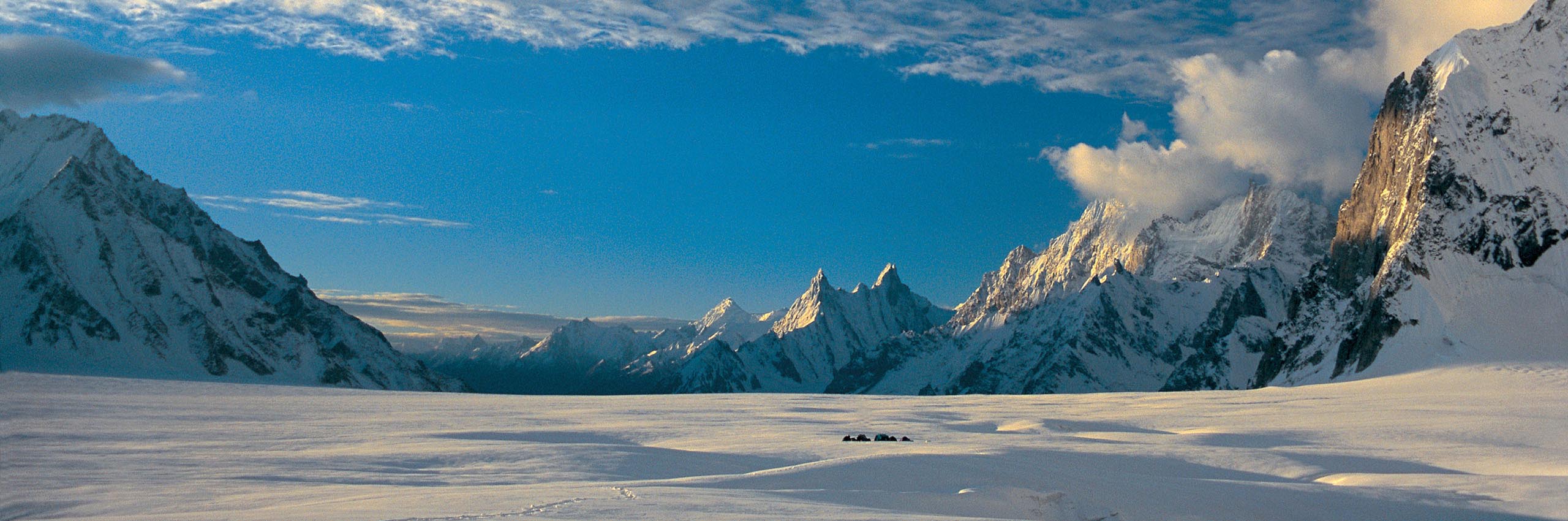
Snow Lake Camp on the Biafo Glacier
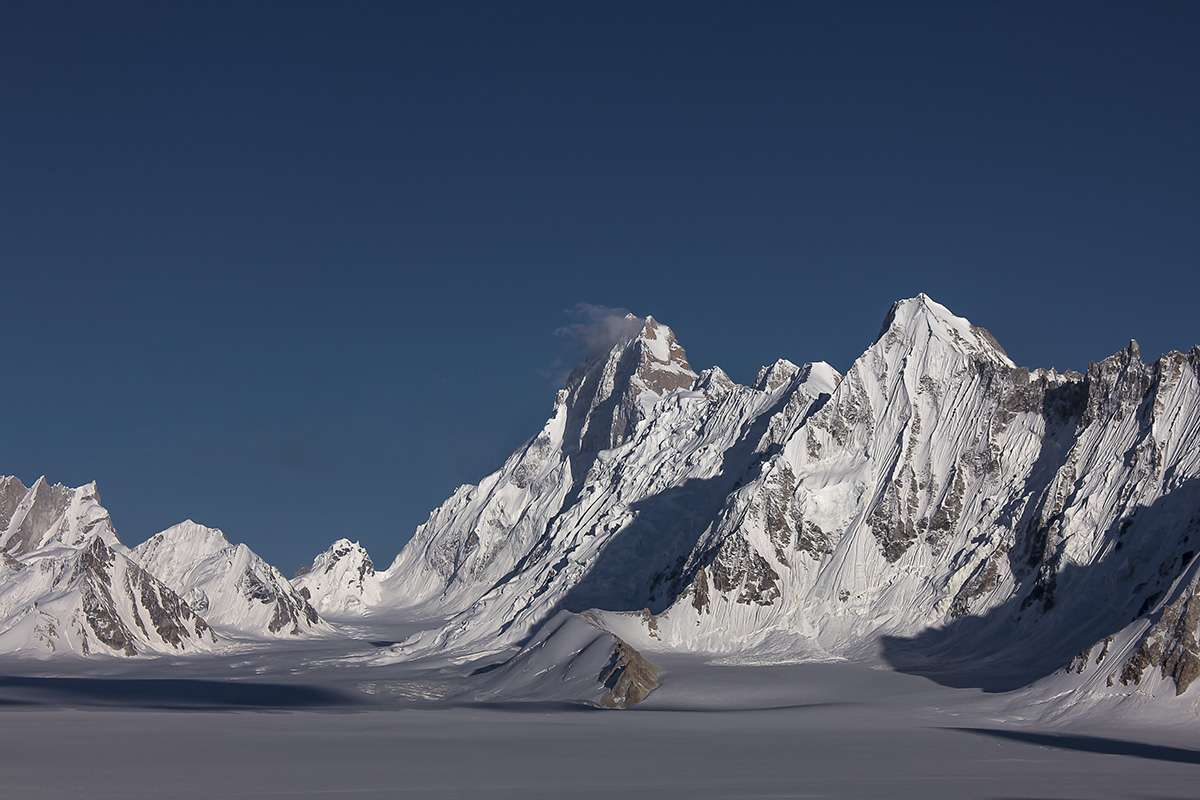
The Ogre from Snow Lake
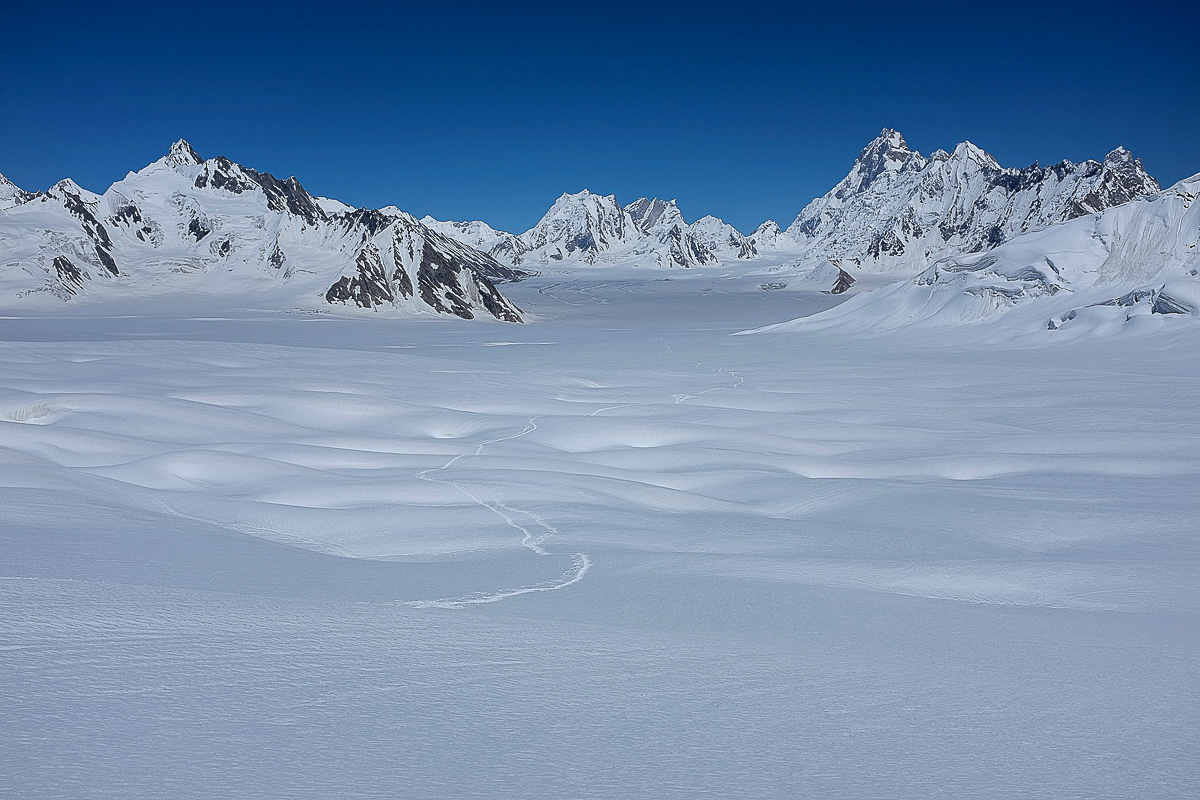
Snow Lake from The Hispar Pass
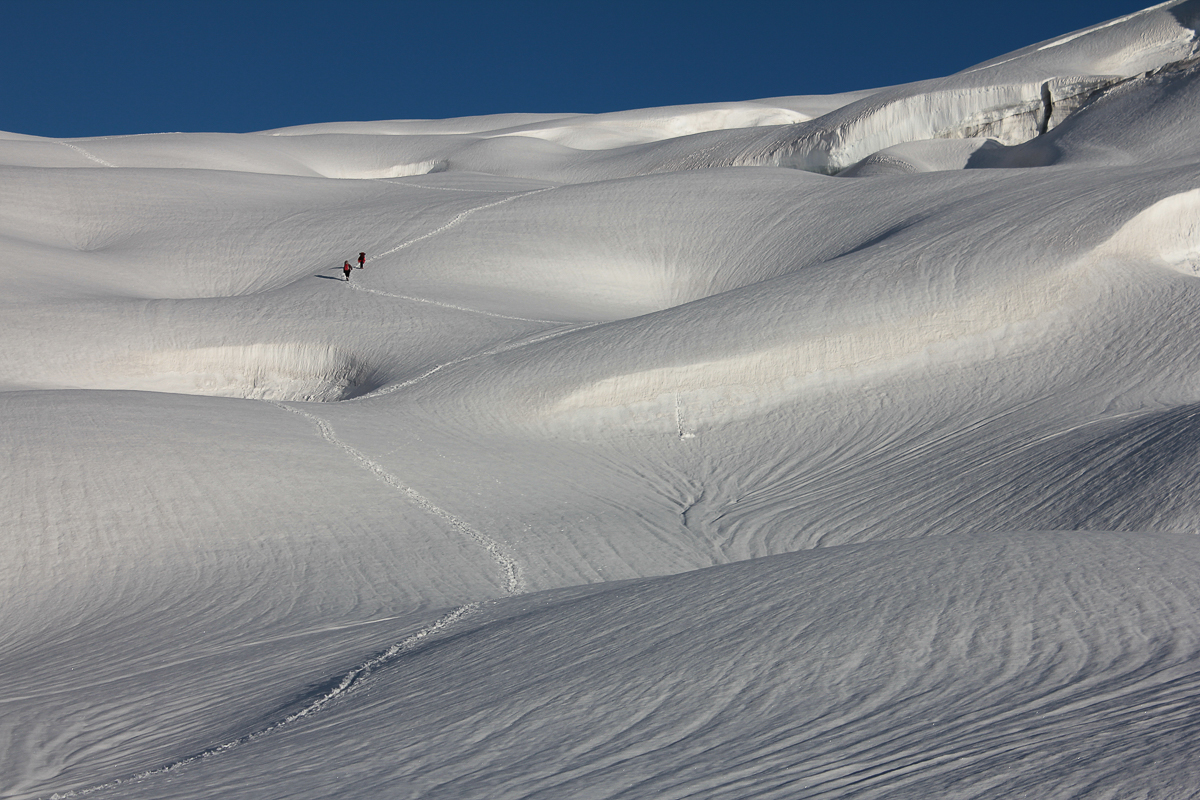
Ascending the Hispar Pass
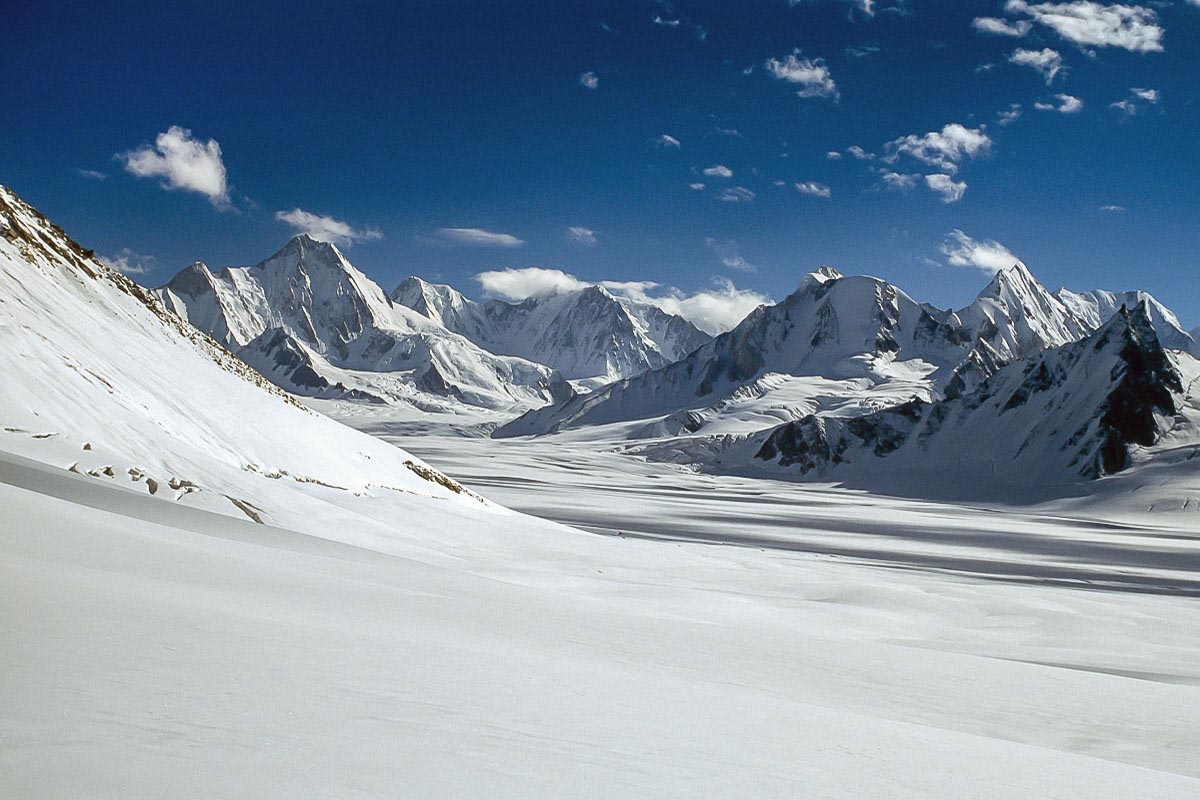
Snow Lake from the Hispar Pass

The Ogre from the Hispar Pass
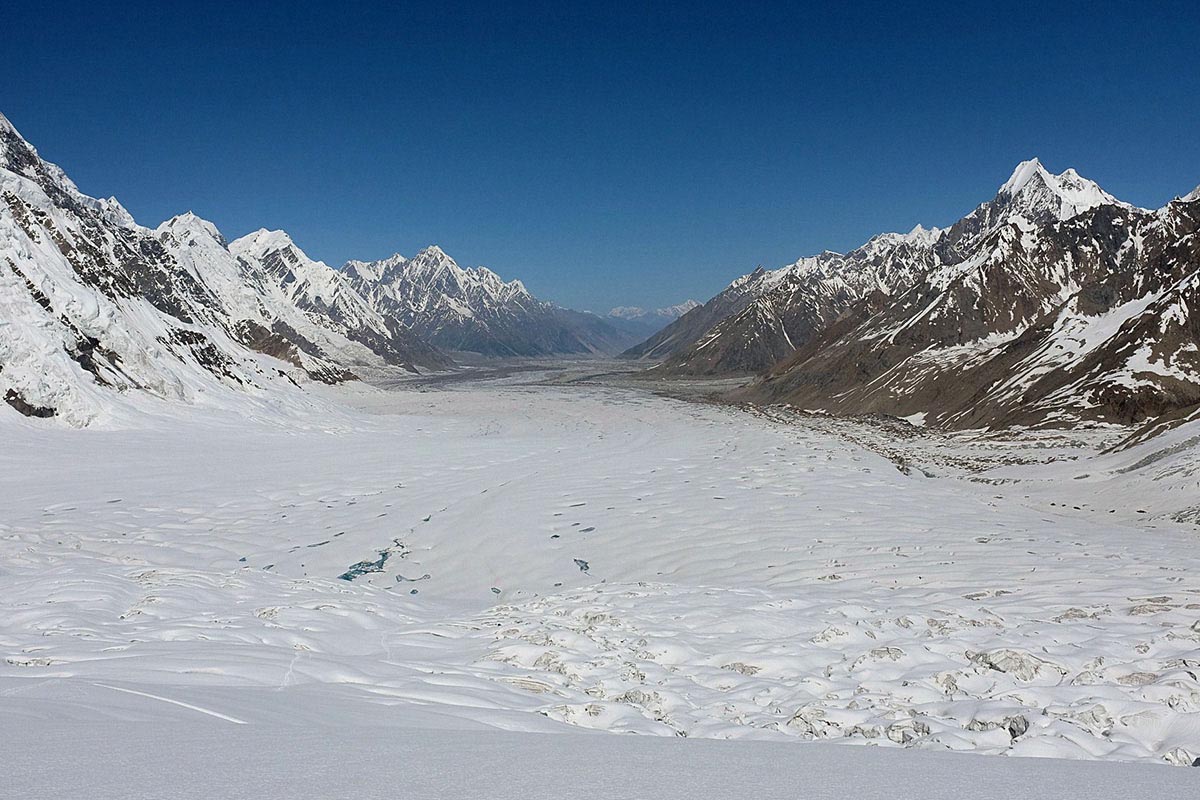
The Hispar Glacier from Hispar Pass
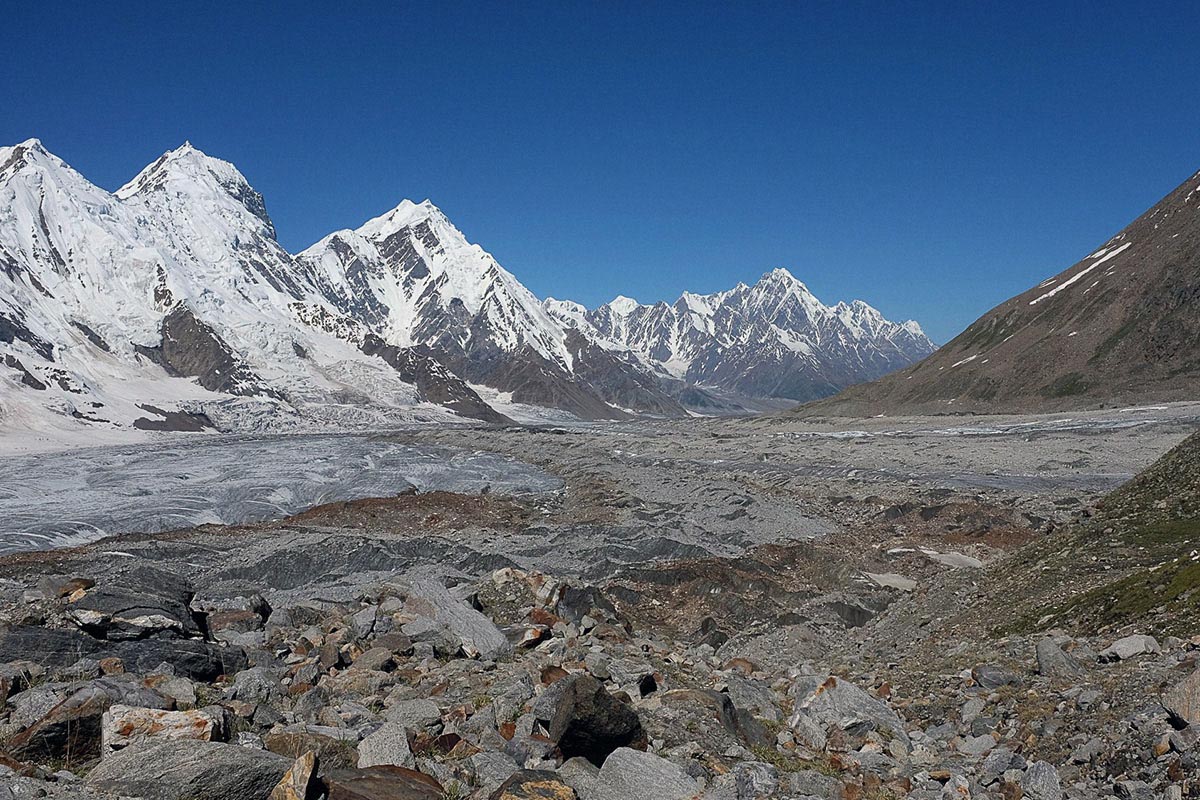
The Hispar Glacier from Hispar Pass
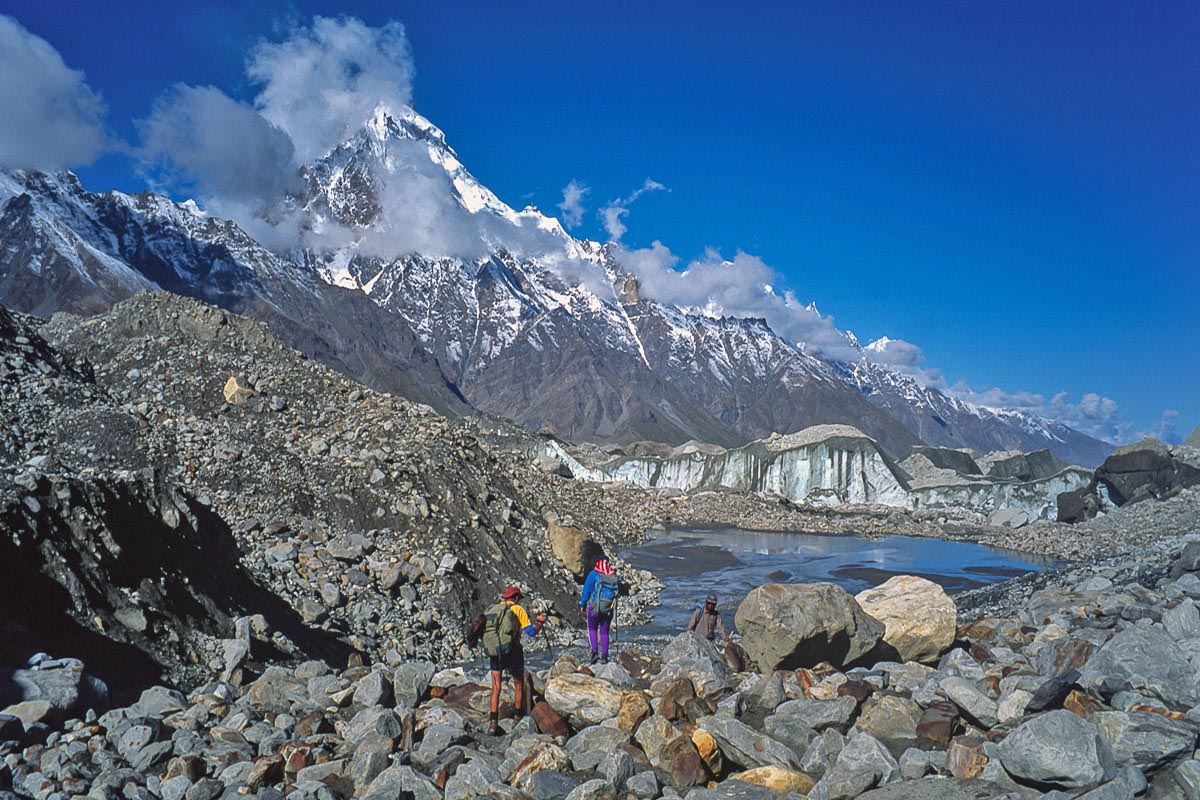
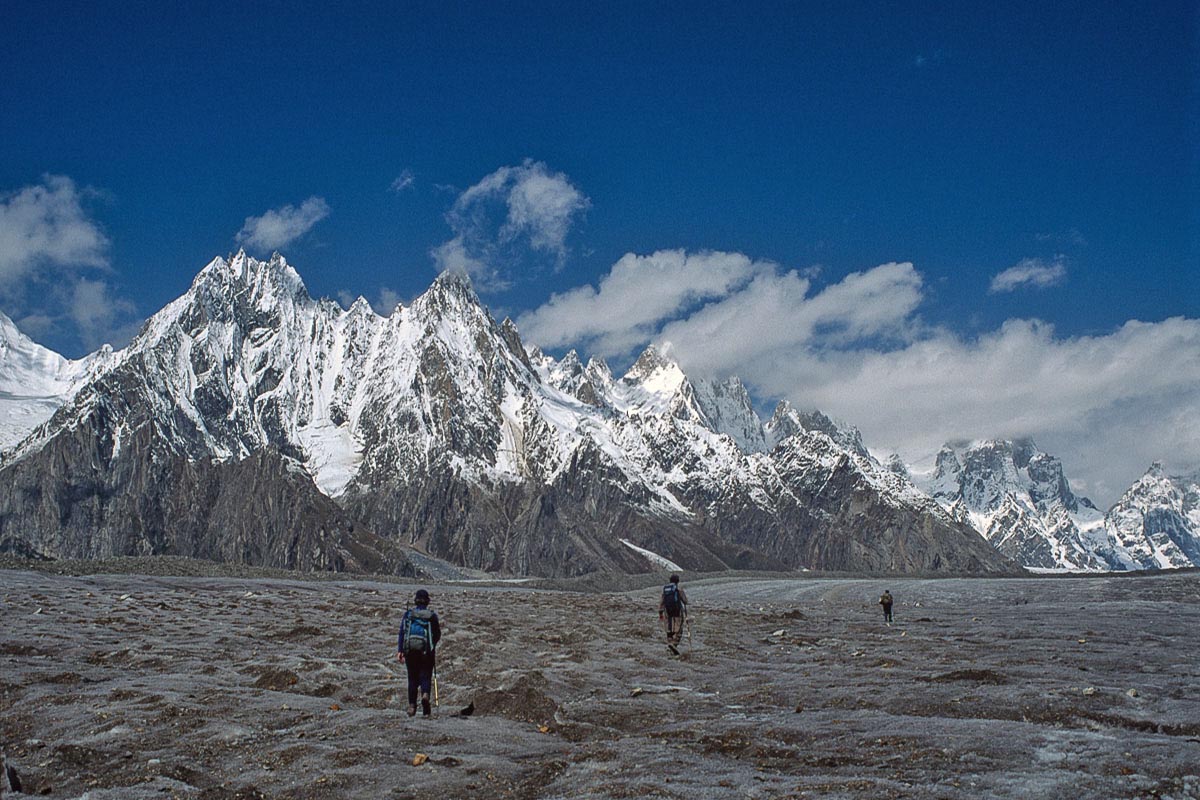
Negotiating Moraines on Hispar Glacier
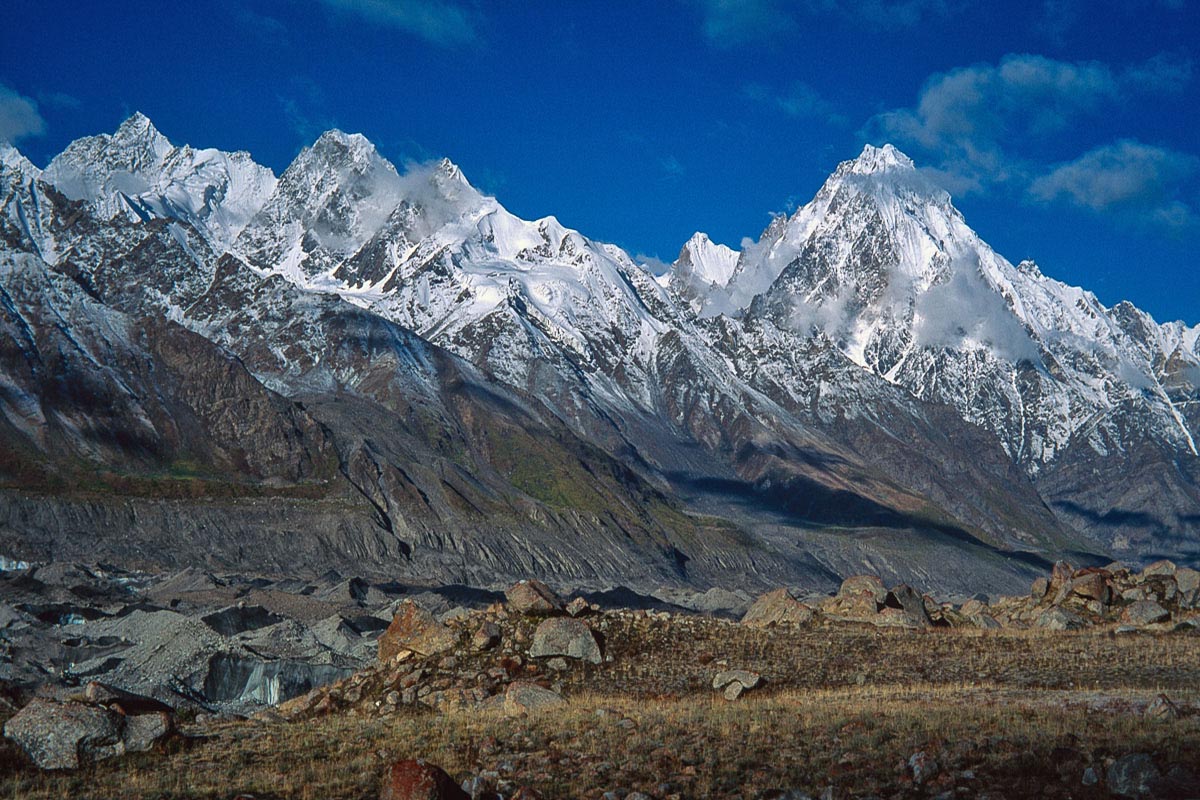
Makkrong Chhish, 6607m, from beside the Hispar Glacier
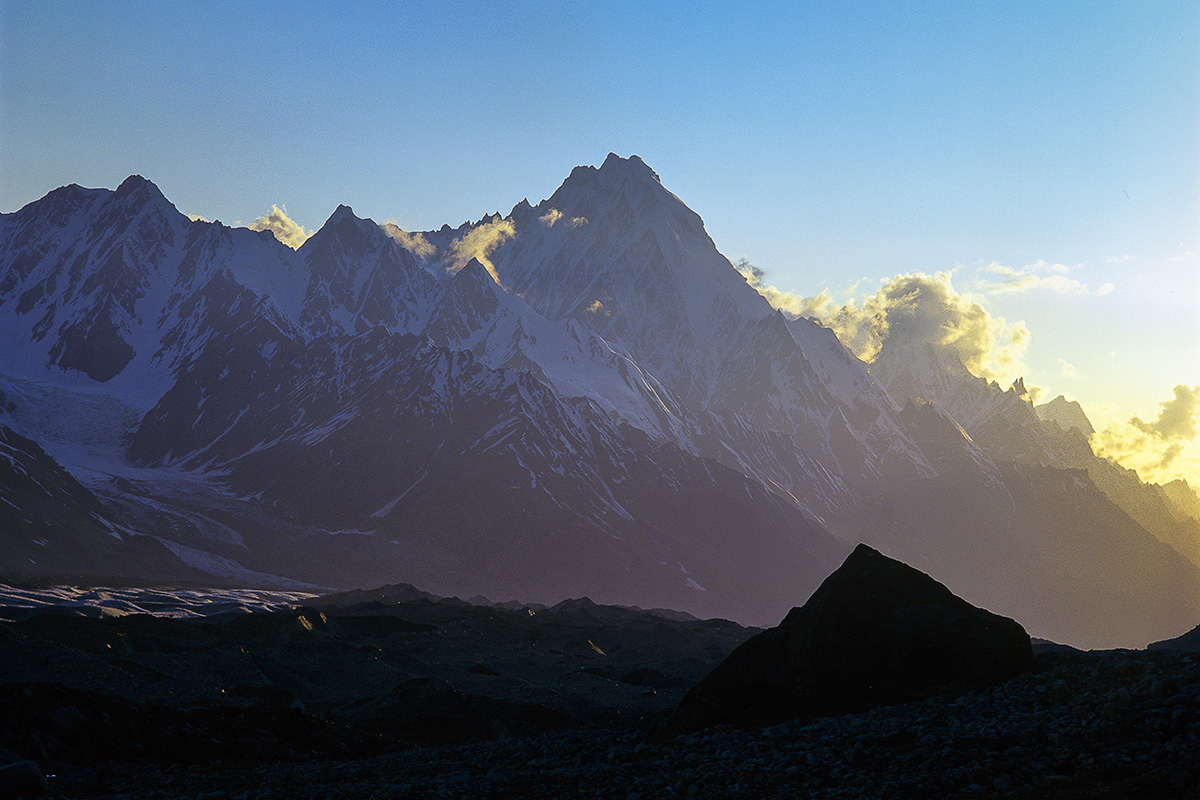
Hispar Sunset